The Temple at Ambajogai
The Yogeshwari temple stands at Ambajogai, also written Ambejogai, in Beed district of Maharashtra, in the Marathwada region.
What is there:
- A temple in stone, with a courtyard, mandapa and sanctum
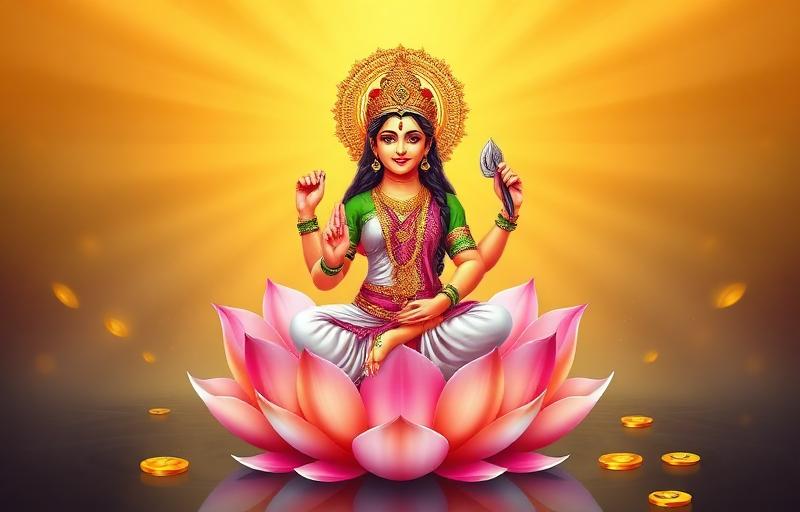
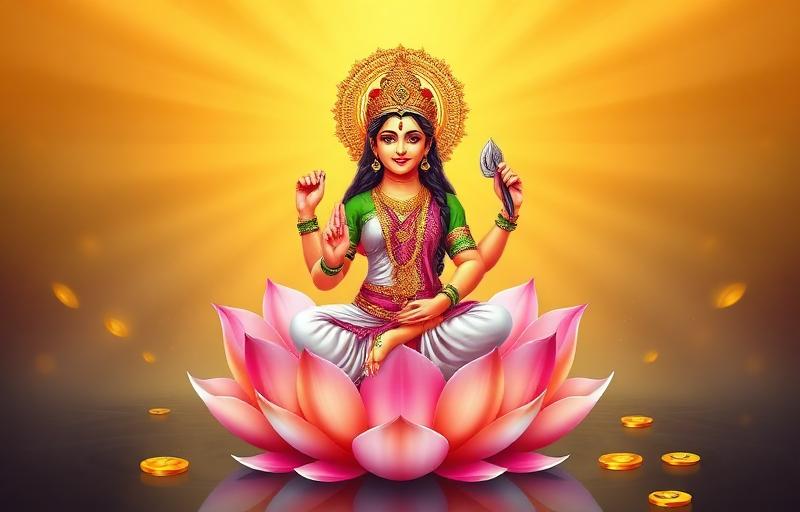
- The image of Yogeshwari, the presiding goddess, richly dressed and ornamented
- Subsidiary shrines within the complex
- The town around it, which carries a great deal more history than its size suggests
The name. Ambajogai combines Amba, the mother, with Jogai, the Marathi form of Yogeshwari. The town is named for the goddess, as Mumbai is for Mumbadevi.
Why she matters far beyond Beed district. Yogeshwari is the kuldevi of a very large number of Marathi families, spread across Maharashtra and well outside it.
That gives the temple a particular character. It is not primarily a destination for pilgrims making a general tour. It is a shrine that specific families are obliged to visit, at weddings, at births, and when a vow requires it.
A great many people who arrive here have never been before and will tell you, when asked, that their family has come from this place. Very often nobody in the family has lived in Marathwada for several generations.
The Wedding That Did Not Happen
The katha attached to Yogeshwari is one of the most widely told in Marathwada, and it explains her status.
As it is told:
- A marriage was arranged between Yogeshwari and Vaidyanath, the deity of Parali, about twenty five kilometres away
- Elaborate preparations were made, and an auspicious muhurat was fixed
- The wedding party was delayed. Accounts differ on why, with various tellings blaming the length of the preparations or a deliberate obstruction
- The muhurat passed before the party arrived
- The marriage did not take place
- Yogeshwari remained unmarried and stayed at Ambajogai
- In many tellings the food prepared for the wedding turned to stone, and features in the local landscape are pointed out as the remains
Why this story type recurs. A goddess whose marriage is prevented is a widespread Indian motif, and the best known instance is Kanyakumari at the southern tip of India, where the same structure appears, including the wedding provisions turned to sand.
What the motif accomplishes:
- It explains why a major goddess is worshipped as unmarried, without a consort in the sanctum
- An unmarried goddess retains her shakti undivided, and in this understanding is more powerful rather than less
- It preserves her independence. She is not an adjunct to a male deity and has no husband's temple to be secondary to
- It grounds the story in a specific landscape, with features that can be pointed at
This matters for how she is approached. A married goddess in the sanctum is generally approached with her consort. Yogeshwari is approached alone, and her devotees speak of her accordingly, in terms of a mother's authority rather than a wife's household.
Kuldevi to a Scattered People
The reason Ambajogai receives visitors from all over Maharashtra is the kuldevi relationship, and it is worth seeing how it works in practice.
What families do:
- A visit to the kuldevi is expected at a wedding, either before or soon after
- Many families bring a newborn for the first darshan and for naming or first hair cutting
- Vows made during difficulty are fulfilled here
- Some families make an annual or periodic visit regardless of occasion
- The bride in many communities is understood to take on her husband's kuldevi, so the obligation transfers at marriage
What happens when a family has moved. This is where the system shows its real function.
- Marathi families have dispersed enormously, to Mumbai and Pune, across India, and abroad
- The kuldevi does not move with them. It stays at Ambajogai
- The obligation is therefore an obligation to return, and it is generational
- Families keep the information, the village and the deity's name, sometimes for centuries after anyone lived nearby
Why that information survives. It is preserved in a few practical ways:
- In the wedding ritual itself, where the kuldevi is invoked
- In family records and in the memory of elders
- Through priests at the shrine, who in some cases maintain registers of the families who come
- Through the community networks that arrange marriages, where the kuldevi is part of what is exchanged
What this produces at the temple. On any given day at Ambajogai you will find families who have driven a long way for a specific ritual purpose, are performing something quite precise, and are then leaving. It gives the place a working, business like atmosphere quite unlike a general pilgrimage site, and it is one of the most interesting things about visiting a kuldevi shrine.
The Town's Literary History
Ambajogai has a claim in Marathi literary history that very few towns can match, and almost nobody visiting the temple knows about it.
Mukundraj:
- A figure generally placed in the twelfth century
- Author of the Vivekasindhu, a work of Vedantic instruction in Marathi
- Regarded by many as the first book written in Marathi, predating the Dnyaneshwari
- His samadhi is at Ambajogai
Why that claim matters. The question of which text is the first in a language is always contested, and Marathi's case is no exception. What is not in dispute is that the Vivekasindhu is very early, and that its existence puts Ambajogai at the beginning of one of India's major literary languages.
A town that produced philosophical prose in the vernacular in the twelfth century was doing something significant. That was the period when writing serious religious argument in a spoken language rather than Sanskrit was still a novel and slightly transgressive act, and it is the same impulse that produced the Dnyaneshwari a century later.
Dasopant:
- A sixteenth century saint associated with Ambajogai
- Remembered for an extraordinary volume of writing, including the Pasodi, a manuscript of enormous length written on cloth
- His samadhi is also here
What else the town holds:
- The Kholeshwar temple remains and other early medieval structures
- The Barakhambi, a twelve pillared structure
- Rock cut work in the vicinity
What this adds up to. Ambajogai is a small town in a district that is not on any tourist route, and it contains a major kuldevi shrine, the samadhi of a candidate for the first Marathi author, the samadhi of a prolific sixteenth century saint, and early medieval temple remains.
That combination is not unusual in India. What is unusual is how little of it is signposted.
Parali Vaijnath and the Pair
The katha ties Ambajogai to another shrine, and the two are worth visiting together for that reason.
Parali Vaijnath:
- About twenty five kilometres from Ambajogai, in the same district
- A Shiva shrine, counted by many as one of the twelve jyotirlingas, under the name Vaidyanath or Vaijnath
- The identification of the Vaidyanath jyotirlinga is disputed between this site and Deoghar in Jharkhand, and both are major shrines with long traditions
- The name Vaidyanath means lord of physicians, and the deity is associated with healing
The relationship between the two sites. In the katha, this is the groom who arrived too late. The two shrines therefore sit in a permanent relationship of a marriage that did not take place, and local usage refers to it easily.
What visitors should know:
- The two are close enough to see in one day
- They are very different in character. Parali is a major Shiva pilgrimage shrine with the crowds that implies. Ambajogai is a kuldevi shrine with a different rhythm
- Doing both in sequence makes the katha concrete in a way that reading about it does not
On the jyotirlinga dispute. Visitors sometimes want a ruling on whether Parali or Deoghar is the true Vaidyanath. There is no ruling to be had.
Both traditions are old, both are supported by textual readings, and both sites have been continuously worshipped for a very long time. Indian sacred geography contains a number of such double identifications, and the tradition has generally accommodated them without much anxiety.
The useful attitude is that this tells you something about how the jyotirlinga list works. It is a devotional scheme that different regions have applied to their own great shrines, and the overlaps are evidence of how seriously each region took it.
Visiting Ambajogai
Getting there
- Ambajogai, Beed district, Marathwada, Maharashtra
- Roughly 200 km from Aurangabad and about 250 km from Pune, by road
- Latur is the nearest major railway station, at about 50 km, with Parli Vaijnath also on the rail network
- Buses run from Latur, Beed, Nanded and Aurangabad. A car is easier if you want to see the town properly
Timings
- The temple keeps daily hours with aarti morning and evening. Check locally
- Kuldevi rituals for families are arranged through the temple priests
When to go
- October to March. Marathwada is very hot from April to June
- Margashirsha, when the temple's principal yatra is held and the town fills
- Navratri, both Chaitra and Ashwin
- Tuesdays and Fridays for the weekly observance
If you are coming as a family for kuldevi rites
- Contact the temple in advance to arrange the priest and the specific ritual
- Know what your family's observance actually is. Practices differ between families and it is worth asking elders before you travel rather than improvising on arrival
- Allow time. These rituals are not quick
What else to see in the town
- The samadhi of Mukundraj
- The samadhi of Dasopant
- The Kholeshwar temple remains
- The Barakhambi
- Ask locally. Very little is signposted and people are generally happy to direct you
Practical notes
- Dress conservatively
- Accommodation in Ambajogai is basic. Latur has better options
- Carry cash. Facilities are limited
Combining the visit
- Parali Vaijnath, twenty five kilometres away, for the other half of the katha
- Latur and Nanded, the latter with its own major shrine
- Aurangabad for Ellora and Ajanta, which is a separate trip in itself
A closing thought. Kuldevi shrines are the least documented and most visited category of temple in India. They do not appear in guidebooks because their devotees are not tourists and do not need directions. They are simply going home, to a place their family has not lived for four hundred years.
Frequently Asked Questions
Where is the Yogeshwari temple?+
At Ambajogai in Beed district, in the Marathwada region of Maharashtra. It is roughly 200 km from Aurangabad and 250 km from Pune, with Latur the nearest major railway station at about 50 km and buses running from Latur, Beed, Nanded and Aurangabad.
What is the katha of the lapsed wedding?+
A marriage was arranged between Yogeshwari and Vaidyanath of Parali, about twenty five km away, with an auspicious muhurat fixed. The wedding party was delayed, the muhurat passed before it arrived, and the marriage did not take place. Yogeshwari remained unmarried at Ambajogai, and in many tellings the wedding food turned to stone.
Why is an unmarried goddess significant?+
An unmarried goddess retains her shakti undivided and in this understanding is more powerful rather than less. She has no consort in the sanctum and no husband's temple to be secondary to, so she is approached alone, in terms of a mother's authority rather than a wife's household. Kanyakumari is the best known parallel.
Who is Yogeshwari kuldevi to?+
A very large number of Marathi families, spread across Maharashtra and well outside it. A visit is expected at a wedding, families bring newborns for first darshan and naming, and vows are fulfilled here. The obligation transfers at marriage in many communities, since the bride takes on her husband's kuldevi.
Who was Mukundraj?+
A figure generally placed in the twelfth century, author of the Vivekasindhu, a work of Vedantic instruction in Marathi regarded by many as the first book written in the language, predating the Dnyaneshwari. His samadhi is at Ambajogai, as is that of the sixteenth century saint Dasopant.
Is Parali or Deoghar the true Vaidyanath jyotirlinga?+
There is no ruling to be had. Both traditions are old, both are supported by textual readings, and both sites have been continuously worshipped for a very long time. Indian sacred geography contains a number of such double identifications and the tradition has generally accommodated them without much anxiety.
About the author
Anjali Mehta · Editor, M.A. Religious Studies
Anjali is the managing editor for Vandnaa and oversees the festival and vrat coverage. She holds an M.A. in Religious Studies and reviews every published article for accuracy, accessibility, and tradition-fidelity.
Meet the Vandnaa editorial team →