An Argument About What Matters
The story belongs to the Annapurna Ashtakam tradition and the devotional literature built up around the Annapurna shrine at Kashi, and it starts as a domestic argument rather than a cosmic battle, which is part of why it reads so differently from most Shiva-Parvati stories.
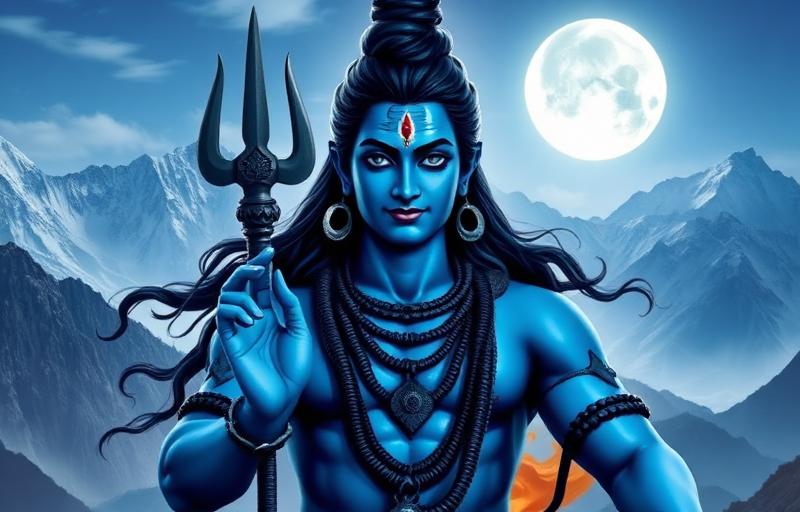
Shiva, in his role as the great ascetic for whom the entire material world is maya, an appearance laid over the one changeless reality, made a passing remark that food itself was included in that category: unreal, beneath serious notice, a distraction from the real work of consciousness turning toward itself.
Parvati did not accept the remark quietly. She held, and the story treats her position as correct rather than merely wifely stubbornness, that food is not separate from Brahman but is one of its direct expressions - annam, in the Taittiriya Upanishad's own language, is called Brahman, and every embodied being, gods included, depends on it to exist at all, however much philosophy someone practises.
Rather than argue the point further, she left Kailash. And with her went every source of nourishment in the three worlds: crops failed, kitchens went cold, and hunger reached every level of creation, from ordinary households up through the gods themselves, because the goddess who is the material basis of food had simply withdrawn from being present anywhere.
Even Shiva, whose whole claim was that this was all illusion beneath his notice, discovered he could not actually sustain a body without her.
The Kitchen at Kashi
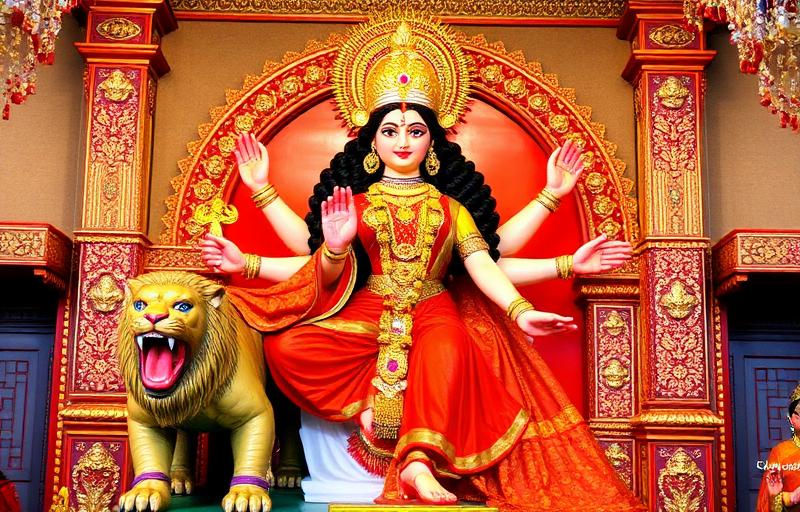
Parvati settled in Kashi, the city Shiva himself is said never to leave even during the periodic dissolution of the universe, and there she opened, in effect, a kitchen: she took the form of Annapurna, the one who is full of food, and began feeding whoever came to her, without condition.
Shiva, forced by the general starvation and by his own hunger to admit the point he had dismissed, went to Kashi himself. But he did not go as the lord of the universe demanding his share. He went as a mendicant, carrying a begging bowl, a kapala, and stood at Annapurna's door the way any wandering ascetic would, asking for alms.
She fed him. The texts are specific that this was not a symbolic gesture but an actual feeding, ladle to bowl, in a kitchen, and that in doing so she made her point completely: the yogi who claimed to have transcended the material world could not, in fact, sustain the very body his yoga depended on without the goddess he had just called unreal.
The reconciliation that follows is not framed as Shiva conceding defeat so much as both of them recognising that their two roles, renunciation and nourishment, consciousness and its material basis, are not actually opposed but are a single reality looked at from two directions - which is the specific philosophical point the Annapurna story is usually told to make, distinguishing it from stories that are primarily about romance or reconciliation for its own sake.
The Ladle Next to the Trishul
The Annapurna Devi Temple in Varanasi stands immediately beside the Kashi Vishwanath Temple, close enough that a single pilgrimage circuit usually covers both, and the physical closeness is itself a small, permanent statement of the story: the ascetic and the kitchen share a wall.
Annapurna is shown holding a ladle and a bowl of rice or kheer, actively serving rather than posed in stillness, and free food distribution, in the spirit of the goddess who fed without condition, remains a genuine practice associated with her worship in Kashi, not only a scriptural detail.
The Annapurna Ashtakam, attributed to Adi Shankaracharya, is the text most commonly recited at her shrine, and it repeatedly makes the same move the myth does: addressing her as both the giver of food and the ultimate reality itself, refusing to separate the two the way Shiva's original remark tried to.
For a household observance, the story is usually invoked around two related but distinct practices: not wasting food, treated as a direct offense against the goddess rather than a general good habit, and never turning away a hungry guest, since the story's entire tension exists because even the greatest ascetic in the universe had, eventually, to ask.
Reader Questions Answered
Where exactly is the Annapurna Temple in Kashi?+
It stands directly adjacent to the Kashi Vishwanath Temple in Varanasi, close enough that pilgrims commonly visit both in a single circuit, which the tradition treats as fitting given how the story links the two deities.
Is Annapurna considered a separate goddess from Parvati?+
No, she is understood as a specific form Parvati takes, associated with food and nourishment, in the same way Durga, Kali and Gauri are all recognised as forms of the same goddess rather than entirely separate beings.
What is the Annapurna Ashtakam?+
An eight-verse Sanskrit hymn attributed to Adi Shankaracharya, addressed to Annapurna, still the most widely recited text at her shrine and in household worship connected to food and abundance.
What does this story actually teach about renunciation?+
That renunciation of the material world and dependence on it are not opposites - even the ideal ascetic in the tradition needs food to sustain the body that practises yoga, which is why the story insists food itself is a form of the divine rather than something beneath a seeker's notice.
About the author
Anjali Mehta · Editor, M.A. Religious Studies
Anjali is the managing editor for Vandnaa and oversees the festival and vrat coverage. She holds an M.A. in Religious Studies and reviews every published article for accuracy, accessibility, and tradition-fidelity.
Meet the Vandnaa editorial team →