A Temple Built as a Chariot
The temple's architecture is its second distinguishing feature, and it is unusual enough that visitors notice it before they reach the sanctum.
The main shrine is built in the form of a ratha, a chariot, with wheels at the four corners and horses at the front. The design is deliberate and carries a specific meaning in the temple's own explanation, where the structure represents the chariot of the deity and the levels of the building correspond to the levels of the murti within.
Other features of the complex:
- The temple stands on Ratnagiri hill, with the Pampa river below and the coastal plain visible from the top
- The hill is reached by a flight of steps for those who wish to climb, and by road for those who do not
- A large vratam mandapam occupies much of the complex, built specifically to accommodate hundreds of families performing the ritual simultaneously
- Shrines to Kanaka Durga, Rama and Hanuman stand within the complex
- The Pampa river below is used for snan before the vratam by many families
The scale of the vratam mandapam tells you what this temple is for. Most temples are built around darshan, with space for people to move past a deity. Annavaram is built around a ritual that takes an hour or more and is performed sitting down, in large numbers, all day.
The Vratam: What Actually Happens
The Satyanarayana vratam is performed continuously at Annavaram, and understanding it explains why the temple functions the way it does.
The ritual, in its standard form:
- A couple performs it together, seated, usually with family members present
- The kalasha is established, the deity invoked, and the puja performed step by step under a priest's guidance
- The Satyanarayana katha is read, in five chapters, and this reading is the heart of the vratam
- Prasadam is prepared, traditionally a sweet preparation of rava or wheat flour with ghee, sugar and banana, and offered
- The vratam concludes with aarti and distribution of prasadam
At Annavaram, temple arrangements allow families to book a vratam slot, and the mandapam runs sessions through the day with priests assigned to groups of families.
What brings families here specifically:
- Marriage, either in thanksgiving after one or in prayer for one
- A new house, business or vehicle
- The birth of a child
- A vow made during a difficult period, completed here rather than at home
The vratam is deliberately open. It requires no initiation, no caste qualification and no advanced ritual knowledge, and the katha itself, which describes people of very different stations keeping and forgetting the vratam, makes that inclusiveness its explicit theme.
The Katha Read During the Vratam
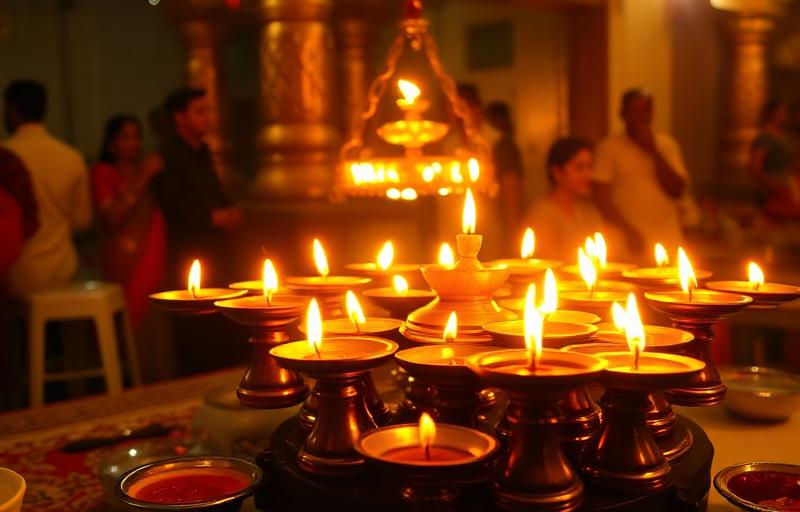
The Satyanarayana katha, read in five chapters, is one of the most widely heard narratives in Hindu households, and its structure is worth understanding.
The chapters move through a series of people who encounter the vratam:
- A poor brahmin to whom Narada, or the deity himself, first describes the vratam
- A woodcutter who overhears it, keeps it and prospers
- King Ulkamukh, who performs it and whose story links to the next
- A merchant and his family, whose promise to perform the vratam after a child is born, and their delay in doing so, forms the longest section
- The merchant's return voyage, in which forgetting the vow brings loss, and remembering it restores what was lost
The merchant's story is the part everyone remembers. He promises the vratam, receives what he asked for, then postpones it repeatedly. His ship is seized, his fortune vanishes, and only when the vow is finally kept does the situation reverse.
The moral is stated plainly in the text and is unusually blunt for a devotional narrative: keep the promise you made. Not the ritual for its own sake, not the offering, but the specific commitment given at a specific moment of need.
That is also why the katha ends by describing people of every station keeping the vratam successfully. The text is explicit that the rite belongs to everyone who is willing to keep their word.
Keeping the Vratam at Home
Most families who keep Satyanarayana Swamy will perform the vratam at home far more often than they will travel to Annavaram, and the home form is complete in itself.
The usual practice:
- Choose a day. Purnima is the most common, and Ekadashi, Sankranti and family occasions are also used. Many families keep it on the purnima following a new beginning.
- Clean the house and the puja space, and prepare a small mandap or platform for the kalasha
- Invite a priest, or perform it yourself with the katha book, which is what a large number of families do
- Read all five chapters of the katha aloud, with the family present. This is the part that should not be shortened.
- Prepare the prasadam, traditionally sooji or wheat halwa with ghee, sugar and banana, and offer it
- Distribute prasadam to everyone present and to neighbours, which the katha itself emphasises
The one instruction the tradition is firm about is the same one the katha teaches. If you promised a vratam, perform it. Delay is the failure the story warns against, not incorrect procedure.
For families who cannot arrange a full vratam, the customary alternative is to read the katha, offer a simple naivedya and distribute it, which the tradition accepts as a sincere keeping of the vow rather than as a lesser substitute.
Common Questions From Devotees
Who is the deity at Annavaram?+
Sri Veera Venkata Satyanarayana Swamy, a form of Vishnu, worshipped on Ratnagiri hill in Kakinada district of Andhra Pradesh. The form in the sanctum is worshipped in three levels, as Shiva below, Vishnu in the middle and Brahma above.
Why is the temple built like a chariot?+
The main shrine is built in the form of a ratha with wheels at the four corners and horses at the front, representing the chariot of the deity, with the levels of the structure corresponding to the levels of the murti within.
How is the Satyanarayana vratam performed?+
A couple performs it seated together, establishing the kalasha, invoking the deity, reading all five chapters of the Satyanarayana katha, offering the traditional sweet prasadam and concluding with aarti and distribution of prasadam.
Can the vratam be booked at Annavaram?+
Yes. Arrangements are made at the temple and sessions run through the day in a large vratam mandapam built for the purpose. Going early helps, especially on Purnima days, weekends and in the region's wedding seasons.
What is the main teaching of the Satyanarayana katha?+
That a promise made must be kept. The merchant's story, the longest section, turns on his repeated delay in performing the vratam he vowed, the losses that follow, and the restoration once the vow is finally fulfilled.
Can the vratam be done at home?+
Yes, and most families do. It is commonly kept on Purnima, performed with or without a priest, with all five chapters of the katha read aloud, the traditional prasadam prepared, and prasadam distributed to everyone present and to neighbours.
About the author
Pandit Ravindra Sharma · Vedic Rituals & Bhakti, 22+ years
Pandit Ravindra is the Vandnaa editorial team's resident specialist on aarti, chalisa, and daily devotion. He has performed home and temple pujas across Varanasi and Delhi for over two decades and contributes the bhakti-focused articles on this site.
Meet the Vandnaa editorial team →