The Temple on the Pamba
The Aranmula Parthasarathy temple stands on the bank of the Pamba in Pathanamthitta district, Kerala.
What is there:
- A temple in the Kerala style, with a walled compound and a stepped ghat down to the river
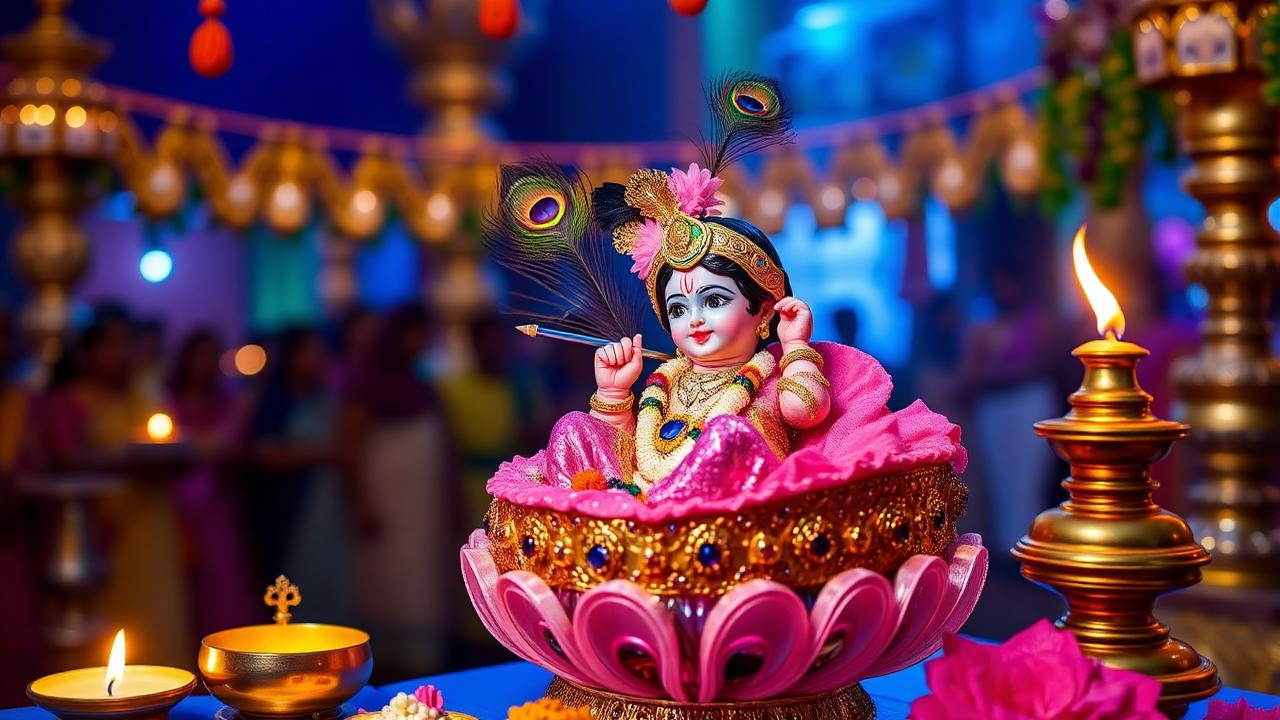
- The deity Parthasarathy, Krishna in the form he takes as Arjuna's charioteer
- Murals on the walls of the temple
- The Pamba immediately below, which is where most of what Aranmula is known for happens
Where it stands. Aranmula is one of the 108 Divya Desams, and it is among the important Vishnu temples of central Travancore.
The deity's name. Partha is Arjuna and sarathi is charioteer, so Parthasarathy is Krishna in the role he takes at Kurukshetra. It is the form in which he does not fight, holds no weapon, and drives.
What Aranmula is known for. Three things, and they are all unusual:
- The Uthrattathi Vallamkali, a snake boat event that is explicitly not a competition
- The vallasadya, a feast the oarsmen are served, which devotees request by singing
- The Aranmula kannadi, a metal mirror made nowhere else in the world
The Palliyodams
The boats at Aranmula are not sporting equipment, and the distinction is the whole point.
What a palliyodam is:
- A snake boat belonging to one of the karas, the villages along the Pamba, of which there are around forty eight
- The boat is understood to belong to the deity, not to the village
- It is built to a specification derived from tradition, and its construction and repair are ritual matters
- It is kept in a boat shed and is treated with the observances due to a shrine
- People remove footwear before entering the shed, and the boat is not casually touched
What happens at the Uthrattathi Vallamkali:
- It is held on the Uthrattathi asterism in the Onam season, generally in August or September
- The palliyodams of the karas row to the temple along the Pamba
- They are rowed by teams of oarsmen from their own village, singing vanchipattu, the boat songs
- They arrive at the temple and are received
- It is not a race. There is no winner and no prize
How this differs from the other boat races. Kerala has several famous snake boat competitions, of which the Nehru Trophy at Punnamada near Alappuzha is the best known.
Those are races. They are competitive, they are timed, teams train for them, and they are a major spectator event.
Aranmula's is a procession and an offering. The boats come to the deity. The distinction is maintained carefully and locals will correct a visitor who describes it as a race.
Why it matters. A hundred boats rowing hard in formation, with several thousand people singing, looks like a race to an outsider and is not one. Understanding that changes what you are watching. Nobody there is competing with anybody. They are all arriving at the same place, for the same reason, at the same time.
The Katha of the Escort
The boats exist because of a specific arrangement, and the katha explains it.
As it is told:
- A devotee, remembered as Mangattu Bhattathiri, undertook to supply the temple with the provisions for the Onam feast each year
- The provisions were sent by boat down the Pamba, in a vessel called the thiruvona thoni
- On one occasion the boat was threatened on the way, in some tellings by attack and in others by obstruction
- Thereafter the villages along the river sent escort boats to accompany the thiruvona thoni and see it safely to the temple
- Those escorts became the palliyodams, and the annual journey became the vallamkali
What that origin explains:
- Why the boats belong to the deity rather than to the villages. They are in his service
- Why it is not a race. They are escorting something, and an escort that competes with itself has failed
- Why there are so many of them. Every village along the route took a share of the duty
- Why the feast matters, since the whole arrangement began with a delivery of food
Why this is a good story. It has the shape of a real administrative arrangement rather than a miracle.
Somebody promised to supply a temple. The supply route was unsafe. Neighbouring villages organised protection. The protection became an institution, and the institution became a festival that has run for centuries.
That is how a great many Indian festivals actually began, and Aranmula happens to have kept the reason legible instead of losing it behind a divine origin.
Singing for Lunch
The vallasadya is the part of Aranmula that visitors find most delightful, and it has a structure worth explaining.
What it is:
- A feast served to the oarsmen of the palliyodams at the temple
- It is elaborate, running to a very large number of items served on a banana leaf
- It is sponsored by devotees, who offer it as a vow fulfilment, and the season runs across a number of days with different sponsors
How the food is requested. This is the part that is unlike anything else.
- The oarsmen do not simply eat what is served
- They sing for each dish, in vanchipattu, the boat song metre
- A verse is sung requesting a particular item, and it is then brought
- The requests continue, item by item, with the singing carrying the meal
- The exchange is playful, and the singing is expected to be good
What that produces. A feast that takes a long time, in which the food arrives in response to poetry, sung by men who have just rowed a boat a considerable distance.
Why this is more than a charming custom. It inverts the usual relationship at a temple feast.
- Normally the devotee is fed as a recipient of the deity's grace, and takes what is given
- Here the oarsmen are in the deity's service, having brought his boats, and they are entitled to ask
- The asking is done in verse, which makes it an offering as well as a request
The vanchipattu metre itself. Boat songs from this tradition have a distinctive rhythm, matched to rowing, and the form has been used for literary composition as well. The best known example is Ramapurathu Warrier's Kuchela Vritham Vanchipattu, composed in this metre.
That a rowing rhythm became a literary metre, and that the metre is still used to order lunch, is the kind of continuity that is very hard to find anywhere else.
The Aranmula Mirror
Aranmula produces an object made nowhere else, and it is worth understanding what makes it different.
What the Aranmula kannadi is:
- A mirror made of polished metal, not of glass
- The reflecting surface is the front surface of the metal itself
- It is made by a small number of families at Aranmula, and the alloy composition is a closely held family secret
- It has a Geographical Indication registration, which protects the name
- It is traditionally set in a brass frame with a handle, and is one of the ashtamangalyam, the eight auspicious items used in Kerala ceremonies
Why front surface matters. This is the technical point and it is genuinely interesting.
- An ordinary glass mirror has its reflective coating on the back of the glass
- Light therefore passes through the glass, reflects, and passes back through, and there is a slight secondary reflection from the glass surface itself
- The result is a very faint double image and a small loss
- A front surface mirror has no glass in the path. The image is formed at the surface
- The reflection is therefore undistorted by any intervening layer
What this means in practice. Front surface mirrors are used in scientific and optical instruments for exactly this reason, and are difficult to make and maintain because the surface is exposed.
That a family craft tradition in Kerala arrived at a front surface metal mirror, and has maintained the alloy and the polishing technique across generations, is a genuine technical achievement.
Buying one. They are expensive, they are made in small numbers, and there are imitations.
- Buy at Aranmula itself, from the making families or the registered outlets
- Look for the GI mark
- A real one is heavy for its size and the reflection is noticeably different from a glass mirror when you look closely
- They tarnish and require the specific polishing the makers advise
Why the temple and the mirror go together. The mirror is one of the eight auspicious items and is used in Kerala rituals and weddings, so a temple town producing them is not a coincidence of geography. The demand and the craft grew up together.
Visiting Aranmula
Getting there
- Aranmula, Pathanamthitta district, Kerala, on the Pamba
- About 10 km from Chengannur, which has the nearest railway station
- Roughly 100 km from Kochi and 120 km from Thiruvananthapuram, both with airports
- Buses and autos run from Chengannur and Pathanamthitta
Timings
- The temple opens early, before dawn, with morning and evening sessions and a long midday closure. Check locally
When to go
- October to February for the most comfortable weather
- Uthrattathi Vallamkali, in the Onam season, generally August or September, for the palliyodams. Confirm the date, since it follows the asterism
- The vallasadya season, which runs across a number of days and is worth timing for if you want to see the singing
- Onam generally, when the whole state is at its most active
If you go for the vallamkali
- It is on a river, and the viewing areas along the bank fill early
- Arrive well ahead and take a position on the bank rather than trying to move once it starts
- Carry water and sun protection. It is hot and humid at that time of year
- Do not attempt to get on the water in a small boat to watch. Crowded rivers during these events are dangerous and there have been accidents in Kerala at boat events
- Keep children well back from the bank edge
- Follow the organisers and police
Dress and conduct
- Kerala temple rules apply. Men must remove upper garments and wear a mundu inside, and trousers and shirts are not permitted
- Women should wear a sari, set mundu or salwar
- Non Hindus are not permitted inside many Kerala temples, and the rule is applied. Check before travelling if it affects your party
- Photography inside is not permitted. The riverside events are a different matter
The mirror
- Visit the workshops if they are open to visitors, and buy from a registered source with the GI mark
- Expect it to be expensive, and expect a wait if you want a larger one
Combining the visit
- Chengannur and its Mahadeva temple
- Sabarimala pilgrims pass through this district in the season, which changes the character of the area entirely between November and January
- Alappuzha and the backwaters, about an hour away
- Pathanamthitta town
A closing thought. Kerala's snake boats are usually presented as a sport, filmed from helicopters, with commentary about which crew is ahead. At Aranmula nobody is ahead. Forty eight villages row a hundred boats to the same doorstep on the same afternoon, and then sit down and sing until somebody brings them lunch.
Quick Answers
Why is the Aranmula boat event not a race?+
Because the palliyodams belong to the deity and are escorting rather than competing. They row to the temple along the Pamba and are received, with no winner and no prize. The distinction is maintained carefully and locals will correct a visitor who describes it as a race, unlike the competitive Nehru Trophy at Punnamada.
What is a palliyodam?+
A snake boat belonging to one of the karas, the villages along the Pamba, of which there are around forty eight. The boat is understood to belong to the deity rather than the village, is built to a traditional specification, is kept in a boat shed treated with the observances due to a shrine, and is not casually touched.
What is the katha behind the boats?+
A devotee remembered as Mangattu Bhattathiri undertook to supply the temple with provisions for the Onam feast each year, sent by boat down the Pamba. When the boat was threatened on the way, the villages along the river sent escort boats to see it safely to the temple, and those escorts became the palliyodams.
What is the vallasadya?+
A feast served to the oarsmen at the temple, sponsored by devotees as vow fulfilment. The oarsmen do not simply eat what is served but sing for each dish in vanchipattu, the boat song metre, requesting a particular item in verse, which is then brought. The exchange is playful and the singing is expected to be good.
What makes the Aranmula mirror special?+
It is made of polished metal rather than glass, with the reflecting surface being the front surface of the metal itself. An ordinary glass mirror has its coating on the back, so light passes through glass and back, giving a faint double image. A front surface mirror has no glass in the path, so the reflection is undistorted.
What should I be careful about at the vallamkali?+
It is on a river and the viewing areas fill early, so arrive well ahead and take a position rather than moving once it starts. Carry water and sun protection since it is hot and humid then. Do not attempt to get on the water in a small boat to watch, keep children well back from the bank edge, and follow the organisers and police.
About the author
Pandit Ravindra Sharma · Vedic Rituals & Bhakti, 22+ years
Pandit Ravindra is the Vandnaa editorial team's resident specialist on aarti, chalisa, and daily devotion. He has performed home and temple pujas across Varanasi and Delhi for over two decades and contributes the bhakti-focused articles on this site.
Meet the Vandnaa editorial team →