Who Baba Sodal Ji Is
Baba Sodal ji is a child deity worshipped at a temple beside the Sodal Sarovar in Jalandhar, Punjab. Devotees address him as a bal roop deity, a divine presence in the form of a small child, and families across Punjab, especially of the Chaddha lineage, revere him as their kul devta.
Unlike most Punjabi Hindu devotion, which travels outward to the Devi shrines of the hills, this one stays at home. The shrine is inside the city, the mela is a city event, and the devotion is shaped around family memory rather than pilgrimage.
Three things define him for devotees:
- He is approached as a child, which changes the tone of the prayer. Devotees speak to him plainly, promise small things and bring toys, sweets and clothes.
- He is a family deity, invoked at births, weddings and mundan ceremonies, and named in the family's list of deities before other worship begins.
- He is tied to a specific place, the sarovar where his katha unfolded, which is why the annual visit matters more here than daily ritual.
The Katha of Baba Sodal
The katha told at the temple is short and, like most folk kathas, carries its meaning in the ending rather than in a long narrative.
A child named Sodal, born into a Chaddha family of the city, followed his mother to the pond where she had gone to wash clothes. He kept troubling her while she worked, and in a moment of irritation she scolded him and told him to go away.
The child slipped into the pond and did not come back. When his mother called for him in grief, tradition says he appeared before her in the form of a nag, told her that he was leaving the human form, and gave her one instruction: that he would remain present at that spot, and that whoever remembered him there with a true heart would be looked after.
The family built a small shrine at the sarovar, and over generations the worship spread beyond the lineage to the whole city and then across Punjab.
Devotees draw two lessons from the katha that are repeated at the shrine. The first is a warning about words spoken to a child in anger. The second is the reassurance that the deity chose to stay rather than to punish.
The Anant Chaturdashi Mela
The Baba Sodal mela is held every year on Anant Chaturdashi, in Bhadrapada, the same day on which Ganpati visarjan takes place in western India. It is among the largest single day gatherings in Punjab.
What happens on the day:
- Families arrive from across Punjab, and many from abroad plan their India trip around it
- Devotees take a dip or sprinkle water from the Sodal Sarovar before darshan
- Mundan ceremonies are performed in large numbers, since many families vow the child's first haircut to Baba Sodal
- Offerings of sweets, toys, clothes and coins are made, and prasad is distributed continuously
- Community langars and bhandaras run through the day across the surrounding streets
The mela is also a social occasion in a way that is specific to Punjab. Extended families meet here once a year, marriages are discussed, and the visit is treated as a report to the deity on the year that has passed. For many families settled in Canada, the United Kingdom or Australia, the Sodal mela is the fixed point that brings them back to Jalandhar.
How Devotees Keep His Worship
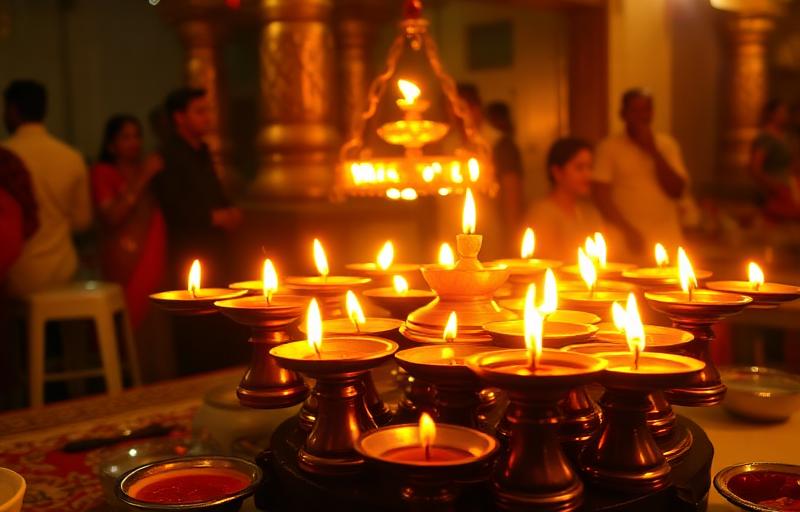
Worship at Baba Sodal is simple and unstructured compared to a large temple, and that is part of its character.
- The vow, or sukhna, is the centre of the practice. A family asks for something specific - a child's recovery, a marriage, a job, a safe journey - and promises a visit, a mundan, a langar or a fixed offering when it is fulfilled.
- Prasad is usually patasha, laddoo, or sweets bought from the shops around the sarovar
- Water from the sarovar is sprinkled on children by many families as a blessing
- Toys and children's clothes are offered because the deity is a child, and these are often given afterwards to children in need
- Bhandara or langar is the most common way of completing a vow, and families frequently sponsor one on the mela day
Daily worship at home, where families keep it, is a lamp on Sundays and the child deity's name taken along with the household's other deities. Punjabi Hindu families that keep Baba Sodal as kul devta also complete a visit before major life events, in the same way other families visit their kuldevi in the hills.
Where Baba Sodal Fits in Punjab's Hindu Devotion
Punjabi Hindu devotion has a distinct shape, and Baba Sodal sits inside it as the local, city bound element.
- The Devi yatra - families from Punjab traditionally travel to the Devi shrines of the neighbouring hills, including Vaishno Devi in Jammu, and Chintpurni, Jwala ji, Naina Devi, Chamunda Devi and Brajeshwari in Himachal, often covering several in one trip
- The city temples - Devi Talab Mandir in Jalandhar with its ancient Shakti Peeth association, and Durgiana Mandir in Amritsar
- The Ram connection - Ram Tirath near Amritsar, associated with Valmiki's ashram and the birth of Luv and Kush
- The local kul devta shrines - Baba Sodal in Jalandhar being the largest, with smaller family shrines across Doaba and Majha
What holds these together is the Punjabi household habit of completing a vow physically. Devotion here is measured in journeys made and langars served rather than in daily ritual length, and Baba Sodal's mela is the clearest example of that instinct.
Visiting Sodal Mandir
The temple is in the Sodal area of Jalandhar, close to the old city, and is open through the year rather than only on mela day.
- Best time for a quiet darshan - any weekday morning outside Bhadrapada. The shrine is calm and the sarovar area is uncrowded.
- Mela day - Anant Chaturdashi, when the whole area is closed to normal traffic and the crowd runs into lakhs. Arrive very early, keep valuables minimal and plan for long walking distances.
- What to carry - sweets or patasha, a small offering of clothes or toys if you are completing a vow, and a cloth bag for prasad
- With children - the shrine is well suited to family visits, and mundan arrangements are available at the temple on mela day
- Nearby - Devi Talab Mandir is a short drive away and is usually visited on the same trip
A practical courtesy: since this is a child deity, devotees speak softly and avoid crowding the sanctum, and families with vows are usually allowed ahead. It is normal here to let someone completing a mundan or a long promised visit go first.
Common Questions From Devotees
Who is Baba Sodal ji?+
Baba Sodal ji is a child deity worshipped at a temple beside the Sodal Sarovar in Jalandhar, Punjab. He is revered as a kul devta by many Punjabi Hindu families, particularly of the Chaddha lineage, and by devotees across the state.
When is the Baba Sodal mela held?+
The mela is held every year on Anant Chaturdashi in the month of Bhadrapada. It is one of the largest single day religious gatherings in Punjab, and many families abroad plan their visit to India around it.
What is the katha of Baba Sodal?+
Tradition says the child Sodal followed his mother to the pond, was scolded in a moment of irritation, and disappeared into the water. He then appeared in the form of a nag, told his mother he was leaving the human form, and promised to remain present at that spot for those who remember him.
Why are mundan ceremonies done at Baba Sodal?+
Many families vow a child's first haircut to Baba Sodal when praying for the child's health or birth. Mundan is therefore performed in large numbers at the temple, especially on the mela day.
What is offered to Baba Sodal ji?+
Sweets and patasha, toys and children's clothes since he is worshipped as a child, coins, and the sponsoring of a langar or bhandara when a vow is fulfilled.
Can the temple be visited outside the mela?+
Yes. The temple is open through the year and weekday mornings are calm, which many families prefer for a quiet darshan and for completing vows without the mela crowd.
About the author
Anjali Mehta · Editor, M.A. Religious Studies
Anjali is the managing editor for Vandnaa and oversees the festival and vrat coverage. She holds an M.A. in Religious Studies and reviews every published article for accuracy, accessibility, and tradition-fidelity.
Meet the Vandnaa editorial team →Explore on Vandnaa
Related Articles
Devi Talab Mandir, Jalandhar: The Temple of the Sacred Tank
6 min read

Kuldevta / Kuldevi - How to Find Your Family Deity, Why It Matters & Worship Vidhi
10 min read
Chintpurni Temple - Chhinnamastika Shakti Peeth Significance & Darshan
9 min read
Naina Devi Temple - Sati's Eyes Shakti Peeth Significance & Darshan
8 min read