The History Behind Mumbai's Govinda Tradition
Dahi Handi is Maharashtra's living re-enactment of one of Krishna's most beloved childhood mischiefs, and nowhere is it performed with more energy than in Mumbai.
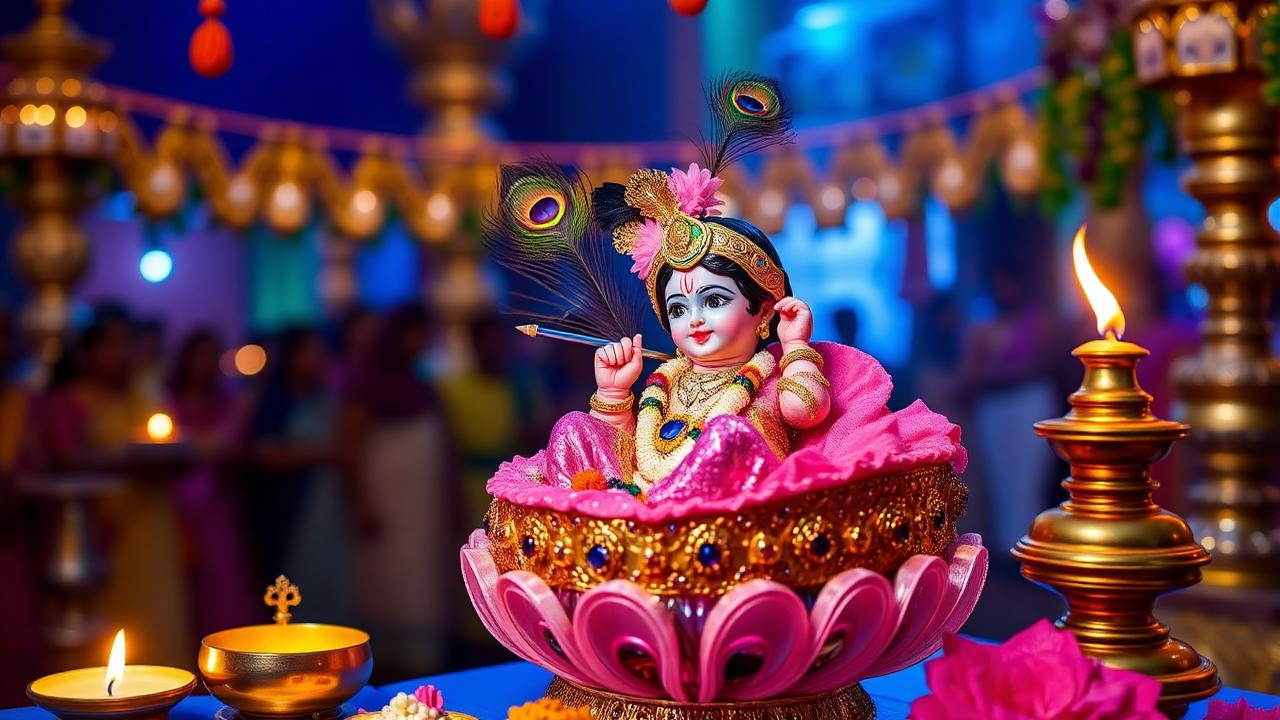
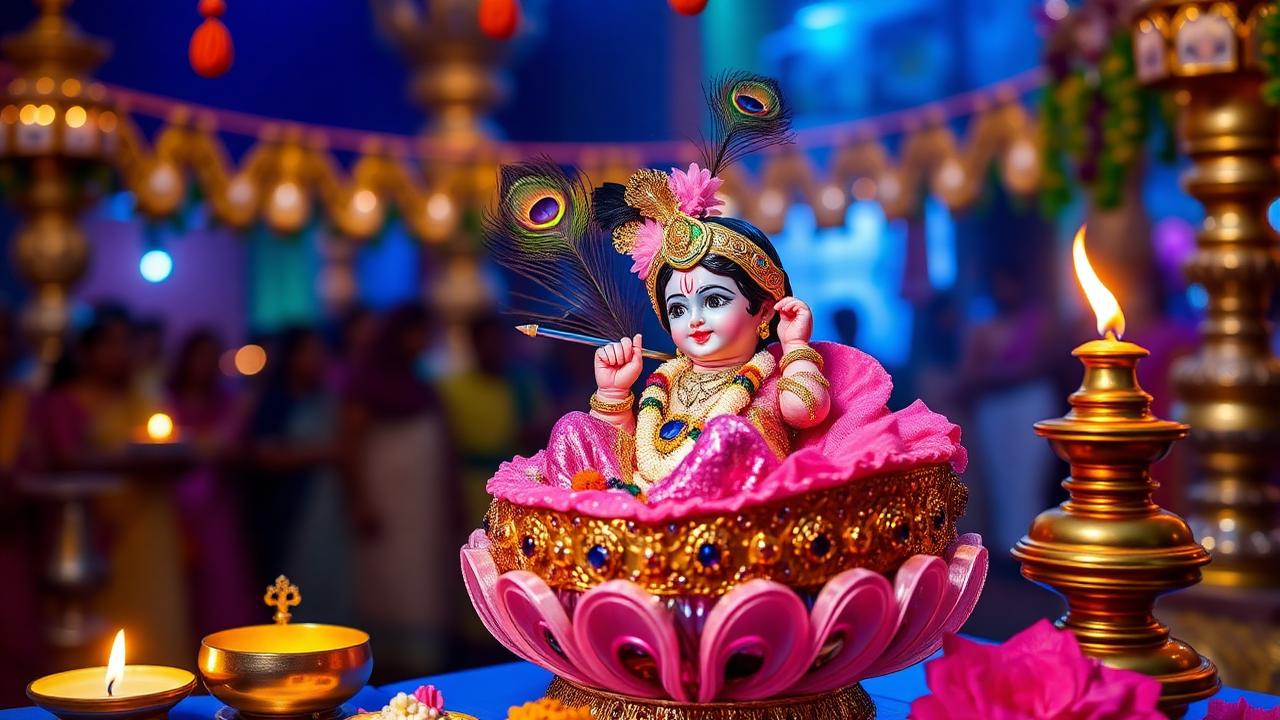
As a child in Gokul, young Krishna and his friends were notorious for stealing fresh butter and curd that women hung in earthen pots (handis) high out of children's reach, precisely to keep it safe from him. Undeterred, Krishna would form a human pyramid with his friends, climbing on each other's shoulders to reach and break the pots, earning him the affectionate names Makhan Chor (butter thief) and later Govinda, protector of cows.
This playful defiance of an obstacle deliberately placed out of reach became, over generations, a full-blown community sport. The Mumbai version of Dahi Handi as we know it today, with organized teams, height competitions and prize money, really took shape through the 20th century, growing rapidly from the 1970s and 80s onward as neighbourhood mandals (community groups) began competing against each other for the tallest human pyramid and the richest prize handi.
By the 1990s and 2000s, Dahi Handi in Mumbai had evolved into a genuine city-wide spectacle, drawing political patronage, corporate sponsorship, and media coverage rivaling any major sporting event. Prize money for a single handi can run into lakhs of rupees at the most competitive events, and top govinda pathaks (teams) train for months, much like an amateur sports league.
What makes Mumbai's version distinct from Dahi Handi elsewhere in India is this scale and organization - it is simultaneously a devotional reenactment and a genuinely competitive, spectator sport with its own local celebrity teams.
How Modern Govinda Mandals Organize Dahi Handi
Today's Dahi Handi in Mumbai is run with the logistics of a small sporting tournament, coordinated by hundreds of local govinda mandals and pathaks (teams) across the city.
Team formation and practice: Most established pathaks begin practising weeks before Janmashtami, often on a local ground or gymkhana, working on the physical technique of building stable human towers, usually four to nine layers (thars) high. Team sizes can range from 15-20 members for smaller pyramids to 40+ for the tallest attempts.
Registration with organizers: Teams register in advance with the mandal or sponsor hosting a particular handi, since the most famous handis attract dozens of competing pathaks and have limited slots and time windows on the day.
The handi itself: A clay or copper pot filled with curd, milk, dry fruits and sometimes a symbolic prize (cash, gold coins, or a two-wheeler for the biggest events) is suspended between buildings or on a rig, typically 20 to 40 feet above the street, though very famous handis can go higher.
Judging criteria: Prize money is usually awarded based on a combination of the height/number of layers successfully formed, speed of formation, and whether the team broke the handi cleanly. Some events have separate categories for the tallest pyramid versus the fastest formation.
Sponsorship and prize pools: Political parties, local businesses, television channels, and even film celebrities have historically sponsored major Mumbai handis, with total prize money across a single day's events in the city running into crores in a big year.
Music and atmosphere: Loud Bollywood and folk dance numbers, water sprayed on the crowd and climbers by fire trucks (partly for cooling, partly for tradition), and huge crowds of spectators create a carnival-like atmosphere around each handi site through the afternoon and evening.
Understanding the Human Pyramid (Thars)
The human pyramid at the heart of Dahi Handi is a genuine feat of coordinated strength and balance, built in distinct layers called thars.
How the pyramid is built: The heaviest, strongest members form the base layer (first thar), standing shoulder to shoulder in a tight circle or square formation. Lighter members climb onto their shoulders to form the second thar, and so on, with the lightest and most agile member, usually a young teenager, climbing to the very top to break the handi.
Why height matters so much: Each additional thar dramatically increases both the difficulty and the prize money at stake. A three or four-thar pyramid is common for smaller neighbourhood events, while the most competitive Mumbai handis attempt eight or nine thars, a genuinely difficult athletic achievement requiring real strength, core stability and trust between team members.
The role of the "topper": The final climber, who scales the completed pyramid to strike the pot, is often the smallest and lightest team member, chosen specifically for low body weight relative to the strain it places on the layers below.
Formation time: Top teams can build and break a seven or eight-thar pyramid in under a minute of actual climbing, a speed that comes only from months of repeated practice and very precise foot and hand placement on each other's shoulders and thighs.
Why it sometimes collapses: Wet, slippery conditions from the water sprayed by fire trucks and crowds, fatigue after multiple pyramid attempts at different handis in one day, and inexperienced participants are the most common causes of a pyramid toppling mid-formation, which is exactly why the safety rules in the next section matter so much.
Safety Rules and Regulations You Should Know

Human pyramids climbing several storeys into the air are inherently risky, and after a string of serious injuries in past years, Mumbai's Dahi Handi is now governed by specific safety regulations that every participant and organizer is expected to follow.
Bombay High Court age and height guidelines: Following petitions over child safety, courts have at various points directed that participants be at least 18 years old, with handi heights and related restrictions periodically reviewed and adjusted by state authorities, especially concerning children in pyramids.
Mandatory safety gear: Many organized events now require or strongly encourage helmets for the top two or three thars, and safety nets or cushioned mats spread below the pyramid to cushion falls.
Medical readiness: Larger handi events are required to have an ambulance and first-aid team on standby at the site, with several organizers now also arranging trained physiotherapists for immediate injury assessment.
Restrictions on alcohol: Consumption of alcohol by participants, especially those climbing, is prohibited at organized events, both for safety and in keeping with the day's devotional character.
Crowd barricading: Police typically cordon off the immediate pyramid area to prevent spectators from being struck by falling participants or the pot itself once broken.
What families and participants should personally check before joining a pathak:
- Confirm the team has practised specifically for the thar height being attempted, not just shown up on the day
- Ask whether the organizing mandal provides any insurance or medical cover for participants
- Avoid joining a pyramid attempt after consuming heavy food or in fatigue from multiple handis already attempted that day
- Children and first-time participants should stick to lower thars, never the top
These precautions exist because the same enthusiasm that makes Dahi Handi so thrilling to watch is exactly what can make it dangerous without proper preparation.
Famous Dahi Handi Events Across Mumbai
Mumbai's Dahi Handi map spans the entire city, but certain neighbourhoods have built decades-long reputations for hosting the biggest, most competitive events.
Worli and Lalbaug-Parel: Historically among the most prominent handi hubs, drawing large pathaks and significant prize pools, partly due to the strong mandal culture already established in these areas around Ganesh Chaturthi celebrations.
Dadar and Dahisar: Known for hosting some of the tallest pyramid attempts in the city, with several govinda pathaks from these areas developing strong competitive reputations over the years.
Thane: Just outside Mumbai proper, Thane has grown into one of the most active Dahi Handi districts in the wider metropolitan region, with numerous handis held across its neighbourhoods on the same day.
Vasai-Virar and other extended suburbs: As Mumbai's population has spread outward, so has the scale of Dahi Handi celebrations, with well-organized events now common well beyond the traditional city core.
What to expect if you go to watch:
- The best viewing windows are typically mid-morning through late afternoon on the day after Janmashtami, when most major handis are scheduled
- Expect heavy traffic and crowd density near major venues; public transport or being dropped off nearby is more practical than driving
- Water is sprayed liberally near active handi sites by fire trucks and crowds, so keep phones and valuables protected if standing close
- Many venues have designated spectator areas kept separate from the pyramid zone for safety
Whether you're watching from a rooftop, a nearby balcony, or street level behind the barricades, the collective roar when a pyramid successfully breaks a handi is something photographs rarely capture fully.
🎊 Track Janmashtami and Dahi Handi dates, and set festival reminders, in the Vandnaa app.
Govinda Culture Beyond Mumbai
While Mumbai has become synonymous with Dahi Handi's competitive, spectator-sport version, the Govinda tradition has meaningful roots and variations across other parts of Maharashtra and India too.
Pune: Pune's Dahi Handi culture is nearly as prominent as Mumbai's, with its own set of established pathaks and mandal rivalries, often featuring strong participation from local college students and youth groups.
Nashik and other Maharashtra towns: Smaller-scale but equally enthusiastic celebrations happen across Maharashtra's towns and cities, usually organized at a neighbourhood or temple level rather than the large sponsored events seen in Mumbai and Pune.
Gujarat: Dahi Handi is celebrated with similar human-pyramid traditions, sometimes called "Handi Fod," particularly in Vaishnav-dominated communities, though generally at a smaller community scale than Maharashtra's competitive circuit.
North India: In Mathura, Vrindavan and other Krishna-associated towns in Uttar Pradesh, the emphasis stays closer to the devotional origin story, with handi-breaking as one part of a broader day of temple celebration rather than the standalone competitive spectacle it has become in Mumbai.
Overseas Indian communities: ISKCON temples and Hindu community centres in cities with large diaspora populations, including in the US, UK and parts of the Middle East, now organize their own smaller-scale Dahi Handi events, usually with a stronger emphasis on the devotional and community aspects than the competitive prize-money angle.
What unites all these versions, from a modest temple courtyard to a crore-rupee Mumbai handi, is the same underlying story: a community coming together, quite literally, to reach for something sweet that was deliberately placed just out of reach.
Frequently Asked Questions
When is Dahi Handi 2026 celebrated in Mumbai?+
Dahi Handi is traditionally celebrated the day after Janmashtami. With Janmashtami 2026 falling on Friday, 4 September, most Mumbai Dahi Handi events, including the major competitive handis, are held on Saturday, 5 September 2026.
Is there a minimum age to participate in a Govinda pyramid?+
Following Bombay High Court directions on participant safety, organized events generally require participants to be at least 18 years old, particularly for the upper thars of a pyramid. Individual mandal rules can vary, so it is worth checking directly with the organizing pathak before joining.
How tall can a Dahi Handi pyramid get, and is it dangerous?+
Competitive Mumbai pyramids can reach eight or nine thars (layers), several storeys tall. It carries genuine physical risk, which is why organized events now use safety nets, helmets for top climbers, and on-site medical teams. Participants should only attempt height levels their team has specifically practised.
Why is water sprayed on Govinda participants during Dahi Handi?+
Water is sprayed, often by fire trucks, partly to help cool participants during physically intense pyramid formation in Mumbai's humid early-September weather, and partly as a long-standing festive tradition that adds to the carnival atmosphere. It does make the ground and grip more slippery, which is one reason safety precautions have become stricter.
Can tourists or visitors watch Dahi Handi events in Mumbai?+
Yes, Dahi Handi is a public street celebration and visitors are welcome to watch from designated spectator areas. Popular spots include Worli, Lalbaug-Parel, Dadar and Thane. Expect large crowds, heavy traffic and loud music, so plan to arrive early and keep to marked viewing zones for safety.
How is Mumbai's Dahi Handi different from the tradition celebrated elsewhere in India?+
The devotional core, re-enacting Krishna's butter-stealing childhood, is the same everywhere. What makes Mumbai distinct is the scale of organization: registered competitive teams, large cash prizes, corporate and political sponsorship, and city-wide media coverage, turning a devotional ritual into one of Maharashtra's most-watched annual spectacles.
About the author
Pandit Mahesh Trivedi · Festival Traditions & Panchang
Pandit Mahesh leads the festival-date and Panchang content on Vandnaa. He cross-references multiple regional panchangs (Drik, Vaishnava, Bengali, Marathi) for every festival date published on the site.
Meet the Vandnaa editorial team →