What it is and when it falls
Durga Puja is Bengal's grandest festival, celebrated over ten days in the Hindu month of Ashwin, usually falling in the autumn season. In 2021, this centuries-old celebration received a rare honour when UNESCO inscribed it on its Representative List of the Intangible Cultural Heritage of Humanity, recognising it as an outstanding example of community participation in a living tradition.
For Kolkata, this recognition simply confirmed in international terms what devotees had always known, that Durga Puja is not merely a religious event but a shared civilisational celebration binding the entire city together.
Katha and origin
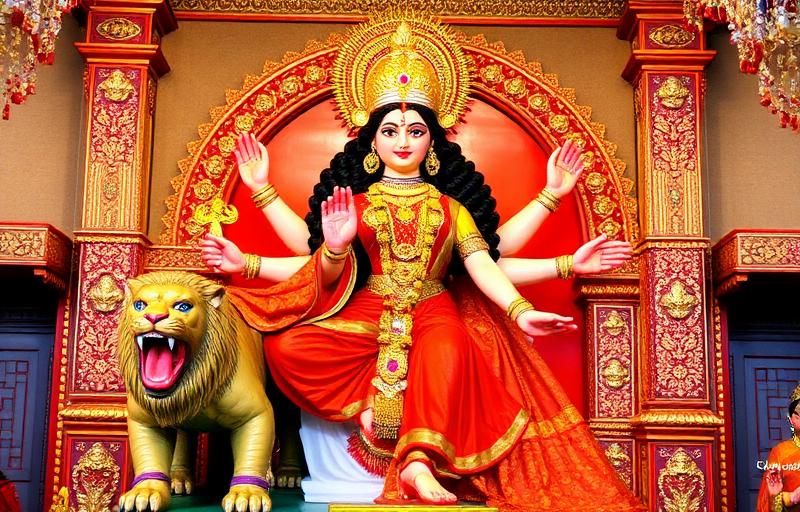
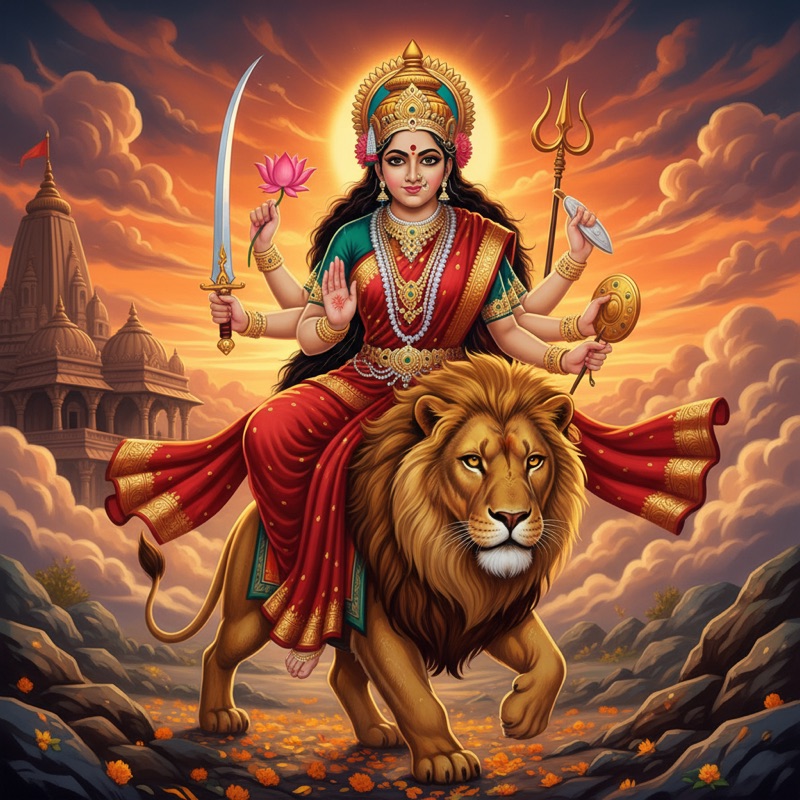
The festival celebrates the Devi Mahatmya's account of Durga's battle with Mahishasura, the shape-shifting buffalo demon whom no god alone could defeat, so all the gods combined their energies to create the Goddess, arming her with their weapons for the fight. Her victory on Vijayadashami is celebrated as the eternal triumph of good over evil.
In Bengal, the festival is also deeply personal, imagined as Durga's annual visit to her parental home with her children Lakshmi, Saraswati, Ganesha and Kartikeya, before she returns to Kailash with her husband Shiva.
Rituals and vidhi
The festival's core days, Shashthi through Dashami, follow a set rhythm: bodhan invokes the goddess into the clay image, Saptami, Ashtami and Navami bring daily puja, anjali and the dramatic Sandhi Puja at the exact junction of Ashtami and Navami, and Dashami closes with sindoor khela and the emotional immersion of the idol.
- Kumartuli's artisans spend months hand-crafting the clay idols each year
- Pran pratishtha rituals are believed to invoke the goddess's living presence into the image
- Dhunuchi dance and dhak drumming mark the festival's most electric moments
The UNESCO recognition and its context

UNESCO's citation praised Durga Puja for the way it transcends religion, art, and community, noting how pandal-hopping brings together people of every background in shared celebration, and how the festival supports the livelihoods of artisans, decorators, lighting designers and performers across Bengal. Each year, Kolkata's pandals also become spaces of creative artistry, with themes ranging from mythological to deeply contemporary.
This recognition has strengthened global appreciation for Bengal's devotional and artistic traditions, while devotees themselves continue to experience the festival first and foremost as an intimate encounter with the Mother.
Mantras and bhog
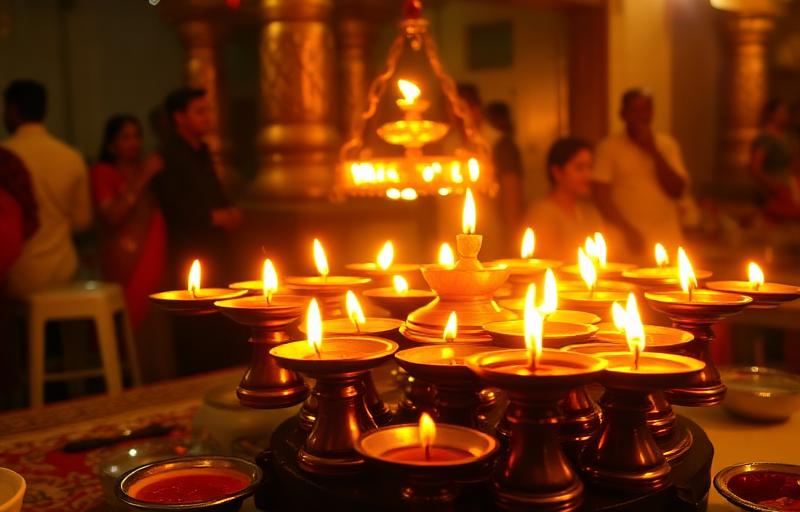
Through the festival, priests and devotees recite verses from the Devi Mahatmya during Chandipath, with Ya Devi Sarvabhuteshu Shakti Rupena Samsthita echoing through pandals as a reminder that the Mother resides as strength within every being. Bhog offerings of khichuri, labra, chutney and payesh are prepared and shared freely, often feeding thousands at large community pandals.
This shared meal, offered first to the goddess and then distributed among all present regardless of status, is considered as sacred as the puja itself.
The takeaway
Durga Puja's UNESCO recognition is, in the end, simply a global acknowledgment of what Bengal has always practised, that devotion grows richer when shared, and that art, community and faith can flow from the very same well. Every idol immersed on Dashami carries with it a year's worth of devotion, ready to be renewed the following autumn.
Whether experienced as heritage or as personal faith, Durga Puja remains at its core an act of faith and love, not a transaction.
Reader Questions Answered
When did Durga Puja receive UNESCO recognition?+
UNESCO inscribed Durga Puja in Kolkata on its Representative List of Intangible Cultural Heritage of Humanity in 2021, recognising its community participation and cultural richness.
What does Durga Puja celebrate?+
Durga Puja celebrates the Devi Mahatmya's story of Goddess Durga's victory over the demon Mahishasura, celebrated over ten days culminating in Vijayadashami.
What makes Kolkata's Durga Puja pandals special?+
Kolkata's pandals are known for elaborate artistic themes, months of craftsmanship by Kumartuli's artisans, and a spirit of community participation that draws people of every background together.
About the author
Pandit Mahesh Trivedi · Festival Traditions & Panchang
Pandit Mahesh leads the festival-date and Panchang content on Vandnaa. He cross-references multiple regional panchangs (Drik, Vaishnava, Bengali, Marathi) for every festival date published on the site.
Meet the Vandnaa editorial team →