Who Are the Ekadasha Rudra?
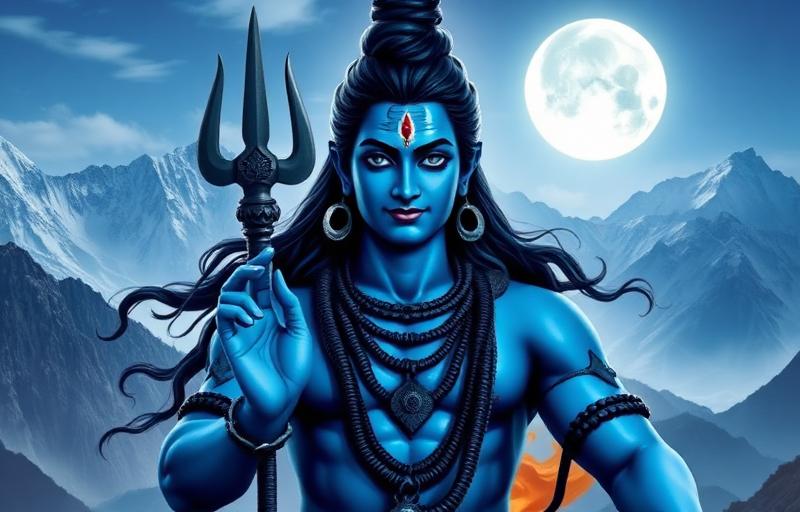
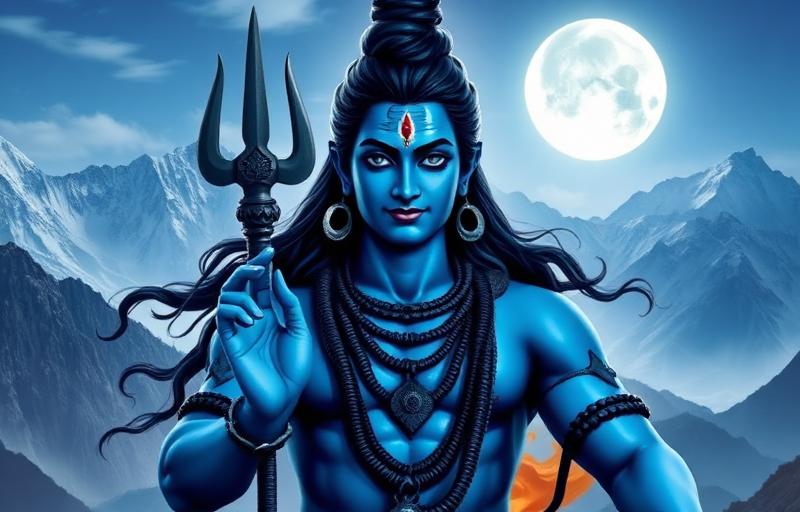
Rudra is one of the most ancient names of Lord Shiva, appearing in the Vedas as the fierce yet healing god of storm, power and transformation. The Ekadasha Rudra are the eleven Rudras (ekadasha means eleven) - eleven forms or aspects of Rudra-Shiva.
In the classical scheme of the thirty-three principal devas, there are twelve Adityas, eight Vasus, two Ashvins and eleven Rudras. The eleven Rudras express the many powers of Shiva - his role as destroyer of evil, dissolver of the universe at the end of time, and the inner force of life and breath. They are deeply revered in Shaiva worship, including in the Rudrabhishek and Rudri path.
The Meaning of 'Rudra'
The name Rudra carries several traditional meanings. One explanation is ru-dra - 'one who drives away (dra) sorrow and suffering (ru)', the remover of pain. Another links it to rud (to roar or cry), describing the roaring storm-god whose power both terrifies and purifies.
In the Rig Veda, Rudra is praised as both fierce and gracious - the lord of medicines and healing (jalasha bheshaja) who also wields the bow and arrow. This double nature - the terrible destroyer who is also the most compassionate healer - runs through the whole idea of the eleven Rudras. They are not separate gods but the many faces of the one Shiva, expressing how the same power can dissolve and renew, frighten and bless.
The 11 Forms of Rudra
Different scriptures give slightly varying lists of the eleven Rudras. One widely cited tradition names them as:
1. Kapali - the bearer of the skull, the ascetic Shiva beyond fear of death 2. Pingala - the tawny or golden-hued one, fiery and radiant 3. Bhima - the formidable, awe-inspiring form 4. Virupaksha - the one with uneven (three) eyes, of unusual sight 5. Vilohita - the deep-red one, fierce in power 6. Shasta (Shastra) - the ruler and teacher who governs and disciplines 7. Ajapada (Ajaikapada) - the one-footed, unborn aspect, firm and unmoving 8. Ahirbudhnya - the serpent of the deep, lord of the cosmic depths 9. Shambhu - the source of happiness and well-being 10. Chanda - the fierce, swift and terrible form 11. Bhava - existence itself, the very ground of being
Each name describes a quality of Shiva, together showing him as ascetic and fierce, terrible and benevolent, the destroyer and the source of all life.
Significance in Worship

The eleven Rudras are honoured in some of the most powerful forms of Shiva worship:
- Rudrabhishek - the ceremonial bathing of the Shivling while chanting the Rudri (the Sri Rudram from the Yajurveda) invokes the Rudras for health, peace and the removal of obstacles.
- Ekadasha Rudri and Maha Rudra are advanced recitations where the Rudram is chanted multiple times, often eleven, honouring the eleven forms.
- The eleven Rudras are also linked to the eleven pranas (life-breaths) in the body in some traditions, showing Shiva as the very force of life within us.
For the devotee, remembering the Ekadasha Rudra is a way of honouring the full majesty of Shiva - not only the gentle, blessing Shankara, but also the powerful Rudra who dissolves what is old so that life may be renewed. They remind us that destruction and grace are two sides of the same compassionate Lord.
Common Questions From Devotees
What does 'Ekadasha Rudra' mean?+
Ekadasha means eleven and Rudra is a Vedic name of Lord Shiva. So Ekadasha Rudra means the eleven forms or aspects of Rudra-Shiva, counted among the thirty-three principal devas of the Vedic tradition.
Are the eleven Rudras different from Shiva?+
No. The eleven Rudras are not separate gods but eleven forms or expressions of the one Rudra-Shiva. Each name highlights a different quality - ascetic, fierce, healing or blessing - of the same Lord.
Why is the name 'Rudra' given to Shiva?+
One traditional meaning is 'one who drives away sorrow and suffering'. Another links it to the roaring storm-god of the Vedas. Rudra describes Shiva as both fierce and gracious, the destroyer of pain and the lord of healing.
How are the eleven Rudras worshipped?+
They are honoured especially through Rudrabhishek, the ceremonial bathing of the Shivling while chanting the Sri Rudram. Advanced rituals like Ekadasha Rudri and Maha Rudra recite the Rudram multiple times to honour the eleven forms.
About the author
Anjali Mehta · Editor, M.A. Religious Studies
Anjali is the managing editor for Vandnaa and oversees the festival and vrat coverage. She holds an M.A. in Religious Studies and reviews every published article for accuracy, accessibility, and tradition-fidelity.
Meet the Vandnaa editorial team →