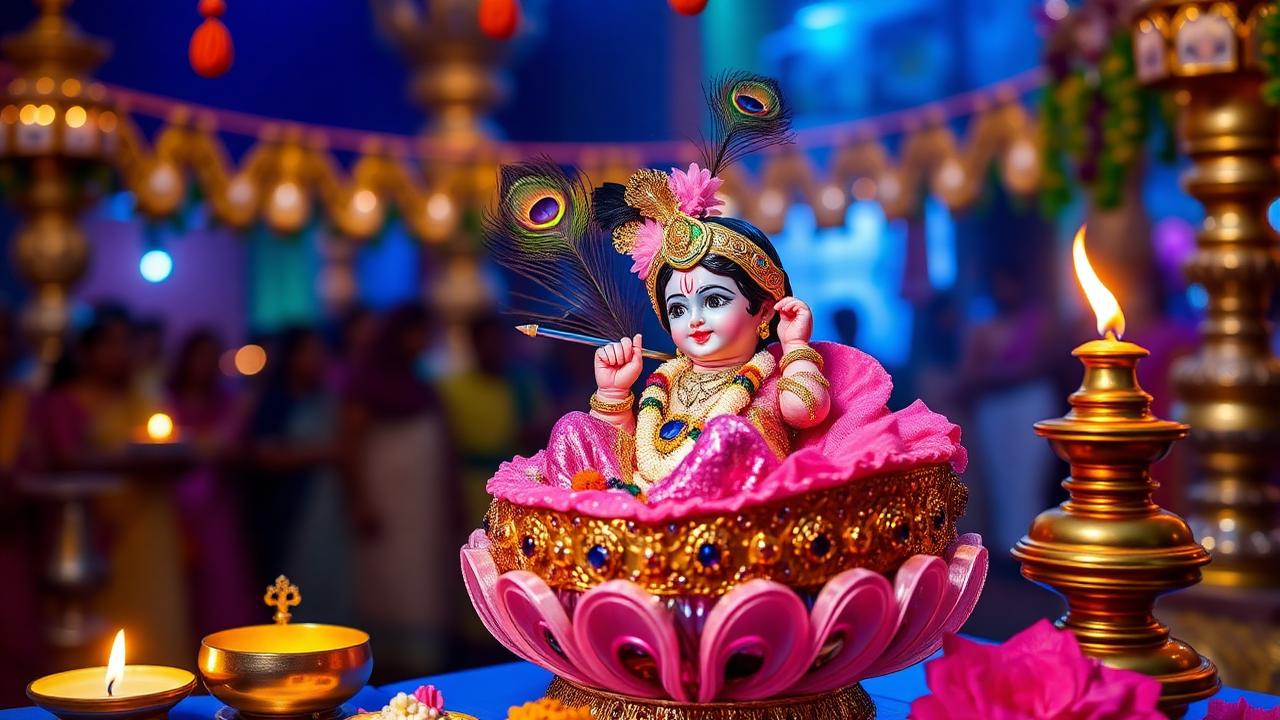
Significance of the Govind Damodar Stotram
The Govind Damodar Stotram is a beloved Krishna hymn traditionally attributed to the saint Bilvamangala Thakura (Leela Shuka). Its other name, Karavalambam, means 'the hand-support' - the prayer one holds onto like a supporting hand through every condition of life.
Its beauty is in its refrain. Every verse closes with the holy names Govinda Damodara Madhaveti - 'O Govinda, O Damodara, O Madhava!' The stotram paints scenes from Krishna's life - the gopis calling him, Yashoda binding him with a rope (which is why he is called Damodara, 'bound at the belly'), Draupadi crying for help - and shows that in joy, in danger, and at the last breath, the one thing worth doing is to chant his names.
The central teaching is simple and profound: constantly remember and call out the names of Krishna, for the holy name is the easiest and most powerful sadhana in this age.
Key Verses with Meaning
Opening verse: Agre kuru-naam paadou vane raadhaa, srivatsa-laanchhana-hridi sphurad-aananta-naagam.
The most loved and oft-quoted is the verse on the final hour:
श्रीकृष्ण राधावर गोकुलेश गोपाल गोवर्धननाथ विष्णो। जिह्वे पिबस्वामृतमेतदेव गोविन्द दामोदर माधवेति॥
Shri Krishna Radhaavara Gokulesha Gopaala Govardhana-naatha Vishno, Jihve pibasvaamritam-etadeva Govinda Damodara Madhaveti.
Meaning: O tongue, drink only this nectar - the names Shri Krishna, beloved of Radha, Lord of Gokul, Gopala, Lord of Govardhana, Vishnu - Govinda, Damodara, Madhava!
The refrain that ends every verse: गोविन्द दामोदर माधवेति (Govinda Damodara Madhaveti) - 'O Govinda, O Damodara, O Madhava!' Govinda means the protector of cows and the senses, Damodara the one bound at the belly by Yashoda's love, and Madhava the lord of Lakshmi and the sweet one.
Benefits of Chanting the Govind Damodar Stotram
- Constant remembrance of Krishna: The refrain trains the tongue and mind to repeat the holy names through the day.
- Peace and protection: Like Draupadi, the devotee learns to call out to Krishna in every difficulty and feel his support.
- Purification of the heart: The names dissolve worry, fear and worldly attachment.
- Preparation for the final hour: Tradition holds that one who habitually utters these names will remember them at the time of death, the most auspicious of all blessings.
- Deepening of bhakti: The sweet imagery of Krishna's leelas naturally awakens love and devotion.
These are traditional spiritual benefits described in the bhakti tradition; the stotram is a devotional practice, not a substitute for any medical or worldly effort.
How to Chant - Vidhi
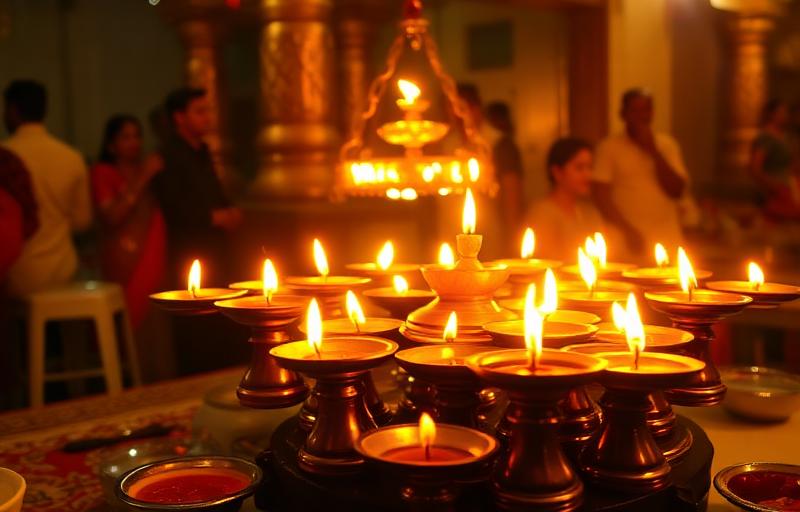
1. Best time: Early morning after a bath, or in the evening before the family deity. The stotram can also be recited softly at any free moment. 2. Seat and image: Sit facing east or north before an image of Krishna; light a ghee lamp and offer tulsi if available. 3. Recite with feeling: Read the verses aloud, letting the refrain Govinda Damodara Madhaveti roll off the tongue with love. The melody is simple and meant to be sung. 4. Even one verse counts: If short of time, repeat just the verse 'Shri Krishna Radhaavara...' and the refrain - the holy name is complete in itself. 5. Carry the refrain: Through the day, while walking or working, gently repeat 'Govinda Damodara Madhava' so the names stay on the breath. 6. Close with a pranam and offer the chanting at Krishna's feet.
What People Ask Most
What is the Govind Damodar Stotram about?+
It is a Krishna hymn in which every verse ends with the holy names 'Govinda Damodara Madhaveti'. It depicts scenes from Krishna's life and teaches the devotee to constantly remember and call out his names in all circumstances.
Why is it also called Karavalambam?+
Karavalambam means 'the support of the hand'. The stotram is so called because, like a supporting hand, the chanting of Krishna's names is meant to hold and steady the devotee through every condition of life and at the final hour.
Why is Krishna called Damodara?+
Damodara means 'bound at the belly (udara) by a rope (dama)'. It recalls the leela in which Mother Yashoda lovingly tied the little Krishna to a mortar - a sign that the Lord is bound only by a devotee's love.
Can anyone recite the Govind Damodar Stotram?+
Yes. There are no restrictions - anyone of any background can recite it with devotion. Even repeating the single refrain 'Govinda Damodara Madhava' through the day is considered a complete and blessed practice.
About the author
Acharya Vinaya Kapoor · M.A. Sanskrit, Mantra & Stotra Studies
Acharya Vinaya holds an M.A. in Sanskrit from Banaras Hindu University and writes the mantra and stotra commentary on Vandnaa. Her focus is on accurate pronunciation, traditional context, and helping modern readers connect with classical texts.
Meet the Vandnaa editorial team →