The Devi of the Eternal Flame
Jwala Ji, also called Jwalamukhi, is one of the most revered Shakti Peeths, set in the Kangra valley of Himachal Pradesh. Here the Devi is not worshipped as a carved idol but as nine natural eternal flames that rise from the rock and have burned for centuries without any visible fuel. The blue-tinged flames are seen as the living presence of Maa Adishakti, and each flame is given a goddess name such as Mahakali, Annapurna, Chandi, Hinglaj, Vidhya Vasini, Maha Lakshmi, Saraswati, Ambika and Anji Devi.
Shakti Peeth Origin - Sati's Tongue
Jwala Ji is counted among the fifty-one Shakti Peeths, the sacred spots where parts of Sati's body fell as Lord Vishnu cut it with his Sudarshan Chakra. According to the katha, *Sati's tongue (jihva) fell here*, and the eternal flames are revered as her radiant tongue, ever-burning. This is why the Devi reveals herself as fire rather than form. The legend of Emperor Akbar, who tried to extinguish the flames with water but failed, is told to this day as proof of the Devi's living power.
What Makes Jwala Ji Unique
Unlike almost every other temple, Jwala Ji has no idol and no image in its sanctum - the worship is entirely of the natural flame. The main flame burns inside a small pit, and devotees offer milk, rabri and water without ever putting out the fire. The golden dome over the temple is said to have been gifted by Maharaja Ranjit Singh. The site is also linked to Gorakhnath, and a nearby spot still holds water that bubbles as if boiling yet stays cool to the touch, adding to its wonder.
Darshan, Timing and Yatra Tips
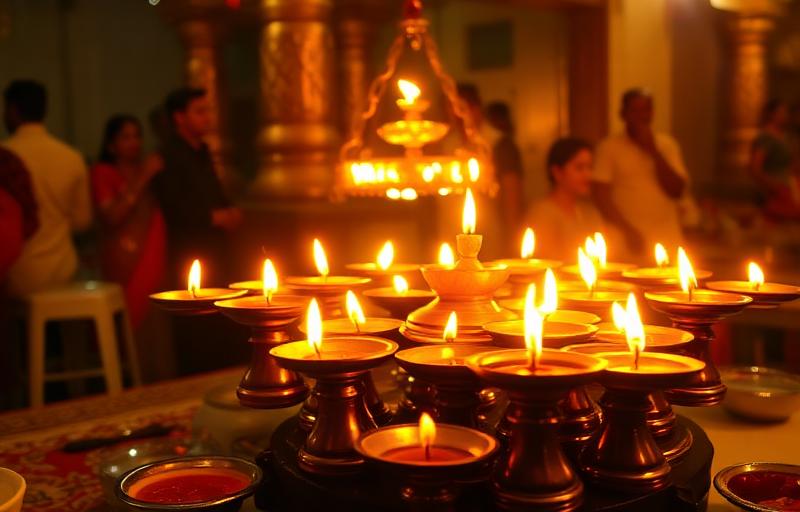
The temple is open roughly from 5 am to late evening, with aartis performed five times a day - the morning mangal aarti and the evening shayan aarti are especially loved. Jwala Ji lies about 30 km from Kangra and 35 km from Dharamshala, well connected by road; the nearest airport is Gaggal (Kangra). Tips: carry a light shawl as the valley turns cool, reach early to avoid queues, and combine the visit with nearby Chintpurni, Kangra Devi (Brajeshwari) and Chamunda Devi for the full HP Shakti Peeth circuit.
Mantra and How to Pray
Devotees invoke the goddess with the simple, powerful chant:
Om Jwala Mukhi Devyai Namah
Many also recite Om Aim Hreem Kleem Chamundayai Vichche and the Durga Saptashati before the flame. Stand before the jyoti with folded hands, offer your prayer with a pure heart, and feel the warmth as the Devi's blessing. It is traditional to offer rabri, milk, batashe and a red chunri, and to bow without trying to touch or disturb the sacred flame.
Festivals and Navratri at Jwala Ji
Jwala Ji is busiest during Chaitra Navratri (spring) and Sharad Navratri (autumn), when grand fairs draw lakhs of pilgrims and the flames are decorated and worshipped with special aartis. The temple also celebrates a vibrant fair on these occasions with bhajan, kirtan and continuous darshan. Plan a Navratri visit well in advance, as accommodation in nearby Jwalamukhi town fills quickly during these days.
Frequently Asked Questions
Why is there no idol at Jwala Ji Temple?+
At Jwala Ji the Devi reveals herself as nine natural eternal flames rather than a carved idol. As the Shakti Peeth where Sati's tongue fell, the ever-burning flame itself is worshipped as her living presence.
Which body part of Sati fell at Jwala Ji?+
According to the Shakti Peeth legend, Sati's tongue (jihva) fell at Jwala Ji. This is why the goddess appears as flame, revered as her radiant, ever-burning tongue.
Where is Jwala Ji Temple located?+
Jwala Ji is in the Kangra district of Himachal Pradesh, about 30 km from Kangra and 35 km from Dharamshala. The nearest airport is Gaggal (Kangra), and it is well connected by road.
What is the mantra of Jwala Ji?+
The simple chant is 'Om Jwala Mukhi Devyai Namah'. Many devotees also recite 'Om Aim Hreem Kleem Chamundayai Vichche' and the Durga Saptashati before the eternal flame.
What should one offer at Jwala Ji?+
Devotees traditionally offer rabri, milk, batashe and a red chunri. Bow before the flame with folded hands and a pure heart, without trying to touch or disturb the sacred fire.
When is the best time to visit Jwala Ji?+
Chaitra and Sharad Navratri see the grandest fairs but also the biggest crowds. For a calmer darshan, visit on regular days in spring or autumn, reaching early in the morning for the mangal aarti.
About the author
Pandit Ravindra Sharma · Vedic Rituals & Bhakti, 22+ years
Pandit Ravindra is the Vandnaa editorial team's resident specialist on aarti, chalisa, and daily devotion. He has performed home and temple pujas across Varanasi and Delhi for over two decades and contributes the bhakti-focused articles on this site.
Meet the Vandnaa editorial team →Explore on Vandnaa
Related Articles
Chintpurni Temple - Chhinnamastika Shakti Peeth Significance & Darshan
9 min read
Naina Devi Temple - Sati's Eyes Shakti Peeth Significance & Darshan
8 min read
Chamunda Devi Temple - Fierce Durga Significance & Darshan
9 min read
Vaishno Devi Aarti & Mantra - Significance, Yatra & Puja Vidhi
9 min read
Durga Aarti Lyrics – Ambe Tu Hai Jagdambe Kali (दुर्गा आरती)
8 min read
Sharad Navratri 2026: 9 Days Colors, Puja Vidhi, Vrat Rules & Kanya Pujan Guide
10 min read