A Demon Sent Specifically to Delay, Not Fight
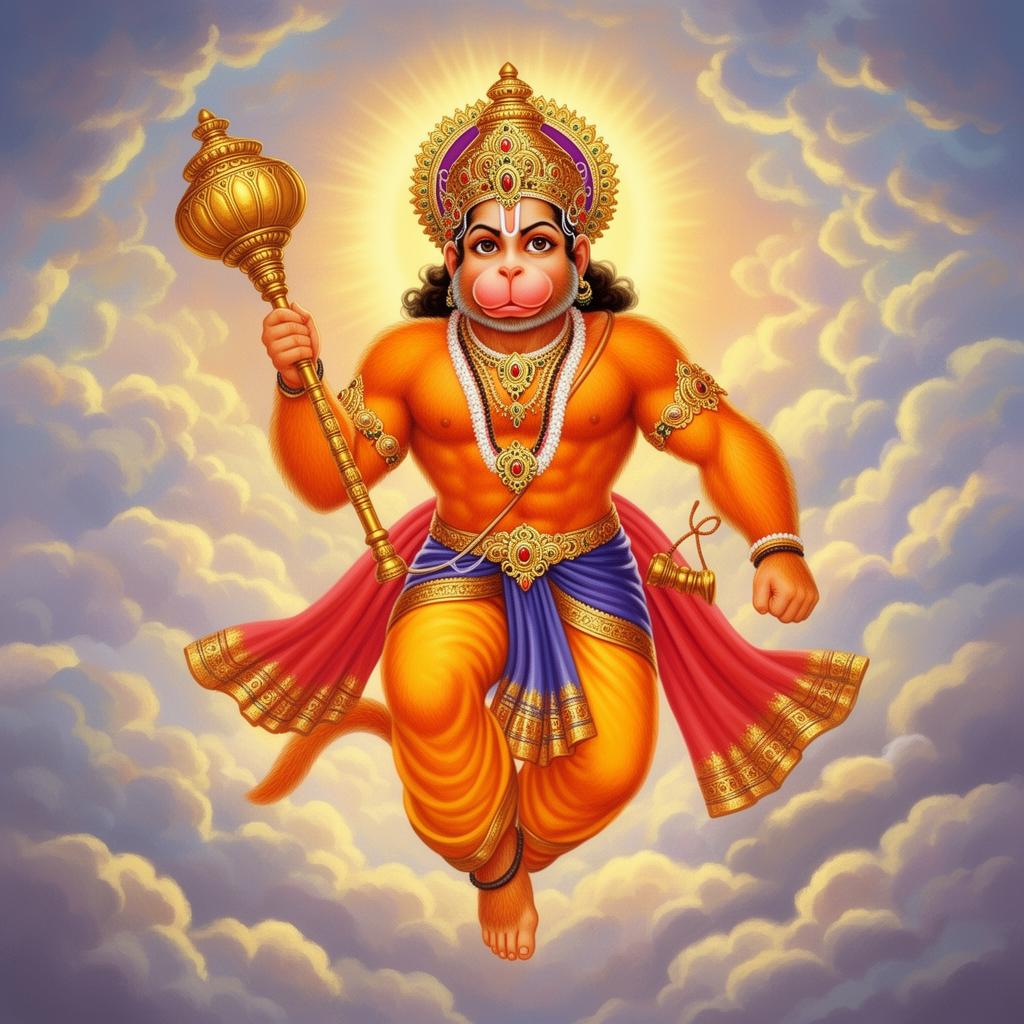
With Lakshmana struck unconscious by Indrajit's Shakti weapon and Sushena the physician declaring that only the Sanjeevani herb from a specific Himalayan mountain can save him before sunrise, Hanuman takes flight north to fetch it. Ravana, informed of this by his spies, understands immediately that stopping Hanuman, even briefly, is now more valuable than any other action he could take, since Lakshmana's death would badly damage Rama's cause regardless of what else happens in the war.
Rather than send a warrior to fight Hanuman directly, which Ravana's advisors know has already failed against him repeatedly, Ravana summons Kalanemi, a powerful rakshasa with the specific ability to take on the appearance of a peaceful ascetic, and instructs him not to defeat Hanuman in combat but simply to delay him past sunrise, when Lakshmana's window for survival closes regardless of whether the herb is ever delivered.
Kalanemi, reluctant, tries to excuse himself, aware of Hanuman's reputation and the danger of provoking him, but Ravana threatens him with death if he refuses the assignment, leaving Kalanemi to conclude that facing possible death from Hanuman is at least a chance, while refusing Ravana guarantees it.
The Hospitality That Was a Trap
Kalanemi establishes himself as a hermit near Hanuman's flight path, complete with a convincing ashram, disciples, and an appearance of deep sanctity, and when Hanuman, hungry and pressed for time but unwilling to be discourteous to what appears to be a genuine sage, stops briefly, Kalanemi invites him to bathe in a nearby lake and to eat before continuing his journey, insisting hospitality cannot be refused.
The lake, it turns out, is inhabited by a crocodile who is in fact a cursed apsara named Damayanti, waiting to be freed by whoever pulls her from the water. When the crocodile seizes Hanuman's leg as he bathes, Hanuman kills it without difficulty, and the apsara, freed from her curse, warns him directly that the hermit who sent him to this lake is not what he appears to be, revealing Kalanemi's disguise and Ravana's plot.
Hanuman, now aware of the deception and with time running out before sunrise, does not negotiate or argue. He seizes Kalanemi by the legs and, in most tellings, kills him with a single decisive blow, sometimes described as flinging him into the ocean, before resuming his flight north without further delay, the entire detour having cost him only minutes rather than the hours Ravana had hoped for.
Why This Episode Is Retold the Way It Is
The Kalanemi episode, drawn mainly from later texts and regional Ramayana traditions rather than being prominent in Valmiki's own account, is popular in devotional retellings specifically because it frames the danger to Hanuman not as physical strength, which he plainly has in overwhelming supply, but as deception dressed as piety, a trap built entirely around his own good manners and unwillingness to be rude to an apparent holy man.
The episode is often paired in commentary with a broader point about discernment, viveka, being as important a spiritual quality as devotion or strength: Hanuman succeeds not because he refuses hospitality on principle but because, once shown the truth by the freed apsara, he acts immediately and without hesitation, wasting no further time on doubt or debate.
It remains one of the most frequently dramatised episodes in Ramlila and Hanuman-centred devotional performance precisely because it slows down, briefly, one of the epic's most breathless sequences, the race to save Lakshmana, and gives it a self-contained obstacle with its own beginning, middle and resolution, distinct from the mountain-carrying climax that follows it.
Common Questions From Devotees
Why didn't Ravana just send a strong warrior to fight Hanuman?+
Ravana's own experience and his advisors already knew direct combat with Hanuman had failed repeatedly, in Lanka and elsewhere, so he chose deception and delay through Kalanemi instead, reasoning that even a brief delay past sunrise would be enough to let Lakshmana die.
Who freed Hanuman from the crocodile trap?+
Hanuman killed the crocodile himself without difficulty when it seized his leg; the creature turned out to be a cursed apsara, and upon being freed from her own curse by that death, she was the one who warned Hanuman that the hermit who had sent him to the lake was actually the demon Kalanemi.
How much time did the Kalanemi detour actually cost Hanuman?+
The texts describe the delay as relatively brief, only enough for the hospitality, the bath, the crocodile encounter and Kalanemi's death, and Hanuman still reached the Himalayan mountain, uprooted it, and returned in time to save Lakshmana before sunrise.
About the author
Anjali Mehta · Editor, M.A. Religious Studies
Anjali is the managing editor for Vandnaa and oversees the festival and vrat coverage. She holds an M.A. in Religious Studies and reviews every published article for accuracy, accessibility, and tradition-fidelity.
Meet the Vandnaa editorial team →