A Weapon Built for One Purpose
During the Lanka campaign, Indrajit, Ravana's most dangerous son, deploys the Shakti, a spear gifted to him for the specific purpose of killing an opponent outright, against Lakshmana in battle. Struck through the chest, Lakshmana collapses, and the wound is immediately understood by everyone present as different in kind from ordinary battle injuries: this is a weapon meant to kill, and Lakshmana's survival is not assumed.
Rama's grief on seeing his brother struck down is described at length in the text, at points overwhelming his usual composure entirely, and the army's morale visibly falters with him, since Lakshmana has been present at every major turn of the exile and the war, and his death would be a wound to the whole campaign, not only to Rama personally.
Sushena, the vanara physician attached to Sugriva's army, examines Lakshmana and delivers both bad and specific news: he can be saved, but only by a set of four particular herbs, Mrita Sanjeevani among them, which restore life, growing on a specific peak, Dronagiri, in the Himalayas, and only if they are administered before sunrise.
Why Hanuman Brought the Whole Mountain
Hanuman is dispatched immediately, given the urgency, and after the Kalanemi detour described elsewhere in this series, he reaches the Himalayas and Dronagiri specifically, only to find that he cannot identify the correct herbs among the mountain's full covering of plant life. Some versions attribute this to the herbs having taken on the power to make themselves invisible or unrecognisable to prevent misuse, others simply to Hanuman, unfamiliar with plant identification, running out of time to search leaf by leaf in the dark.
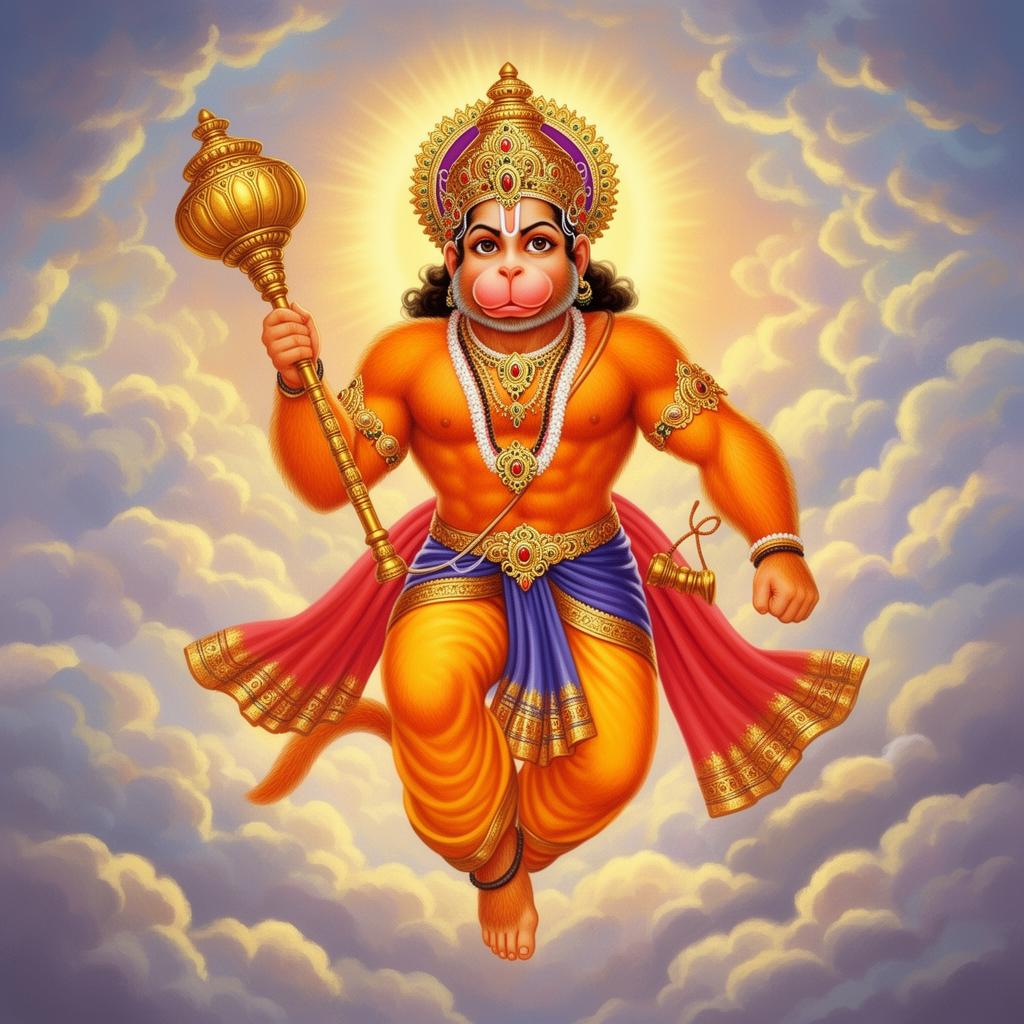
Rather than fail the mission or waste further time searching, Hanuman makes the decision that has become the single most iconic image associated with him: he grows to an enormous size, uproots the entire mountain peak, and carries it whole through the sky back to Lanka, reasoning that if he cannot identify the correct herb, he will simply bring every herb on the mountain and let Sushena sort it out on arrival.
The flight back is itself eventful in several tellings, with Bharata, watching from Ayodhya's outskirts and mistaking the enormous flying figure carrying a mountain for a demon, nearly shooting Hanuman down before recognising who and what he is looking at and letting him pass, a near miss that is sometimes included as its own small episode within the larger rescue.
The Revival and What It Established
Sushena, presented with the entire mountain, locates the Sanjeevani and the other required herbs and administers them to Lakshmana before sunrise, reviving him fully, to the army's overwhelming relief and Rama's own visible emotion, described in the text as greater even than his joy at Sita's eventual recovery, since Lakshmana's loss would have been irreversible in a way few other setbacks in the war would have been.
Hanuman then carries the mountain back to its original place in the Himalayas, restoring it rather than keeping the herbs as a stockpile, which most retellings read as a deliberate detail underlining that the act was one of necessity and respect for the mountain's own ecology, not conquest or extraction.
The episode, alongside the ocean crossing, is the single most reproduced image of Hanuman in Indian devotional art and public sculpture, the flying figure with a mountain balanced on one palm, and it functions in popular retelling as the clearest demonstration of a principle the whole Ramayana associates with him: when the precise solution is unavailable or unknown, total, immediate effort in service of dharma is treated as its own form of correct action, rather than something to be second-guessed for being excessive.
Reader Questions Answered
Why couldn't Hanuman just identify the right herb himself?+
Several tellings describe the herbs as having the power to conceal themselves from misuse, while others simply note that Hanuman was not trained in plant identification and had no time to search leaf by leaf in darkness before sunrise, so bringing the whole mountain was the faster, surer option.
Did Hanuman keep the mountain or return it?+
After Sushena administered the needed herbs to Lakshmana, Hanuman carried the mountain back to its original location in the Himalayas rather than keeping it, which is generally read as a sign of respect for the natural order rather than treating the feat as a conquest.
Who almost shot Hanuman down while he was carrying the mountain?+
Bharata, watching from near Ayodhya, mistook the enormous flying figure carrying a mountain for a demon and nearly loosed an arrow at him before recognising who it was in time and letting him continue on to Lanka.
About the author
Anjali Mehta · Editor, M.A. Religious Studies
Anjali is the managing editor for Vandnaa and oversees the festival and vrat coverage. She holds an M.A. in Religious Studies and reviews every published article for accuracy, accessibility, and tradition-fidelity.
Meet the Vandnaa editorial team →