Who Is Maa Kali
Maa Kali is the most powerful and fearless form of Adi Shakti - the same divine mother who is gentle as Parvati and protective as Durga. Dark as the night sky, she wears a garland of skulls and stands upon Shiva, symbolising that she destroys time, ego and death itself. Though her form looks fierce, her heart is that of a loving mother who shields her devotees from every fear and evil. She is worshipped especially in Bengal, Assam and at Shakti Peethas across India.
What the Kali Chalisa Contains
The Kali Chalisa is a devotional hymn of forty verses that praises Maa Kali's divine forms, her destruction of demons like Raktabija, and her boundless compassion for devotees. It opens with a doha in her honour, followed by chaupais describing her dark radiant beauty, her weapons, her victory over evil and the protection she grants. It closes with a doha affirming that whoever reads it with faith is freed from fear, debt, illness and enemies.
Opening Doha and Key Verses
Doha: Jai jai Kali Kalika, dushtan ko sanhaar. Bhakt jano ki vipda, haro daya ki dhaar.
Chaupai (sample): Jai Kali Maa Kalka, mahima agam apaar. Khadag haath sohat tumhare, sir munda ki maal dhaar. Raktabija ko maara tumne, deven harshe sansaar.
These verses are recited with full faith, calling on the goddess to cut away fear and protect her children.
Jap Vidhi - How to Recite the Kali Chalisa
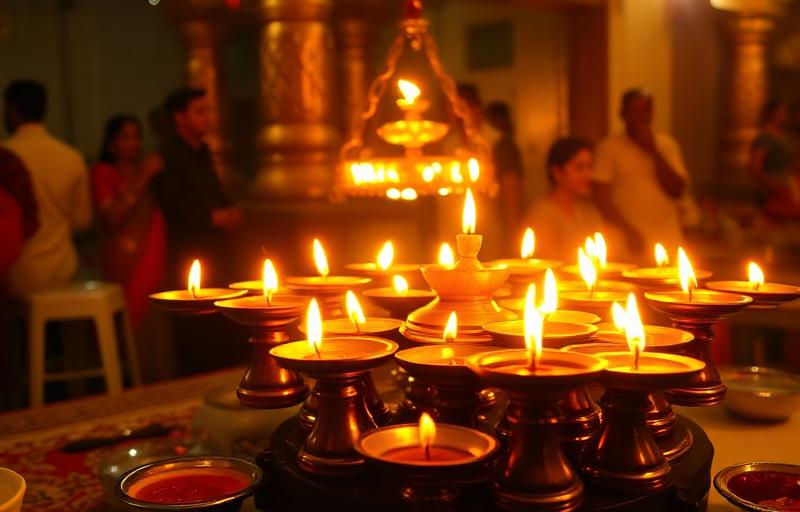
1. Bathe and wear clean, preferably red or black clothing. 2. Sit facing south, the direction associated with Kali. 3. Light a til (sesame) oil lamp and offer red hibiscus flowers. 4. Begin with the opening doha, then recite the forty verses with steady devotion. 5. Offer the Kali beej mantra Om Kreem Kalikayai Namah 108 times afterwards. 6. Conclude with the final doha and a prayer for protection. Reciting at night, on Tuesdays, Saturdays, Amavasya and during Navratri (especially Kali Chaudas) is considered most powerful.
Benefits of Reciting the Kali Chalisa
Devotees recite the Kali Chalisa for protection from fear, black magic, accidents and hidden enemies. It is believed to remove negativity from the home, grant courage to face hardship, relieve chronic obstacles and debts, and steady a fearful or anxious mind. Above all, it brings the assurance that the fierce mother stands guard over her devotees and never lets sincere faith go unanswered.
Rules and Precautions
Maintain cleanliness and a vegetarian, sattvic diet on the days of recitation. Approach the goddess with humility and pure intent - never to harm anyone. Do not eat or drink while reciting, and avoid breaking the count midway once you begin. If you take a vow (sankalp) to recite daily for a fixed period, complete it sincerely. Women may pause formal recitation during menstruation and resume afterwards, as per family tradition.
Quick Answers
Who is Maa Kali and is she different from Durga?+
Maa Kali is the fierce form of the same Adi Shakti who appears as Durga and Parvati. Durga is the warrior protector, while Kali is her most intense form that destroys ego, fear and evil.
What is the main benefit of reciting the Kali Chalisa?+
It is recited for protection from fear, negativity, enemies and obstacles. Devotees believe it removes anxiety, guards the home and grants the courage to face difficult situations.
Which is the best time to recite the Kali Chalisa?+
Night is considered ideal, especially on Tuesdays, Saturdays, Amavasya, and during Navratri (Kali Chaudas). Face south and recite with a sesame oil lamp lit.
What flowers and offerings does Maa Kali like?+
Red hibiscus (japa) flowers are especially dear to Maa Kali. Devotees also offer red sweets, jaggery and, in some traditions, a sesame oil lamp, with full devotion and a clean mind.
What is the Kali beej mantra?+
The Kali beej mantra is 'Om Kreem Kalikayai Namah'. It is chanted 108 times after the chalisa for protection, courage and the removal of fear and negativity.
Are there any rules to follow while reciting?+
Stay clean, eat sattvic vegetarian food, approach with humility and never use the worship to harm anyone. Do not eat while reciting, and complete any vow you take sincerely.
About the author
Acharya Vinaya Kapoor · M.A. Sanskrit, Mantra & Stotra Studies
Acharya Vinaya holds an M.A. in Sanskrit from Banaras Hindu University and writes the mantra and stotra commentary on Vandnaa. Her focus is on accurate pronunciation, traditional context, and helping modern readers connect with classical texts.
Meet the Vandnaa editorial team →Explore on Vandnaa
Related Articles

Maa Kali: Mantras, Significance, Puja Vidhi & The Fierce Mother
9 min read
Durga Chalisa Lyrics in Hindi & English with Meaning
9 min read
Durga Aarti Lyrics – Ambe Tu Hai Jagdambe Kali (दुर्गा आरती)
8 min read

Mahishasura Mardini Stotram - Durga's Battle Hymn: Lyrics, Meaning, Power
9 min read
Navadurga: The 9 Forms of Maa Durga, Their Mantras, Significance & Which to Worship Each Day
13 min read
Sharad Navratri 2026: 9 Days Colors, Puja Vidhi, Vrat Rules & Kanya Pujan Guide
10 min read