Who Kanipakam Varasiddhi Vinayaka Is
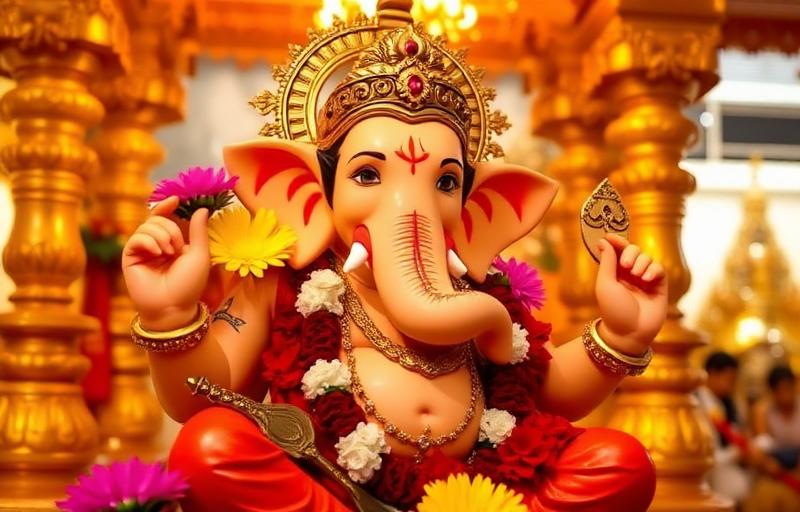
Varasiddhi Vinayaka is Ganesha in the form that grants boons and fulfils what is asked. He is worshipped in this form at Kanipakam, a town in Chittoor district of Andhra Pradesh, on the bank of the Bahuda river, about seventy kilometres from Tirupati.
The name of the town explains its origin. In Telugu, kani refers to wetland and pakam to the flow of water, and tradition holds that the deity appeared in water that has not dried since.
What sets this Ganesha apart from the thousands of other Ganesha temples in India:
- The murti is swayambhu, self manifested, found rather than installed
- It stands in water, and the sanctum's spring is said never to run dry even in drought
- Devotees hold that the murti has grown in size over the centuries, and point to older armour and ornaments that no longer fit it
- The temple is known across the region as the place where oaths are taken to settle disputes
For families in the Rayalaseema and Chittoor region, and for pilgrims travelling to Tirupati, Kanipakam is a standard stop, and the reason most of them give is not sightseeing but a specific request or a promise being kept.
The Katha of the Three Brothers
The origin katha of Kanipakam is told at the temple in a form that has stayed remarkably stable.
Three brothers lived in the village, one blind, one deaf and one unable to speak. They farmed a small piece of land that depended on a well, and one season the well ran dry. The brothers began to dig deeper.
As they dug, the implement struck something and blood began to flow from the stone. The water in the well turned red. In that moment, tradition says, the three brothers were freed of their conditions - the blind brother saw, the deaf brother heard and the mute brother spoke.
Villagers gathered and found a swayambhu Vinayaka murti in the well. Coconuts were offered in the traditional way, and the water that flowed carried the coconut water outward, which is why offering coconuts here remains the central practice.
The katha is the reason devotees associate Kanipakam with removal of long standing conditions and with things that have been stuck for years. It is also the reason the sanctum keeps water. The murti was found in water, and it has never been moved out of it.
The Oath Tradition
Kanipakam's most distinctive feature is the pramanam, the oath taken before the deity.
When two parties in the region have a dispute that cannot be resolved - a land boundary, a loan, an accusation of theft, a family property matter - it has long been customary for them to come to the temple together. The person whose word is in question takes a dip in the temple tank, stands before the deity and states the truth as they hold it.
What gives this practice its weight is the local conviction about consequences. Devotees hold that a false statement made before Varasiddhi Vinayaka at Kanipakam does not pass unnoticed, and the belief is strong enough that many disputes end at the temple gate itself, with one party withdrawing rather than taking the oath.
This has practical history behind it. Oaths taken at Kanipakam have long been treated seriously in the region, and the temple's reputation for settling matters is why people continue to bring them here.
For devotees today, the underlying instruction is worth repeating. The tradition is not a way to win an argument. It is a way to make sure that what is being claimed is something the person is willing to say in front of the deity, in public, with the other party watching.
The Murti That Devotees Say Is Growing
One of the most repeated claims about Kanipakam is that the swayambhu murti has been increasing in size over the centuries.
Devotees and temple attendants point to specific evidence they consider decisive:
- A kavacham, the silver armour offered by a devotee generations ago, that no longer fits the murti
- Ornaments and coverings made at different periods, progressively larger
- Accounts passed down in local families describing the sanctum being expanded over time
The temple does not present this as a scientific claim, and devotees do not treat it as one. It is held as an article of faith, and the way it is spoken about tells you what it means to them. A deity who is still growing is a deity who is still present and still active, not a relic of an older age.
Whatever a visitor makes of the claim, its devotional function is clear. It keeps the temple in the present tense. Families who come with a request are not addressing something that happened long ago, they are addressing a deity they believe is still changing in front of them.
Worship, Offerings and the Brahmotsavam
Worship at Kanipakam follows standard Ganesha practice with a few local particulars.
- Coconut offering is the central practice, tied directly to the origin katha. Large quantities are offered daily.
- Modak, laddoo, jaggery and durva grass are offered as at other Ganesha temples
- Ganesha Chaturthi in Bhadrapada begins the Brahmotsavam, which runs for about twenty days and is the temple's biggest festival, with processions, the temple car and large crowds
- Sankashti Chaturthi each month and Vinayaka Chaturthi are the main monthly and annual days
- Devotees perform Ganapati Homam and other archanas through the temple's booking system
The Bahuda river beside the temple is part of the visit. Devotees bathe there or at the temple tank before darshan, particularly those who have come to take an oath or complete a vow.
A useful point for planning: because Kanipakam sits close to Tirupati, most pilgrims combine the two. Local custom in the region is to visit Ganesha first, as the deity of beginnings, before proceeding to Tirumala, and many families keep that order.
Planning Darshan at Kanipakam
The temple is easy to reach and can be covered in half a day from Tirupati or Chittoor.
- Distance - about seventy kilometres from Tirupati and eleven from Chittoor town, with regular buses and taxis
- Best time - early morning for a calm darshan. Bhadrapada during the Brahmotsavam is the most festive and the most crowded.
- Timings - the temple opens early and closes late with a midday break, and darshan queues are usually manageable outside festival periods
- What to carry - coconuts, flowers, modak or laddoo for offering, and a change of clothes if you plan to bathe in the river or tank
- Dress - traditional and modest clothing is expected, as at most Andhra temples
- Nearby - Tirumala Tirupati, Chandragiri fort, Srikalahasti and the Chittoor region temples
If you are visiting to complete a vow or with a specific request, most families make the coconut offering first, take darshan, and then sit for some time near the tank. The temple is not large, and the pace of a visit here is calmer than at the major Andhra temples, which is part of why devotees return to it.
Quick Answers
Who is Kanipakam Varasiddhi Vinayaka?+
He is Ganesha worshipped in his boon granting form at Kanipakam in Chittoor district, Andhra Pradesh. The murti is swayambhu, found in a well, and remains in water in the sanctum.
What is the katha behind the Kanipakam temple?+
Three brothers, one blind, one deaf and one mute, were digging a dried well when their implement struck a stone and blood flowed from it. Tradition says all three were freed of their conditions at that moment, and a swayambhu Vinayaka murti was found in the well.
Why do people take oaths at Kanipakam?+
It is a long standing regional custom for parties in a dispute to come together to the temple, where the person whose word is questioned bathes and states the truth before the deity. Belief in the consequences of a false oath here is strong enough that many disputes end at the temple itself.
Is the Kanipakam murti really growing?+
Devotees hold that it has grown over the centuries and point to older armour and ornaments that no longer fit. The temple presents this as an article of faith rather than as a scientific claim.
What is offered at Kanipakam?+
Coconuts are the central offering, tied to the origin katha, along with modak, laddoo, jaggery, durva grass and flowers. Devotees also perform Ganapati Homam and archanas through the temple.
How far is Kanipakam from Tirupati?+
About seventy kilometres, and eleven kilometres from Chittoor town. Most pilgrims combine the two, and local custom is to visit Ganesha at Kanipakam first before proceeding to Tirumala.
About the author
Pandit Ravindra Sharma · Vedic Rituals & Bhakti, 22+ years
Pandit Ravindra is the Vandnaa editorial team's resident specialist on aarti, chalisa, and daily devotion. He has performed home and temple pujas across Varanasi and Delhi for over two decades and contributes the bhakti-focused articles on this site.
Meet the Vandnaa editorial team →