Who Karuppasamy Is
Karuppasamy, also called Karuppanaswamy or simply Karuppar, is among the most widely worshipped guardian deities of Tamil Nadu. The name comes from karuppu, meaning black, and refers both to the dark form in which he is depicted and to the night, the time associated with his watch.
He belongs to the category of kaval deivam, the guardian deities who protect a village, its fields, its cattle and its people. These deities stand at the boundary rather than at the centre, and their shrines are usually found where the settlement ends and the fields or the forest begin.
His form is consistent across Tamil Nadu:
- A dark standing figure, often larger than life
- The aruval, the curved sickle sword used in Tamil farming country, held in one hand
- A fierce moustache, wide eyes and a commanding posture
- Sometimes shown on a horse, with bells and anklets, ready to ride
He is not a distant deity. Villagers speak of him as present, awake and on duty, and the tone of prayer to him is closer to reporting a problem than to formal worship.
Karuppasamy and Ayyanar: The Guardian System
Tamil village religion is organised as a system, not as a collection of separate shrines, and Karuppasamy's place in it is specific.
- Ayyanar is the chief guardian of the village, usually seated, often with enormous terracotta horses lined up before his shrine
- Karuppasamy serves as his powerful lieutenant and enforcer, the one who acts
- Madurai Veeran, Sudalai Madan, Muniyandi and Sangili Karuppan are other guardian figures, each with their own domain and their own communities of devotees
- Amman, the village goddess in forms such as Mariamman and Kaliamman, holds the centre and is approached for health and fertility
In many villages Karuppasamy also stands guard at the entrance of the Amman temple, and in some traditions a form of Karuppar is described as guarding sacred places and their treasures.
The division of duties is not decorative. Devotees are clear about which deity is approached for what. The Amman is asked for health and rain, Ayyanar for the wellbeing of the village as a whole, and Karuppasamy when there is theft, threat, injustice or a boundary that has been crossed.
How He Is Worshipped
Worship of Karuppasamy is village worship, performed by the community rather than by a temple establishment.
- The pujari is usually from the village itself, often from a family that has held the role for generations, rather than a temple appointed priest
- Worship intensifies at night, in keeping with the deity's character
- The kodai, the village festival, is the main annual event, held in the Tamil months after the harvest and organised entirely by the villagers
- Sami aadal, in which a devotee enters a trance state and is understood to speak for the deity, is part of the tradition in many villages and is treated with seriousness rather than spectacle
- Firewalking and kavadi like offerings feature in some village festivals
Common offerings include garlands, sandal paste, vibhuti, jaggery rice, pongal cooked at the shrine and coconut. In older village practice, offerings at some guardian shrines included items that are not part of temple worship elsewhere, including meat and country liquor, presented to the deity as a warrior. Practice varies widely by village and community, and many families today keep entirely vegetarian offerings while continuing every other part of the tradition.
The aruval itself is often offered. A devotee who has received what they asked for may present a new sickle sword to the shrine, and the accumulated weapons at an old Karuppasamy shrine are a record of answered prayers.
The Deity of Boundaries and Justice
What devotees bring to Karuppasamy is unusually consistent, and it explains the weapon in his hand.
- Theft and loss. Families whose cattle, tools or crops have gone missing traditionally place the matter before him, and in many villages there is a strong belief that a thief will return what was taken rather than face the consequence.
- Boundary and land disputes. He guards boundaries, so a dispute over one is his subject.
- False accusation. Devotees who feel wrongly blamed come to state their case at the shrine.
- Protection while travelling or working at night. Farmers, drivers and those who work late invoke him for safety.
- Family vows. Many households keep him as a kula deivam, the family deity, and visit before weddings, after childbirth and at the start of anything new.
The kula deivam tradition is worth understanding in the Tamil context. Families identify a specific village shrine as their own, sometimes many generations after leaving that village, and returning there for a wedding or a child's first visit is considered essential. Families settled in Chennai, Bengaluru, Singapore or the Gulf often make long journeys back to a small shrine at a field's edge for exactly this reason.
Where Karuppasamy Is Worshipped
Karuppasamy shrines run into the thousands, since almost every village in southern Tamil Nadu has one. A few are well known beyond their own district.
- Azhagar Kovil, near Madurai - the Karuppanaswamy shrine associated with the Kallazhagar temple is among the most visited, and the deity here is regarded as the guardian of the hill and its temple
- Village shrines across Madurai, Sivaganga, Ramanathapuram, Virudhunagar and Theni - the heartland of guardian deity worship
- Ayyanar temple complexes throughout the state, where Karuppar stands as the guardian figure alongside the terracotta horses
- Shrines maintained by families as kula deivam, often small, unmanned, and visited only by the families who belong to them
The terracotta horse tradition deserves mention. Villages commission large clay horses from local potters and install them before the guardian shrine, so the deity has a mount ready for his night rounds. These horse lines, some of them decades old and weathered, are among the most recognisable images of rural Tamil Nadu.
For visitors, the practical point is that these are living community shrines, not monuments. Ask before entering, do not photograph rituals without permission, remove footwear, and follow whatever the village pujari indicates.
Guardian Deity Worship Today
Guardian deity worship in Tamil Nadu is not a survival on the margins. It is expanding, and the reasons are worth noting.
- Migration strengthened it. Families who left villages for cities and abroad hold on to the kula deivam shrine as the anchor of their identity, and many fund the renovation of shrines they visit once a year.
- The kodai festival became a reunion. Village festivals now function as annual gatherings for scattered families, and attendance has grown rather than declined.
- Documentation improved. Younger devotees record the family shrine's location, the pujari's lineage and the customary vows, since these were previously carried only in memory.
At the same time, elders in the region point out what is at risk: the terracotta horse craft, which depends on potters who are fewer each decade; the traditional songs and villu paattu performances that carry the deity's stories; and the knowledge of which shrine belongs to which family, which is lost quickly once a generation stops asking.
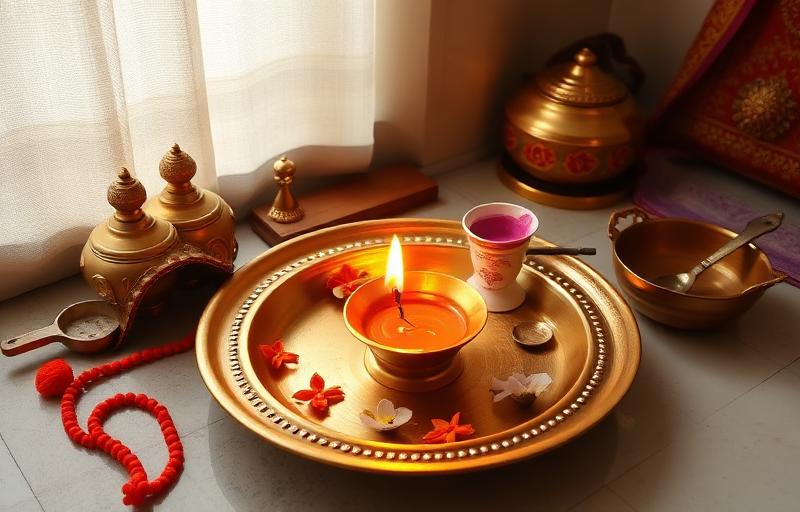
For devotees who want to keep the connection while living far away, the customary practice is straightforward. Learn the name and village of your kula deivam, visit before major family events when possible, send an offering through relatives when it is not, and keep a lamp at home on the deity's day.
Frequently Asked Questions
Who is Karuppasamy?+
Karuppasamy is a guardian deity, or kaval deivam, worshipped across Tamil Nadu. He is depicted as a dark figure carrying an aruval, the curved sickle sword, and he guards village boundaries, fields, cattle and people.
What is the relationship between Karuppasamy and Ayyanar?+
Ayyanar is the chief guardian of the village, usually seated with terracotta horses before his shrine, and Karuppasamy serves as his powerful lieutenant, the deity who acts. They are commonly worshipped in the same complex.
Why does Karuppasamy carry an aruval?+
The aruval is the sickle sword of Tamil farming country, and it marks him as a guardian who enforces rather than only blesses. Devotees whose prayers are answered often offer a new aruval at the shrine.
What do devotees pray to Karuppasamy for?+
Most commonly for recovery of stolen property, settlement of boundary and land disputes, relief from false accusation, safety while travelling or working at night, and family vows kept when he is the kula deivam.
Why are terracotta horses placed at guardian deity shrines?+
Villages commission large clay horses from local potters so the guardian deity has a mount ready for his rounds at night. The rows of horses before Ayyanar and Karuppasamy shrines are among the most recognisable sights of rural Tamil Nadu.
What is a kula deivam and how does a family find theirs?+
A kula deivam is the family's own guardian deity, tied to a specific village shrine. Families usually find it by asking the eldest living relatives for the village name, the shrine and the customary vow, and by visiting with elders who remember the location.
About the author
Anjali Mehta · Editor, M.A. Religious Studies
Anjali is the managing editor for Vandnaa and oversees the festival and vrat coverage. She holds an M.A. in Religious Studies and reviews every published article for accuracy, accessibility, and tradition-fidelity.
Meet the Vandnaa editorial team →