Who is Kaveri Mata?
Kaveri Mata is revered across Karnataka and Tamil Nadu as one of South India's most beloved river goddesses, so central to life and devotion in the region that she is often called the Dakshin Ganga of the south. Her waters sustain millions of devotees along her course, from the misty hills of Kodagu to the fertile delta lands near the Bay of Bengal.
Unlike rivers that are worshipped only in a general sense, Kaveri holds a very personal place in the devotional imagination of the region, seen not merely as water but as a living mother who nurtures the land she flows through.
The Legend of Kaveri and Sage Agastya
According to a cherished tradition, Kaveri was born as Lopamudra, a devoted maiden granted by Lord Brahma to a sage named Kavera, who raised her with great love. In time, she wished to serve all of humanity rather than remain in one form, and the great sage Agastya, moved by her devotion, is said to have carried her in his kamandalu, or water vessel, as he travelled south.
A popular katha tells that when Agastya set his kamandalu down for a moment, the mischievous elephant-headed Lord Ganesha, in the form of a crow, tipped it over, releasing Kaveri to flow freely across the land as a river, exactly as she had wished. Devotees see in this story a reminder that even disruption can serve the divine purpose of bringing blessing to many.
Why Kaveri is Revered as a Goddess
For generations of farmers and devotees across Karnataka and Tamil Nadu, Kaveri has been the very source of sustenance, her waters turning dry land into fertile fields of rice and sugarcane. This lifegiving role has made her worship deeply personal, with devotees offering thanks to her as they would to a mother who feeds her children.
Her sanctity is renewed each year during Tula Sankramana, when devotees believe she manifests anew at her source, an event known as Teerthodbhava, drawing large crowds who gather to witness this sacred moment of renewal.
Worship and Sacred Places Along the Kaveri

- The river's traditional source is at Talakaveri in the Kodagu hills of Karnataka, where a small kund is regarded as her birthplace and devotees gather especially during Teerthodbhava
- Srirangapatna, an island formed by the river, is home to a revered Vishnu temple and is considered especially sacred
- Further downstream, Srirangam near Tiruchirapalli, one of the largest temple complexes in India, stands on another island in the Kaveri, dedicated to Lord Ranganatha
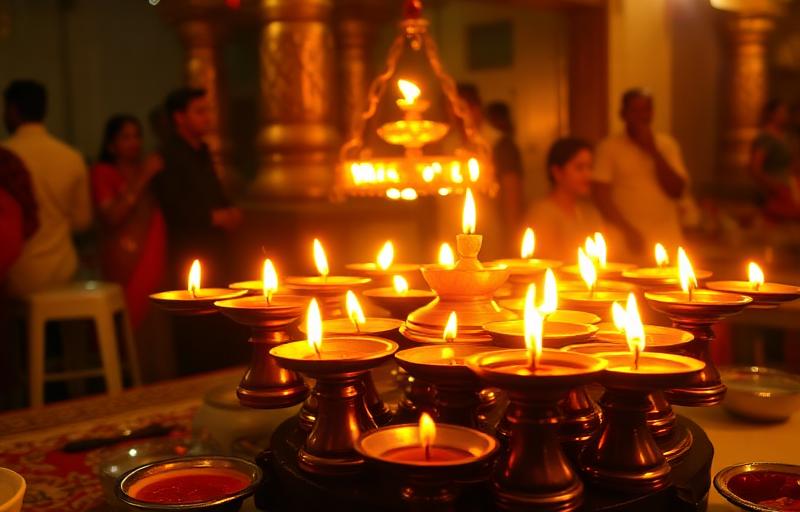
- Devotees traditionally offer flowers and light lamps at her ghats, treating each visit to her banks as an opportunity for quiet gratitude
Kaveri Pushkaram and Regional Devotion
Like other great rivers of India, Kaveri is honoured with her own Pushkaram festival once every twelve years, a period devotees consider especially blessed for taking a holy dip in her waters. Pilgrims travel from across the two states she flows through to participate in the celebrations, and local temples hold special processions in her honour.
The river's importance to both Karnataka and Tamil Nadu has, over generations, made her not just a religious figure but a shared symbol of regional identity and gratitude, discussed with the same warmth in homes as in temples.
Mantra to Chant and a Devotee's Takeaway
Devotees often chant 'Om Kaveryai Namah', meaning 'salutations to Mother Kaveri', while offering prayers at her banks or during daily worship at home.
The story of Kaveri, a devoted maiden who chose to become a river so she could nurture all of humanity, teaches devotees that true devotion often means giving oneself fully for the good of others. Whether one visits her sacred source at Talakaveri or simply remembers her with gratitude, worship of Kaveri Mata is an act of faith and love, not a transaction.
Frequently Asked Questions
Why did Kaveri become a river according to tradition?+
According to legend, Lopamudra, later known as Kaveri, wished to serve all of humanity rather than remain in human form, and sage Agastya carried her as water in his kamandalu until she was released to flow as a river across the land.
What is Teerthodbhava at Talakaveri?+
Teerthodbhava is the sacred moment celebrated during Tula Sankramana when devotees believe Kaveri manifests anew at her source in Talakaveri, drawing large crowds who gather to witness this renewal.
Which major temples are located on islands in the Kaveri?+
The Kaveri forms sacred islands at both Srirangapatna in Karnataka and Srirangam near Tiruchirapalli in Tamil Nadu, each home to a major Vishnu temple dedicated to Lord Ranganatha.
About the author
Anjali Mehta · Editor, M.A. Religious Studies
Anjali is the managing editor for Vandnaa and oversees the festival and vrat coverage. She holds an M.A. in Religious Studies and reviews every published article for accuracy, accessibility, and tradition-fidelity.
Meet the Vandnaa editorial team →