The Muni Who Guards
Muneeswarar, also written Muneeswaran or Munieswarar, is among the most widely worshipped guardian deities of Tamil Nadu, and his shrines are so common that most people in the state have passed dozens without registering them.
The name is the clearest guide to who he is. Muni means an ascetic, one who has undertaken tapas and is under a vow of silence or restraint. Iswarar is the lord. Muneeswarar is the ascetic lord, and he is understood as a form of Shiva in that aspect.
How he is depicted:
- A seated or standing ascetic figure, often with matted hair
- A trident, and frequently a staff
- A beard in many depictions, and the bearing of an old sadhu rather than a warrior
- Sometimes accompanied by a dog, in keeping with the Bhairav pattern
- Occasionally shown on a horse in certain local traditions
What distinguishes him from Tamil Nadu's other guardian deities is register. Karuppasamy carries the aruval and acts. Muneeswarar sits, watches and holds the place, and he is approached as an ascetic presence rather than as an enforcer.
That difference explains where his shrines are. He is the deity of the boundary that has become a street corner.
The Shrine Under the Tree
Muneeswarar shrines follow a recognisable pattern, and once you know it you will see them everywhere in Tamil Nadu.
A typical shrine:
- Sits under a tree, most often a peepal, neem or banyan
- Is small, sometimes just a platform with an image, sometimes a built structure of one room
- Stands at a street corner, a junction, a boundary or the edge of a settlement
- Is maintained by the immediate neighbourhood rather than by any temple authority
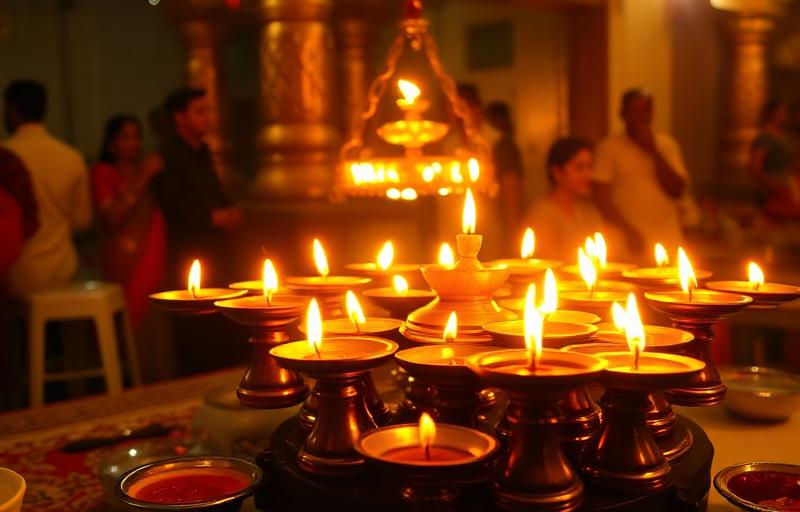
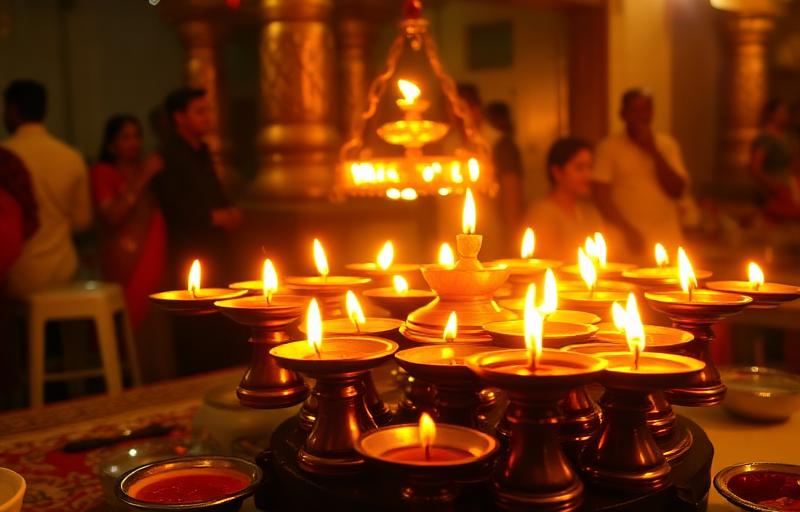
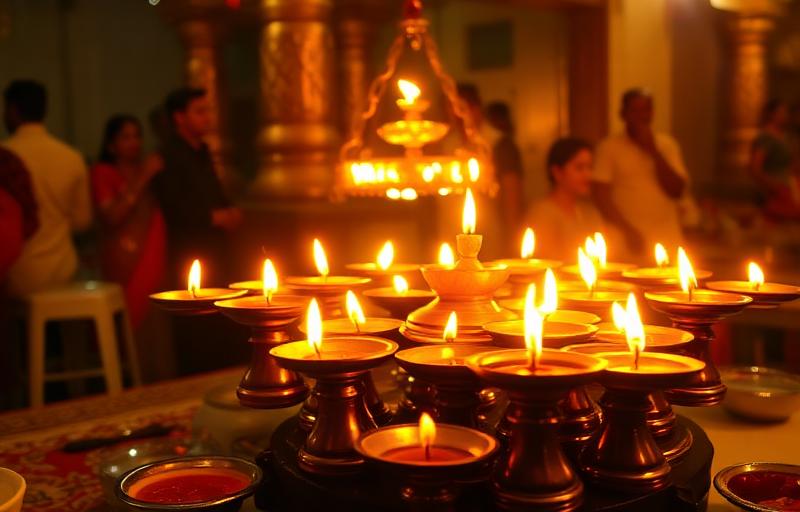
- Has a lamp lit in the evening, usually by whoever has taken on that duty
In cities the pattern persists even where the boundary it once marked has disappeared. Chennai, Madurai, Coimbatore and Tiruchirappalli all have Muneeswarar shrines at street corners, in market areas and beside main roads, in places that were village edges before the city grew over them.
That is worth noticing, because it explains something about how Indian cities work. The shrine stays. The road is built around it, the traffic is diverted past it, buildings go up on all sides, and the small structure with the ascetic under the tree remains exactly where it was.
For devotees, the logic is unchanged. He guards the place. What is around the place has changed a great deal, and that is not his concern.
How He Is Worshipped
Worship at a Muneeswarar shrine is local, informal and mostly conducted by the people who live around it.
- A lamp in the evening is the basic daily observance
- Vibhuti, sandal paste, kumkum and garlands are the common offerings
- Tuesday, Friday and Sunday are the days on which neighbourhood shrines are busiest
- Amavasya and Pournami bring larger observances at many shrines
- The annual kodai, the local festival, is organised by the neighbourhood or village, with cooking, decoration and a night of observance
- Families may perform abhishekam and offer cooked food, particularly pongal made at the shrine
At larger Muneeswarar temples, of which Tamil Nadu has many, worship is more structured, with priests, regular puja timings and annual festivals on a bigger scale.
As with guardian deity worship across the region, older practice at some shrines included offerings not found at agamic temples, and this varies considerably by locality and community. Many shrines today, particularly urban ones, keep entirely vegetarian offerings.
What is worth noting is who does the worship. At a neighbourhood Muneeswarar shrine there is often no priest at all. The people of the street light the lamp, clean the platform, organise the kodai and decide what is offered, which makes these shrines one of the most genuinely community run forms of Hindu worship anywhere in India.
Among Tamil Nadu's Guardian Deities

Tamil Nadu's guardian deities form a system, and each has a distinct character. Placing Muneeswarar in it clarifies him.
- Ayyanar - the chief village guardian, usually seated, with the terracotta horses lined up before his shrine
- Karuppasamy - the enforcer, dark, with the aruval, invoked for theft, injustice and threat
- Muneeswarar - the ascetic, seated with matted hair and trident, holding the place
- Madurai Veeran - a hero deity with his own katha, worshipped as a guardian
- Sudalai Madan - associated with the cremation ground, worshipped in the southern districts
- Periyachi Amman - the fierce protector of childbirth and infants
- Mariamman and the Amman forms - the goddesses who hold the centre of the village
The division of function is precise, and families know it. You do not go to Periyachi about a stolen cow, and you do not go to Karuppasamy about a difficult birth.
Muneeswarar's function is presence rather than action. He is there, at the corner, in the form of an ascetic, and the shrine marks the place as watched.
What makes him distinctive within the group is that his form is not fierce. Tamil guardian deities are generally imposing, armed and confrontational in appearance. Muneeswarar is a seated sadhu, and the protection he offers is understood as the protection of an ascetic's presence rather than of a weapon.
Muneeswarar Abroad
Muneeswarar is one of the deities most fully carried abroad by Tamil migration, and his shrines are prominent in several countries.
- Sri Lanka, where Tamil communities have long maintained Muneeswaram worship, and where the Munneswaram temple near Chilaw is among the significant Shaiva sites of the island
- Malaysia, where Tamil communities established shrines from the nineteenth century onwards, particularly around plantations and later in towns
- Singapore, where guardian deity shrines are part of the Tamil Hindu landscape
- Fiji, Mauritius, South Africa and the Caribbean, where Tamil communities carried their village deities with them
Why guardian deities travelled so completely is worth stating. Communities that migrated for indentured labour or for work in plantations and ports were, overwhelmingly, from the same villages and communities whose devotional life ran through Ayyanar, Muneeswarar, Karuppasamy and the Amman.
Those were the deities they knew, and those were the deities they needed. A community in unfamiliar and often harsh conditions kept the deities who protect boundaries, watch over children and guard those who work at night.
The result is that in several countries, Tamil Hindu practice looks less like the great temple traditions of Tamil Nadu and more like its village religion, preserved and in some cases better documented abroad than at home.
Seeing These Shrines Properly
For a visitor to Tamil Nadu, Muneeswarar shrines are among the easiest things to see and the easiest to miss, because they are not destinations.
How to look:
- Notice the trees in a Tamil town. A large old tree at a corner very often has a shrine at its base.
- Look at junctions and boundaries, including places that are now traffic islands or the edges of markets
- Watch in the evening, when lamps are lit and the shrines are in use
- Visit during a kodai, the neighbourhood festival, when the whole street participates
Etiquette:
- These are community shrines, not public monuments. Ask before approaching closely.
- Do not photograph worship or people at a shrine without permission
- Remove footwear if you step onto the platform
- Do not touch the image, the offerings or the lamps
What these shrines demonstrate is worth carrying away. Hindu practice in Tamil Nadu is often described through its great temples, Madurai, Srirangam, Chidambaram, Thanjavur, and those are extraordinary.
But the deity most Tamil people actually pass every day is a seated ascetic under a tree at the end of the street, maintained by the neighbourhood, with a lamp lit each evening by someone who lives nearby.
That is where the religion actually lives, and Muneeswarar is its most common form.
Reader Questions Answered
Who is Muneeswarar?+
Muneeswarar is a guardian deity worshipped across Tamil Nadu, understood as a form of Shiva in his ascetic aspect. The name combines muni, an ascetic, with iswarar, the lord, and he is depicted as a seated or standing ascetic with matted hair and a trident.
How is Muneeswarar different from Karuppasamy?+
Karuppasamy is the enforcer, dark and armed with the aruval, invoked for theft, injustice and threat. Muneeswarar is the ascetic, seated with matted hair and trident, whose function is presence rather than action, and whose form is not fierce.
Why are Muneeswarar shrines found at street corners?+
Because he is a guardian of boundaries, and his shrines were set at village edges and junctions. As towns grew, the shrines stayed where they were while the city was built around them, which is why they now stand at corners, traffic islands and market edges.
Who maintains these shrines?+
The immediate neighbourhood rather than any temple authority. Local people light the lamp, clean the platform, organise the annual kodai and decide what is offered, which makes these among the most genuinely community run forms of Hindu worship.
Which days are Muneeswarar shrines busiest?+
Tuesday, Friday and Sunday are the main days of the week, with larger observances on amavasya and pournami. The annual kodai, the neighbourhood festival, is the biggest occasion at a local shrine.
Why is Muneeswarar worshipped in the Tamil diaspora?+
Communities that migrated for indentured labour and plantation work came from villages whose devotional life ran through guardian deities. They carried those deities with them, and Muneeswarar shrines are prominent in Sri Lanka, Malaysia, Singapore and other countries with Tamil communities.
About the author
Anjali Mehta · Editor, M.A. Religious Studies
Anjali is the managing editor for Vandnaa and oversees the festival and vrat coverage. She holds an M.A. in Religious Studies and reviews every published article for accuracy, accessibility, and tradition-fidelity.
Meet the Vandnaa editorial team →