The Name and the Katha Behind It
Nanjundeshwara is Shiva worshipped at Nanjangud, on the bank of the Kapila river in Mysuru district of Karnataka, about twenty three kilometres from Mysuru city.
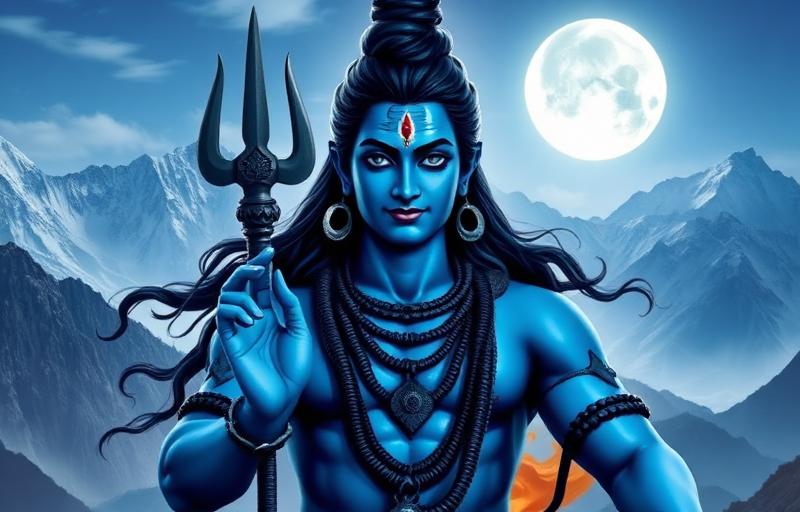
The name is Kannada and it is descriptive. Nanju means poison, and Nanjundeshwara is the lord who consumed it, which is the Kannada equivalent of Neelakantha, the blue throated one.
The katha is one of the most widely known in Hindu tradition:
- The devas and asuras churned the ocean, the samudra manthan, to obtain amrit
- Before anything else emerged, the churning produced halahala, a poison so potent it threatened to destroy creation
- Neither side could contain it, and the world turned to Shiva
- He drank it. Parvati held his throat so it would go no further, and the poison stopped there, turning his throat blue
- The churning continued and the amrit followed
What devotees take from this katha:
- Shiva took in what nobody else could hold, and did not pass it on
- He did not destroy the poison. He contained it, at cost to himself
- The blue throat is not a wound, it is the mark of that act, and it is what the deity is named for wherever this form is worshipped
At Nanjangud the entire temple follows from that name, and the deity's association with healing follows from it too.
The Kashi of the South
Nanjangud is called Dakshina Kashi, the Kashi of the south, and the comparison is made for specific reasons.
- The temple stands on the bank of a river, the Kapila, also called the Kabini, which joins the Kaveri nearby, and river bank Shiva temples are the pattern Kashi established
- The town is a temple town, with the temple as its organising centre rather than as one building among many
- The scale is substantial. The Nanjundeshwara temple is among the largest temples in Karnataka, with a tall gopuram and an extensive complex.
- The healing association is strong, as at Kashi, and the deity is approached for illness
The temple as it stands reflects work over many centuries, with the structure expanded significantly under the Wodeyar rulers of Mysore and in the period following, including a large gopuram and extensive prakaras.
Inside the complex are numerous shrines, since a temple of this scale accumulates them, and the sanctum holds the linga worshipped as Nanjundeshwara.
For devotees in southern Karnataka, this is a temple visited routinely rather than as a distant pilgrimage. Mysuru families come regularly, and the town's proximity to the city means the temple functions as both a major shrine and a local one.
Hakim Nanjunda and the Elephant
The best known story attached to this temple in recent centuries concerns Tipu Sultan, the ruler of Mysore in the late eighteenth century.
The account, told locally and repeated widely:
- An elephant of Tipu Sultan's went blind, and treatment failed
- He was told about the deity at Nanjangud and the temple's association with healing
- He prayed, or had prayers offered, and the elephant's sight returned
- In gratitude he presented the temple with an emerald linga and a jewelled necklace, and referred to the deity as Hakim Nanjunda, the physician Nanjunda
The emerald linga is among the temple's treasures and is brought out on specific occasions.
What this story does, and why it is told so often in Karnataka, is establish the temple's healing reputation in a form people remember. A Muslim ruler addressing a Shiva temple deity as a physician, and endowing the temple in thanks, is the kind of episode that sits in local memory precisely because it crosses the lines people expect.
The historical details of episodes like this are debated by historians, as such accounts usually are. What is not in question is the reputation itself. Nanjangud has been approached for healing for a very long time, families bring the sick and the temple's association with cure is the reason a great many people come.
The Dodda Jathre
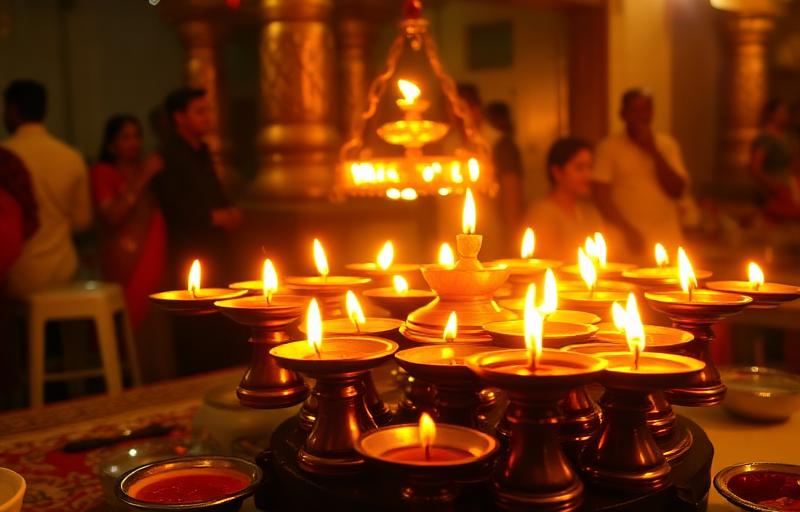
The temple's great annual festival is the Dodda Jathre, the big fair, held in Chaitra, usually falling in March or April.
What happens:
- The temple's rathas, the wooden chariots, are taken out in procession
- Several chariots are drawn, carrying the deity and the associated murtis, pulled by devotees through the streets of Nanjangud
- The town fills with pilgrims from across southern Karnataka
- A large fair runs alongside, with stalls, trade and performance
- Devotees complete vows made during the year
Alongside the Dodda Jathre, a Chikka Jathre, the smaller fair, is held at another point in the calendar.
Other occasions:
- Mahashivratri, the principal Shaiva night of the year
- Mondays through the year, and particularly in the month of Shravan
- Rathasapthami and other festival days, marked at the temple
The chariot festival is the form southern Indian temples give to their annual celebration, and the scale at Nanjangud is substantial. Devotees who have seen the rathotsava at Puri, Srirangam or Tiruvarur will recognise the pattern, in which the deity leaves the sanctum, is drawn through the streets, and is seen by those who cannot enter the temple.
That is the point of a ratha procession, and it is the same everywhere. The temple has thresholds. The street does not.
Why People Come for Healing
The association between Nanjundeshwara and healing is direct, and it follows from the name rather than from later reputation.
The logic devotees state:
- The deity took poison into himself and held it. A deity who did that is the one you approach when poison, illness or something that will not leave the body is the problem.
- The Neelakantha form is invoked across India in exactly this context, and mantras addressing Shiva in this form are used for protection from poison and disease
- The Hakim Nanjunda story reinforced the reputation locally
- Families bring children who are unwell, and vows for recovery are among the most common at the temple
What this produces is a temple where a significant share of the visitors are there about an illness in the family.
And, as at every healing shrine in India, the same thing should be said plainly. Devotion at Nanjangud runs alongside medical treatment and does not replace it. Families in Karnataka do both, and the temple's own reputation includes the accounts of people who prayed here and were treated by doctors, without anyone in the tradition finding that a contradiction.
What the shrine offers, in the terms devotees themselves use, is a deity who is understood to have taken on what could not be borne by anyone else, which is a specific kind of comfort when your family is dealing with exactly that.
Visiting Nanjangud
Nanjangud is one of the easiest major temples in Karnataka to visit.
- Location - Nanjangud town, Mysuru district, on the Kapila river, about twenty three kilometres from Mysuru
- Access - by road or rail from Mysuru in under an hour, and Bengaluru is about three and a half hours away
- Best time - October to March. Dodda Jathre in Chaitra and Mahashivratri are the largest occasions.
- Timings - the temple follows morning and evening darshan hours with a midday break, so check before travelling
- What to carry - bel patra, flowers, and a small vessel if you wish to offer water. Many devotees bathe in the Kapila before darshan.
- Dress - traditional attire is expected, as at most large Karnataka temples
What to combine:
- Mysuru, with the Chamundeshwari temple on Chamundi hill and the palace
- Talakadu, the sand covered temple site on the Kaveri, and its Panchalinga darshana
- Somanathapura, with the Hoysala Chennakeshava temple, among the finest in India
- Bandipur and Nagarhole, if the trip extends south
A suggestion for those visiting Mysuru. Most itineraries cover the palace and Chamundeshwari and stop there. Nanjangud is under an hour away, is one of the largest temples in the state, and gives you a Shaiva counterpart to the Devi on the hill. Between the two you have most of what Mysuru actually worships.
What People Ask Most
What does Nanjundeshwara mean?+
Nanju means poison in Kannada, so Nanjundeshwara is the lord who consumed poison. It is the Kannada equivalent of Neelakantha, referring to Shiva drinking the halahala that emerged during the churning of the ocean.
Why is Nanjangud called Dakshina Kashi?+
Because the temple stands on a river bank, the Kapila, the town is organised around the temple, the complex is among the largest in Karnataka, and the deity is approached for healing, all of which follow the pattern Kashi established.
What is the Hakim Nanjunda story?+
The account tells of an elephant of Tipu Sultan going blind, treatment failing, and its sight returning after prayers at Nanjangud. In gratitude he presented an emerald linga and a jewelled necklace, and called the deity Hakim Nanjunda, the physician Nanjunda.
When is the Dodda Jathre?+
In Chaitra, usually falling in March or April, when the temple's wooden chariots are taken out in procession and pulled by devotees through the streets of Nanjangud, with a large fair alongside. A smaller Chikka Jathre is held at another point in the calendar.
Why do people come to Nanjangud for healing?+
Because the deity took poison into himself and held it, and the Neelakantha form is invoked across India for protection from poison and disease. Families bring children who are unwell, and vows for recovery are among the most common here, alongside medical treatment rather than instead of it.
What can be combined with a Nanjangud visit?+
Mysuru with the Chamundeshwari temple and the palace, Talakadu with its sand covered temples and Panchalinga darshana on the Kaveri, and Somanathapura with the Hoysala Chennakeshava temple.
About the author
Pandit Ravindra Sharma · Vedic Rituals & Bhakti, 22+ years
Pandit Ravindra is the Vandnaa editorial team's resident specialist on aarti, chalisa, and daily devotion. He has performed home and temple pujas across Varanasi and Delhi for over two decades and contributes the bhakti-focused articles on this site.
Meet the Vandnaa editorial team →Explore on Vandnaa
Related Articles

Chamundeshwari Temple Mysuru: History, Darshan and Dasara Glory
7 min read
Anjanadri: The Hill Above Hampi Where Hanuman Is Said to Have Been Born
8 min read
Male Mahadeshwara Swamy: The Shiva Who Rode a Tiger Across Seven Hills
8 min read
Neelkanth Mahadev: How Shiva Drank the Poison of Samudra Manthan
7 min read