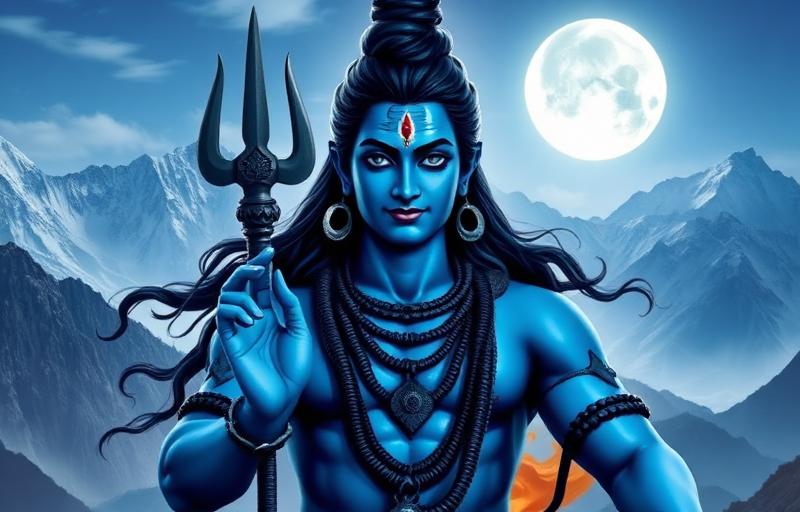
What Is Nirvana Shatkam?
Nirvana Shatkam, also known as Atma Shatkam, is a short but profound composition of six verses by Adi Shankaracharya, the great teacher of Advaita Vedanta. Tradition says the young Shankara spoke these verses to his guru Govinda Bhagavatpada when asked, 'Who are you?'
Instead of naming his body, caste or mind, he answered with the truth of the Self. Each verse first lists what the Self is not - not the body, not the mind, not the elements, not even merit or sin - and ends with the radiant refrain Chidananda rupah Shivoham Shivoham - I am pure consciousness and bliss, I am Shiva, I am Shiva. It is a hymn of self-realisation, pointing beyond all limits to the eternal Atman that is one with Shiva (the Absolute).
The Verses with Meaning
Verse 1:
मनोबुद्ध्यहंकारचित्तानि नाहं न च श्रोत्रजिह्वे न च घ्राणनेत्रे। न च व्योम भूमिर्न तेजो न वायुः चिदानन्दरूपः शिवोऽहं शिवोऽहम्॥
Mano-buddhy-ahankara-chittani naham, Na cha shrotra-jihve na cha ghrana-netre, Na cha vyoma bhumir na tejo na vayuh, Chidananda rupah shivoham shivoham.
Meaning: I am not the mind, intellect, ego or memory; nor the ears or tongue, nor the nose or eyes; nor space, earth, fire or air. I am the form of consciousness and bliss - I am Shiva, I am Shiva.
Verse 2:
न च प्राणसंज्ञो न वै पञ्चवायुः न वा सप्तधातुर्न वा पञ्चकोशः। न वाक्पाणिपादौ न चोपस्थपायू चिदानन्दरूपः शिवोऽहं शिवोऽहम्॥
Na cha prana-sanjno na vai pancha-vayuh, Na va sapta-dhatur na va pancha-koshah, Na vak-pani-padau na chopastha-payu, Chidananda rupah shivoham shivoham.
Meaning: I am not the life-breath nor the five vital airs, not the seven elements of the body nor the five sheaths, not speech, hands or feet. I am consciousness and bliss - I am Shiva, I am Shiva.
The final verse closes:
अहं निर्विकल्पो निराकाररूपो विभुत्वाच्च सर्वत्र सर्वेन्द्रियाणाम्। न चासंगतं नैव मुक्तिर्न मेयः चिदानन्दरूपः शिवोऽहं शिवोऽहम्॥
Meaning: I am beyond all doubt, formless, all-pervading and present in every sense; unattached, beyond bondage and liberation alike. I am consciousness and bliss - I am Shiva, I am Shiva.
Meaning & Spiritual Significance
Nirvana Shatkam is the heart of Advaita Vedanta in six verses. Its method is neti neti - not this, not this. By repeatedly denying that the Self is the body, the senses, the mind or any worldly identity, it strips away everything we wrongly take ourselves to be.
What remains is Chidananda - the Self as pure awareness (chit) and bliss (ananda). The refrain Shivoham does not claim equality with the deity Shiva; it declares that the innermost Self is one with the Absolute, the auspicious reality named Shiva. The teaching is that you are not a limited person passing through the world; your true nature is ever-free, formless and untouched by birth, death, merit or sin. Reciting it again and again loosens the grip of ego and turns the mind toward this truth.
Benefits & How to Chant

Benefits:
- A powerful tool for meditation and quieting the restless mind.
- Dissolves ego, fear and over-identification with the body and circumstances.
- Brings calm, fearlessness and a sense of inner freedom in difficult times.
- Deepens understanding of the Self for seekers on the path of jnana (knowledge).
How to chant: 1. Sit in a quiet place in a steady posture, ideally early morning or before meditation. 2. Recite slowly, letting the meaning of each line settle - feel the not this, not this gently releasing every label. 3. Rest in the refrain Shivoham, breathing it in as a felt truth rather than mere words. 4. After reciting all six verses, sit in silence for a few minutes and simply be the awareness the hymn points to.
It needs no elaborate puja; sincerity and stillness are the true offerings. Many keep it as a daily contemplation alongside Shiva worship.
Common Questions From Devotees
What does Shivoham mean?+
Shivoham means 'I am Shiva'. In Nirvana Shatkam it declares that the true Self is pure consciousness and bliss, one with the Absolute reality called Shiva - not the body, mind or ego.
Who wrote Nirvana Shatkam?+
Nirvana Shatkam (Atma Shatkam) was composed by Adi Shankaracharya, the great Advaita Vedanta teacher. Tradition says he spoke it to his guru when asked who he was.
Why is it called Nirvana Shatkam?+
Shatkam means a group of six verses, and nirvana refers to liberation. The hymn leads to liberating self-knowledge, so it is called Nirvana Shatkam; it is also called Atma Shatkam, the six verses on the Self.
Is Nirvana Shatkam only for sannyasis?+
No. Anyone can recite and contemplate it. While it is a profound Vedanta teaching, even reciting it for calm, fearlessness and meditation benefits everyday seekers, householders included.
About the author
Acharya Vinaya Kapoor · M.A. Sanskrit, Mantra & Stotra Studies
Acharya Vinaya holds an M.A. in Sanskrit from Banaras Hindu University and writes the mantra and stotra commentary on Vandnaa. Her focus is on accurate pronunciation, traditional context, and helping modern readers connect with classical texts.
Meet the Vandnaa editorial team →