What Are the Panch Kedar?
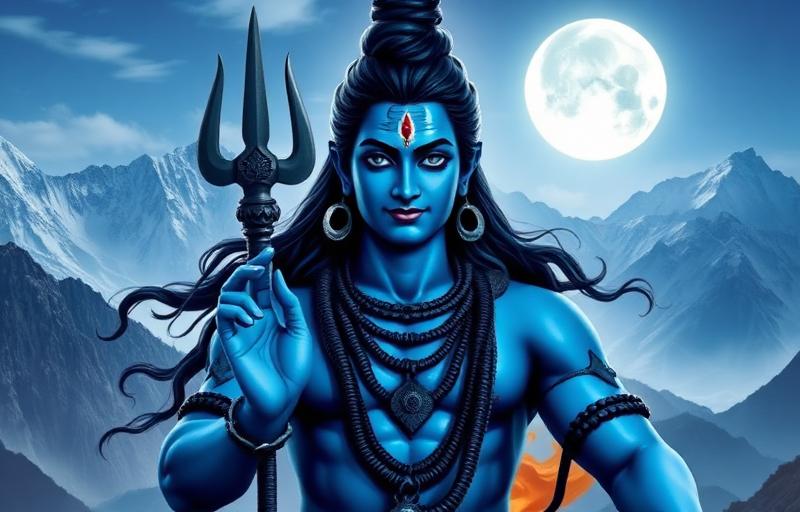
The Panch Kedar are five sacred temples of Lord Shiva set high in the Garhwal Himalayas of Uttarakhand. The word panch means five and kedar refers to Shiva as the lord of this Himalayan region.
Each shrine is believed to enshrine a different part of Lord Shiva's form, and together they make one of the most revered Shiva pilgrimages in India. The journey winds through deep valleys, alpine meadows and remote ridges, and for devotees it is as much an inner ascent as an outer one - a path of penance, surrender and the search for grace.
The Pandava Legend Behind Panch Kedar
After the Mahabharata war, the Pandavas were burdened by the guilt of killing their kinsmen. To free themselves of this sin, they sought the blessing and forgiveness of Lord Shiva.
It is said that Shiva, unwilling to grant them an easy darshan, took the form of a bull (Nandi) and hid among the cattle in the Garhwal hills. When Bhima recognised and tried to seize the bull, it dived into the earth and reappeared in five places.
The hump rose at Kedarnath, the arms (bahu) at Tungnath, the navel and stomach (nabhi) at Madhyamaheshwar, the face (mukh) at Rudranath, and the matted hair (jata) at Kalpeshwar. The Pandavas built temples at each spot, and so the Panch Kedar came to be - a place where penance turned into grace.
The Five Shrines - One Line Each
- Kedarnath: The most famous, where the hump of Shiva is worshipped; one of the twelve Jyotirlingas, set near the Mandakini at high altitude.
- Madhyamaheshwar (Madmaheshwar): Where the navel and stomach of Shiva are revered, reached through green meadows in the Mansoona region.
- Tungnath: The highest Shiva temple in the world, where the arms of Shiva are worshipped, on the Chandrashila ridge.
- Rudranath: Where the face (mukh) of Shiva is honoured, a remote shrine amid alpine pastures and rhododendron forests.
- Kalpeshwar: The only Panch Kedar open all year, where the matted hair (jata) of Shiva is worshipped, in the Urgam valley.
The Yatra Order & How Devotees Travel

The traditional pilgrimage is undertaken in a set order: Kedarnath, then Madhyamaheshwar, Tungnath, Rudranath and finally Kalpeshwar. Completing all five is considered a deeply meritorious vow.
- The high shrines (Kedarnath, Madhyamaheshwar, Tungnath, Rudranath) usually open from around Akshaya Tritiya in spring and close near Diwali, when the deity is shifted to a winter seat. Kalpeshwar remains open through the year.
- The yatra involves long treks at high altitude, so most devotees plan for several days, carry warm clothing and go with proper guidance.
- It is wise to check current temple-opening dates, weather and route conditions before setting out, as Himalayan access changes with the season.
- Above all, the Panch Kedar yatra is approached as a spiritual sadhana - patient, humble and offered to Lord Shiva.
Frequently Asked Questions
What are the five Panch Kedar temples?+
The Panch Kedar are Kedarnath (hump), Madhyamaheshwar (navel and stomach), Tungnath (arms), Rudranath (face) and Kalpeshwar (matted hair). Each enshrines a different part of Lord Shiva's form.
Why are the Panch Kedar linked to the Pandavas?+
After the Mahabharata war, the Pandavas sought Shiva's forgiveness for killing their kinsmen. Shiva took the form of a bull and dived into the earth, reappearing in five places, where the Pandavas built the Panch Kedar temples.
Which Panch Kedar temple stays open all year?+
Kalpeshwar, in the Urgam valley, is the only Panch Kedar shrine open throughout the year. The other four high shrines close in winter, when the deity is moved to a winter seat.
In what order is the Panch Kedar yatra done?+
The traditional order is Kedarnath, Madhyamaheshwar, Tungnath, Rudranath and finally Kalpeshwar. Since these are high-altitude treks, check opening dates, weather and route conditions before you travel.
About the author
Pandit Ravindra Sharma · Vedic Rituals & Bhakti, 22+ years
Pandit Ravindra is the Vandnaa editorial team's resident specialist on aarti, chalisa, and daily devotion. He has performed home and temple pujas across Varanasi and Delhi for over two decades and contributes the bhakti-focused articles on this site.
Meet the Vandnaa editorial team →