What Is Ratha Saptami or Surya Jayanti?
Ratha Saptami falls on the Shukla Saptami of the Magha month - the seventh day of the waxing moon - and is revered as Surya Jayanti, the appearance day of Surya Dev. Tradition holds that on this day the Sun God, born to sage Kashyapa and Aditi, first illumined the world, and that His golden chariot drawn by seven horses, with Aruna as charioteer, turns decisively toward the northern hemisphere. The seven horses are said to embody the seven colours of light and the seven days of the week; the chariot's single wheel is the year itself, with twelve spokes for the months. Ratha Saptami thus marks the deepening of Uttarayana - days grow visibly longer and warmer, fields ripen toward harvest, and devotees greet the strengthening sun as one greets an honoured guest arriving home. It is among the few Hindu festivals devoted purely to the most visible form of the divine: the light by which we see everything else.
Ratha Saptami 2027 Date and Snan Muhurat
Ratha Saptami is observed on Magha Shukla Saptami, which in 2027 falls around January-February, about a fortnight after Makar Sankranti and a day before Bhishma Ashtami. The festival's central observance - the arunodaya snan, bathing at the first light before sunrise - makes timing matter more than on most festivals: the snan's full merit is traditionally tied to the brief arunodaya window, roughly the last hour and a half before sunrise. 1. Confirm the exact Saptami date for your city on the Vandnaa Panchang. 2. Note your local sunrise time and plan the snan to finish as the sun rises. 3. If Saptami spans two days, the day on which the tithi prevails at arunodaya is generally taken for the snan. Do not rely on a generic time printed for another city; sunrise shifts by many minutes across India, and this is one festival where those minutes carry the meaning.
Arka Snan - Bathing with Aak Leaves at Sunrise
The signature ritual of Ratha Saptami is the arka snan - bathing with leaves of the arka plant (aak, Calotropis, the crown flower), whose very Sanskrit name is a name of the sun. 1. Rise during arunodaya, before the sun appears. 2. Take seven arka leaves: tradition places one on the head and others on the shoulders, arms and feet - seven points for the seven horses of the Sun's chariot. 3. Some families add a few grains of akshat (rice) atop the head-leaf. 4. Bathe facing east - in a river or at home with a bucket - letting the water flow over the leaves, while reciting the snan shloka: सप्तसप्तिवह प्रीत सप्तलोकप्रदीपन। सप्तमी सहितो देव गृहाण अर्घ्यं दिवाकर॥ - "O Divakara, drawn by seven horses, lamp of the seven worlds, pleased with this Saptami, accept my offering." 5. The arka leaf is believed to absorb and carry away ailments; the snan is therefore prayed for arogya - health - for oneself and one's family. If arka leaves are unavailable, bathe at arunodaya with the same shloka and bhava; the heart of the ritual is greeting the newborn sun in purity.
Ratha Saptami Puja and Arghya Vidhi
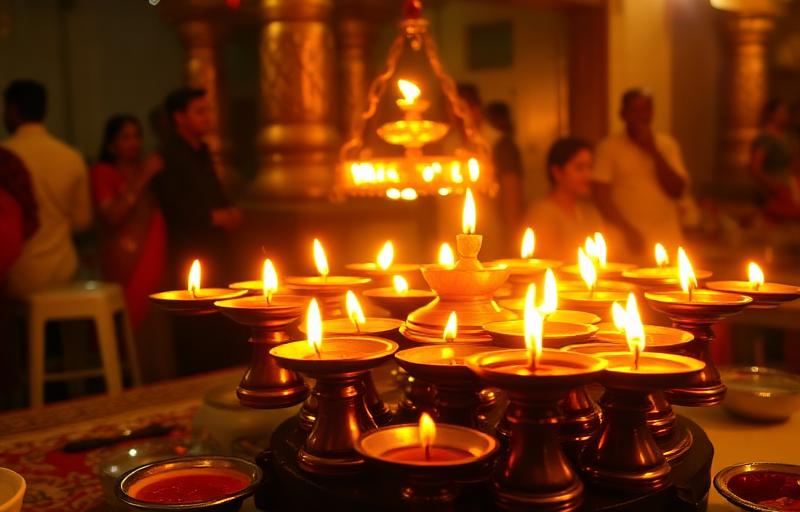
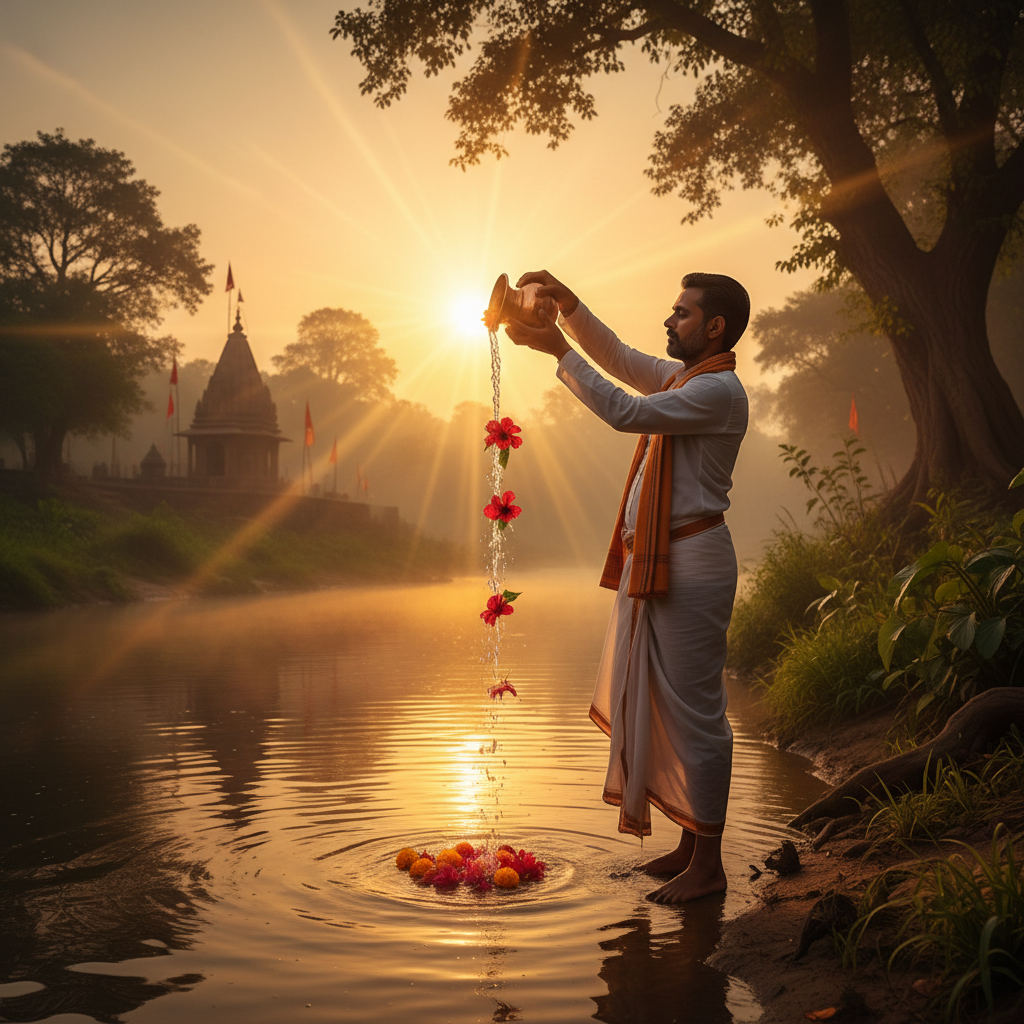
After the snan, the worship continues as the sun rises. 1. Facing the rising sun, offer arghya from a copper lota - water with red flowers, roli, akshat and a touch of chandan - poured in a slow stream while chanting ॐ घृणिं सूर्य आदित्य (Om Ghrinim Surya Aditya). 2. Offer the arghya seven times if you can, honouring the seven horses. 3. At home, draw a rangoli of the Sun's chariot - a rath with seven horses - at the doorway or puja sthal; in many homes this is the children's joyful duty. 4. Light a ghee deepak before Surya Dev's image, offer red flowers, gud and til (sesame), and naivedya of kheer - in South India, sweet paramannam cooked in milk, traditionally begun as the sun rises. 5. Read the katha of Surya's birth to Aditi, or the tale of King Yashovarma's son, whose failing life was renewed by this vrat. 6. Conclude with Surya aarti and distribute the kheer as prasad. The day is also kept as a vrat by many - one saltless meal, as on Ravivar - though the snan and arghya remain the essential observance.
Mantras for Ratha Saptami - Surya Gayatri and More
On Surya Jayanti, the sun's own mantras are chanted at sunrise and through the morning. 1. Surya Gayatri - ॐ आदित्याय विद्महे दिवाकराय धीमहि तन्नः सूर्यः प्रचोदयात्॥ - Om Adityaya Vidmahe Divakaraya Dhimahi Tannah Suryah Prachodayat - "We know the Aditya, we meditate on the Maker of day; may Surya inspire our intellect." Chant 11, 21 or 108 times. 2. ॐ घृणिं सूर्य आदित्य - Om Ghrinim Surya Aditya - the compact, beloved Surya mantra for arghya. 3. ॐ सूर्याय नमः - Om Suryaya Namah - for continuous simple japa. 4. The Aditya Hridaya Stotra - sage Agastya's hymn to the Sun given to Lord Ram - is read in full in many homes and temples on this day; reciting it facing the morning sun on Surya Jayanti is considered especially auspicious. Let the japa be unhurried. The sun does not rush, and neither should the one greeting him.
What to Donate on Ratha Saptami
Dana given on Surya Jayanti, in the sacred Magha month, is held to carry multiplied merit. The traditional gifts echo the sun's own qualities - warmth, light, nourishment. 1. Til (sesame) and gud (jaggery) - the classic Magha donations, warming foods given to the needy. 2. Wheat and rice, or a full anna-dana meal for the hungry. 3. Copper vessels - copper is the sun's own metal, used for his arghya. 4. Red or saffron cloth, blankets for the cold that still lingers in Magha mornings. 5. Ghee deepak and oil to temples that keep lamps burning. Give directly into deserving hands where possible, and give quietly. The katha traditions of this day repeatedly link Surya's grace to unostentatious generosity - the sun himself gives everything to everyone daily, asking nothing, and the giver on Ratha Saptami imitates his deity.
Regional Celebrations - From Tirumala to Konark

Ratha Saptami shines brightest in South India. At Tirumala, the day is observed as a one-day Brahmotsavam: Lord Malayappa Swamy is taken in procession on seven different vahanas from dawn to night, drawing lakhs of devotees. In Mysuru, Melkote and across Karnataka and Andhra, temple deities ride the Surya Prabha vahana - a radiant sun-disc mount - at sunrise. Tamil homes draw chariot kolams and cook sweet pongal; in Maharashtra, children carry small clay chariots, and ratha rangolis adorn doorways. At the sun temples - Konark in Odisha, Modhera in Gujarat, Arasavalli in Andhra - special sunrise pujas mark the deity's day, and at Arasavalli the sun's rays are famed to fall directly upon the murti in this season. Wherever you are, the festival needs no temple: an east-facing window, a lota of water and seven arka leaves make any home a sun temple at arunodaya.
Frequently Asked Questions
When is Ratha Saptami in 2027?+
Ratha Saptami falls on Magha Shukla Saptami, around January-February 2027, roughly a fortnight after Makar Sankranti. Since the snan is tied to your local arunodaya and sunrise, confirm the exact date and timings on the Vandnaa Panchang.
Why is Ratha Saptami called Surya Jayanti?+
Tradition holds that Surya Dev, son of Kashyapa and Aditi, manifested and first illumined the world on Magha Shukla Saptami. The day is therefore kept as His appearance day or birthday, when His seven-horse chariot turns toward the northern course.
How is the arka leaf snan done on Ratha Saptami?+
Before sunrise, place seven arka (aak) leaves on the body - head, shoulders, arms and feet - some add akshat on the head-leaf, and bathe facing east while reciting the Saptami snan shloka. The seven leaves honour the seven horses of Surya's chariot, and the snan is prayed for health.
What do the seven horses of Surya's chariot represent?+
The seven horses are traditionally said to represent the seven colours of sunlight and the seven days of the week. The chariot's single wheel symbolises the year, its twelve spokes the months - the whole image is time itself, driven by the Sun.
What should be donated on Ratha Saptami?+
Til (sesame), gud, wheat, rice, copper vessels, red or saffron cloth, blankets and deepak ghee are the traditional donations, given quietly to the needy. Dana in the Magha month on Surya Jayanti is believed to carry multiplied merit.
How is Ratha Saptami celebrated at Tirumala?+
Tirumala observes Ratha Saptami as a one-day Brahmotsavam: Lord Malayappa Swamy is carried in procession on seven different vahanas from dawn to night, including the Surya Prabha vahana at sunrise. Lakhs of devotees attend this single-day festival of seven processions.
About the author
Acharya Vinaya Kapoor · M.A. Sanskrit, Mantra & Stotra Studies
Acharya Vinaya holds an M.A. in Sanskrit from Banaras Hindu University and writes the mantra and stotra commentary on Vandnaa. Her focus is on accurate pronunciation, traditional context, and helping modern readers connect with classical texts.
Meet the Vandnaa editorial team →