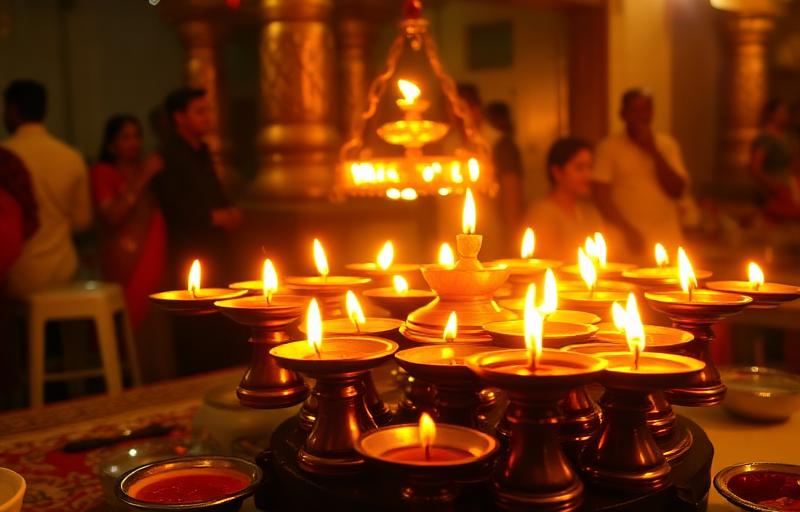
Why the Fourth Somwar Deserves Special Family Treatment
Sawan 2026 gives devotees four Somwars, 3, 10, 17 and 24 August, and while each carries its own merit, the final one occupies a distinct place in how most families experience the month. It is the day that closes the weekly rhythm households have built over four weeks, the last jal abhishek before Sawan Purnima on 28 August, and, practically speaking, often the last chance for extended family to gather before the fasting portion of Sawan gives way to the very different mood of Raksha Bandhan preparations the same week.
Many households treat this Monday with noticeably more effort than the earlier three: a fuller puja thali, an attempt to get every family member present rather than whoever happens to be free, and often a small family meal after the evening aarti that doubles as a quiet celebration of having sustained the month's discipline together. There is also a simple emotional logic to it. Starting something as a family, the first Somwar of Sawan, is easy to coordinate with everyone's enthusiasm fresh; finishing it together, after four weeks of competing schedules, actually takes more deliberate planning, which is exactly why it deserves one.
For multi-generational households, this Monday is also often the most realistic day to involve grandparents who may know katha and mantras younger members do not, working parents who could not make every weekday puja, and children old enough to participate meaningfully but young enough to need clearly defined, simple roles rather than open-ended participation. Getting that structure right, more than any single ritual detail, is what makes a family puja feel unified rather than like several people praying alongside each other.
Planning Ahead: What to Prepare the Night Before
A smooth family puja on a working Monday depends far more on Sunday evening preparation than on anything done in the rushed hour before everyone leaves for work or school. A simple checklist the night before removes most of the friction:
- Puja thali items: bel patra (bilva leaves), fresh flowers (white or light-colored preferred for Shiva), raw milk, water, a small container of honey and curd for panchamrit, dhatura or akwan flowers if locally available, incense, a diya with extra oil or ghee, and matches kept in one place rather than scattered.
- Confirm the abhishek setup, whether it's a home Shivling, a photo-based altar, or a small Shiv Parivar arrangement, cleaned and ready rather than dusty from the week.
- Assign the next morning's timing out loud, as a family, the evening before. Ambiguity about "who's doing what time" is the single biggest reason rushed family pujas fall apart on an actual work morning.
- Prepare falahar ingredients in advance for anyone fasting, so breakfast and lunch don't become a last-minute scramble that eats into puja time.
- Charge phones and check for a printed or saved Shiv Chalisa text, particularly useful for younger members still learning it by heart, so no one is fumbling for lyrics mid-aarti.
- Decide the family meal plan for the evening, since many households mark this final Monday with something slightly more festive than a routine falahar dinner, which is worth deciding ahead rather than improvising while tired after work.
This preparation, done calmly on Sunday night, is what actually allows Monday morning to feel devotional rather than logistically stressful, especially in households balancing school runs and office commutes around the puja itself.
Giving Every Generation a Real Role
The families who describe their Sawan puja as genuinely bonding, rather than something everyone simply tolerates, almost always have one thing in common: clearly divided roles rather than a vague expectation that everyone "participates somehow."
- Children (roughly ages 4-10): Give them ownership of something concrete and repeatable, arranging flowers on the thali, holding the bel patra basket during abhishek, or ringing the small bell during aarti. Avoid asking young children to sit through a full, adult-length puja silently; a defined two or three-minute task keeps them genuinely engaged rather than restless.
- Older children and teenagers: Old enough for slightly more responsibility, they can lead one round of the Shiv Chalisa or Om Namah Shivaya japa count, help younger siblings with their tasks, or be responsible for lighting the diya and incense at the correct point in the sequence.
- Grandparents and elders: Often the household's most knowledgeable members on katha, mantra pronunciation and the reasoning behind specific rituals; invite them explicitly to narrate the Shiva-Parvati story or explain a ritual step aloud as it happens, rather than assuming younger members already know it. This transmission of knowledge is frequently the most valued part of the day for elders themselves.
- Working parents: Rather than trying to do the full traditional sequence before a 9 AM office start, many households split it: a short abhishek and japa at dawn led by whoever is home, with the fuller aarti, Chalisa and family meal moved to evening when everyone has returned.
- The person managing the kitchen: Often overlooked in puja planning entirely; explicitly acknowledging that preparing falahar for the whole family is itself a form of seva (service) helps this contribution feel seen rather than invisible admin work happening around the "real" ritual.
A rotating structure, where roles shift year to year, also keeps the practice fresh rather than calcifying into the same one or two people always "running" the family's devotion.
A Workable Sequence for the Day Itself

For a family managing school and office schedules, splitting the final Somwar into two shorter, focused sessions tends to work better than attempting one long ritual block that inevitably gets rushed:
Morning (roughly 30-40 minutes, before the day starts)
- Bathe and dress in clean clothes
- Jal abhishek on the Shivling or photo-based altar, water first, then milk, then water again to close
- Offer bel patra with the flat side facing the deity, three leaves per offering is traditional
- A short, 21 or 108-count Om Namah Shivaya japa, whoever is present
- A brief sankalp (intention) spoken aloud: since it's the final Somwar, this is a natural moment to state gratitude for completing the month rather than only making a new request
Evening (roughly 45-60 minutes, once everyone is home)
- Full family gathering around the puja space
- Shiv Chalisa recited together, ideally with elders leading the pronunciation for younger members
- Aarti, with children given the diya, bell or conch to hold in rotation
- Katha, a grandparent or elder narrating the Shiva-Parvati story or the significance of the month's fourth Somwar specifically
- Prasad distribution, followed by a slightly more festive falahar or post-fast family meal
- A closing round where each family member, even briefly, shares one thing they noticed about themselves over the month's four Mondays, which turns the evening into genuine reflection rather than only ritual repetition
This two-part structure respects both the sanctity of the morning ritual and the reality of a working household's evening availability, without asking anyone to skip either.
Including Family Members Who Cannot Be Physically Present
Not every extended family can gather in one home, especially on a working Monday, and modern households have developed genuinely workable ways to keep distant members part of the final Somwar rather than simply excluded from it.
- A live video call during aarti, propped up facing the puja space, lets grandparents, siblings or children living elsewhere join the visual and audio experience in real time, even if they cannot physically wave the diya themselves. Many families report this is more meaningful than expected, particularly for elderly relatives who cannot travel.
- A shared family message thread for the day, where members send a quick photo of their own smaller puja setup, wherever they are, creates a sense of simultaneous, distributed observance rather than one "main" puja and everyone else being absent from it.
- Sending prasad by courier ahead of time, where feasible, so distant family members have something tangible from the day even if timing doesn't allow a live connection, is a small gesture many families say matters more than expected.
- Recording a short video of the katha portion, if an elder is narrating the Shiva-Parvati story, and sharing it afterward lets working family members who missed the live moment still receive that specific transmission of knowledge later in the day.
- Setting a flexible time window rather than one fixed slot for the video call, given that time zones or differing work schedules can make an exact simultaneous gathering genuinely difficult, keeps the effort from collapsing into frustration over coordination.
The point of all of this is not to perfectly replicate physical togetherness, which video calls cannot fully do, but to make sure no family member experiences the final Somwar as something happening entirely without them.
🔱 The Vandnaa App's shared puja reminders can notify every family member at the same time, wherever they are, so a scattered family still starts their individual pujas together.
Closing the Month Together and Looking Toward Raksha Bandhan
The fourth Somwar does not mark the absolute end of Sawan, Purnima on 28 August does, but for most families it is the last major ritual gathering of the fasting portion of the month, with the days after shifting naturally toward Raksha Bandhan preparations, shopping for rakhis, and the different, celebratory energy that follows.
A few families use this Monday evening specifically to mark that transition consciously rather than letting one mood blur into the next unnoticed. A simple closing gesture works well: after the aarti and family meal, sitting together for even ten minutes to acknowledge the month collectively, what the family sustained together, which Mondays were hardest to coordinate, what worked well enough to repeat next year. This is not a formal ritual requirement, but households that do some version of it consistently describe Sawan feeling like a complete, shared chapter rather than four disconnected Mondays that happened to fall in the same month.
For households with an upcoming Raksha Bandhan on 28 August, this final Somwar is also a natural, low-pressure moment to loop in any last logistics, confirming who is traveling for Rakhi, when rakhis need to be bought, whether siblings living elsewhere need anything couriered in time, so that the following two weeks feel like a continuation of the family's devotional rhythm rather than an abrupt switch from puja mode to festival-shopping mode.
Ultimately, the value of a well-planned final Somwar is not the specific rituals performed but what it does for a family's shared rhythm: a reminder, repeated once a year, that devotion practiced together, imperfectly and amid real schedules, is still genuinely shared devotion.
Frequently Asked Questions
What time should a working family plan their final Sawan Somwar puja?+
Splitting the day works best: a short 30-40 minute abhishek and japa session at dawn before work, followed by a fuller family aarti, Chalisa and meal together once everyone is home in the evening.
How do I keep young children engaged during a longer family puja?+
Give them one specific, repeatable task, arranging flowers, holding the bel patra basket or ringing the bell during aarti, rather than expecting them to sit through the entire ritual silently.
How can family members who live far away join the final Somwar puja?+
A live video call during the aarti, propped up facing the puja space, along with sharing photos of their own smaller setup in a family group chat, are simple, widely used ways to include them.
What is a meaningful way to close the family puja on Sawan's final Monday?+
Many families sit together after the aarti and meal for a short reflection, each member briefly sharing what they noticed about themselves over the month's four Mondays, turning the evening into genuine reflection.
Is the fourth Somwar the actual end of Sawan 2026?+
No, the fourth Somwar on 24 August is the last Monday fast, but Sawan itself continues until Purnima on 28 August, which also coincides with Raksha Bandhan this year.
About the author
Pandit Mahesh Trivedi · Festival Traditions & Panchang
Pandit Mahesh leads the festival-date and Panchang content on Vandnaa. He cross-references multiple regional panchangs (Drik, Vaishnava, Bengali, Marathi) for every festival date published on the site.
Meet the Vandnaa editorial team →Explore on Vandnaa
Related Articles
Sawan Somwar 2026: Dates, Vrat Vidhi, Shiv Mantras & Why Mondays in Sawan Are So Powerful
10 min read
Mangala Gauri Vrat - Shravan Tuesdays Puja Vidhi, Katha & Benefits
9 min read

Shiv Parivar: The Family of Shiva, Parvati, Ganesha & Kartikeya - Its Meaning
8 min read
What to Donate During the Final Days of Sawan 2026
7 min read