Shani Dev - The Lord of Karma and Justice
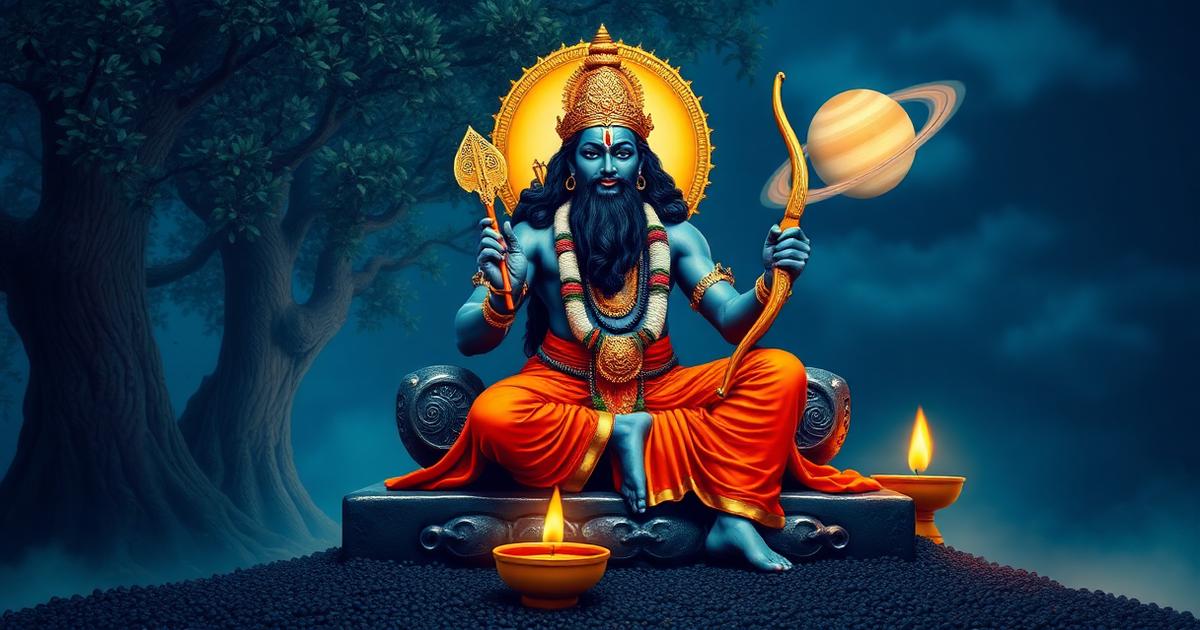
Shani Dev is the son of Surya, the Sun, and Chhaya, and in the devotional tradition He is honoured as the most impartial of all deities - the lord of karma and justice. He does not reward birth, wealth, or status; He responds only to what we actually do. The scriptures call Him a teacher of patience and humility: His lessons come slowly, like Saturn's own unhurried movement across the sky, and they always aim at the devotee's growth.
Generations of bhaktas have therefore approached Shani Dev not with dread but with respect and love, the way one approaches a strict, fair, deeply caring teacher. The Saturday aarti, "Jai Jai Shri Shanidev, Bhaktan Hitkari," states this plainly in its very first line - He is the benefactor of His devotees. This guide gives the full aarti with meaning, the simple Saturday worship flow, and the bhava with which Shani bhakti is truly meant to be done.
Complete Shani Dev Aarti Lyrics - Jai Jai Shri Shanidev
जय जय श्री शनिदेव, भक्तन हितकारी। सूरज के पुत्र प्रभु, छाया महतारी॥ जय जय श्री शनिदेव...
श्याम अंक वक्र दृष्टि, चतुर्भुजा धारी। नीलाम्बर धार नाथ, गज की असवारी॥ जय जय श्री शनिदेव...
क्रीट मुकुट शीश राजित, दिपत है लिलारी। मुक्तन की माल गले, शोभित बलिहारी॥ जय जय श्री शनिदेव...
मोदक मिष्ठान पान, चढ़त हैं सुपारी। लोहा तिल तेल उड़द, महिषी अति प्यारी॥ जय जय श्री शनिदेव...
देव दनुज ऋषि मुनि, सुमिरत नर नारी। विश्वनाथ धरत ध्यान, शरण हैं तुम्हारी॥ जय जय श्री शनिदेव...
Roman Transliteration: Jai Jai Shri Shanidev, Bhaktan Hitkari | Suraj Ke Putra Prabhu, Chhaya Mahtari || Shyam Ank Vakra Drishti, Chaturbhuja Dhari | Neelambar Dhaar Nath, Gaj Ki Asvari || Kreet Mukut Sheesh Rajit, Dipat Hai Lilari | Muktan Ki Maal Gale, Shobhit Balihari || Modak Mishthan Paan, Chadhat Hain Supari | Loha Til Tel Urad, Mahishi Ati Pyari || Dev Danuj Rishi Muni, Sumirat Nar Nari | Vishwanath Dharat Dhyan, Sharan Hain Tumhari ||
Shani Aarti Meaning - Verse by Verse
Verse 1 (Bhaktan hitkari): Victory to Shri Shanidev, the well-wisher and benefactor of His devotees, son of Lord Surya and Mother Chhaya. Notice that the aarti's very first word about Him is "hitkari" - one who does good.
Verse 2 (Shyam ank vakra drishti): His complexion is dark, His gaze is oblique and penetrating - the gaze that sees through pretence straight to our deeds. He has four arms, wears blue garments, and rides a mighty elephant in this depiction.
Verse 3 (Kreet mukut sheesh rajit): A crown adorns His head, His forehead shines with radiance, and a garland of pearls graces His neck - the dignity of the cosmic judge.
Verse 4 (Loha til tel urad): Devotees offer Him modak, sweets, paan, and supari, along with His traditional offerings - iron, black sesame (til), mustard or sesame oil, and urad dal. These dark, humble offerings symbolise giving Him our heaviness and ego.
Verse 5 (Sharan hain tumhari): Gods, sages, men, and women all remember Him; even Vishwanath - Lord Shiva of Kashi - holds Him in meditation. We too take refuge in You, O Shanidev.
The Saturday Worship Flow - Til Oil Diya and Shami
Saturday (Shanivar) is Shani Dev's day, and His worship is beautifully simple. After bathing, devotees visit a Shani temple or worship at home before His image or a simple iron representation. The central offering is a diya of til (sesame) or mustard oil, lit before Him - oil absorbs and carries away heaviness, which is why oil is so central to Shani puja.
Black sesame seeds, urad dal, black cloth, and blue or dark flowers are offered. Many devotees also offer water or a diya at a peepal tree, and the shami tree is especially dear to Shani Dev - offering its leaves or simply lighting a diya beside a shami plant on Saturday evening is an old and cherished practice.
The flow is: bathe, light the til oil diya, make the offerings, chant "Om Sham Shanicharaya Namah" (11, 21, or 108 times), recite the Dasharatha Shani Stotra if you can, and close with the aarti. The stotra is the hymn with which King Dasharatha, father of Lord Rama, pleased Shani Dev through fearless, loving praise - a reminder that Shani is won by devotion, not appeasement.
Shani Aarti Vidhi - How to Perform It
1. Perform the aarti on Saturday evening, or after your Saturday morning puja. Evening is traditional, as Shani Dev is associated with dusk and stillness.
2. Place the til or mustard oil diya on a thali with black sesame seeds and a dark flower. Stand facing the Shani image; west is traditionally associated with Shani, though facing the deity with devotion is what matters most.
3. Move the thali in slow, full clockwise circles - seven circles is the common practice - while singing "Jai Jai Shri Shanidev" steadily and without hurry.
4. After the aarti, offer pranam, then distribute or donate the offerings: til, oil, urad, or a black cloth given quietly to someone in need completes the worship, since daan is the heart of Shani seva.
5. One traditional note: devotees worship Shani Dev's feet and form with lowered, humble eyes rather than a fixed stare - an expression of humility before the lord of justice.
Shani Bhakti - Discipline, Not Fear
Much that is said about Shani Dev in popular culture is coloured by fear. The bhakti tradition sees Him very differently. Shani is nyaya-priya - the lover of justice - and His only demand is honest karma. He is the deity of labourers, of the patient, of those who serve quietly; He stands with the humble and tests the proud. Hanuman ji, the embodiment of seva and humility, is His dear friend, which is why Shani devotees also worship Hanuman on Saturdays.
What pleases Shani Dev, the tradition says, is not anxious appeasement but a changed life: speaking truth, paying workers fairly, caring for the elderly and the poor, feeding animals, keeping one's word, and working with discipline. The Saturday vrat, the til oil diya, and the aarti are weekly anchors for exactly this self-correction.
Approach Him as a teacher, do your duty honestly, and Shani Dev becomes - as the aarti's first line promises - bhaktan hitkari, the steadfast benefactor of His devotees.
Benefits of Shani Dev Aarti and Saturday Vrat

Devotees who keep the Saturday practice describe its blessings in consistent ways: steadiness in difficult phases of life, relief from a sense of heaviness and obstruction, growth in patience, and protection on the path of honest effort. Tradition holds that sincere Shani bhakti brings stability in work, freedom from undeserved blame, and the quiet strength to endure what must be endured.
The practice itself shapes character. Lighting the oil diya week after week builds constancy. The daan that completes Saturday worship - til, oil, food, or clothing given to someone in need - keeps generosity alive as a habit, not an event. The aarti's refrain, sung steadily, replaces anxiety about the future with surrender and effort in the present.
Shani Dev's gifts are rarely sudden. Like the slow planet He governs, His blessings accumulate - and devotees often realise only years later how much steadier, humbler, and stronger the Saturday discipline has made them.
Common Questions From Devotees
When should Shani Dev aarti be performed?+
Saturday is Shani Dev's day, and the aarti is traditionally performed on Saturday evening after lighting the til or mustard oil diya. It can also follow the Saturday morning puja. The aarti closes the worship after offerings, mantra japa, and, if possible, the Dasharatha Shani Stotra.
Why is til (sesame) oil offered to Shani Dev?+
Oil, especially til oil, is Shani Dev's most traditional offering. Symbolically, oil absorbs heaviness - offering it expresses surrendering our burdens, ego, and the weight of past karma to Him. The til oil diya lit on Saturday is the simplest and most complete act of Shani seva.
Is Shani Dev a fearsome deity?+
No. The bhakti tradition honours Shani Dev as nyaya-priya, the just lord of karma, and the aarti's first line calls Him bhaktan hitkari - the benefactor of devotees. He is strict like a fair teacher, responding to our deeds alone. Honest work, humility, and seva please Him; fear has no place in true Shani bhakti.
What is the significance of the shami tree in Shani worship?+
The shami tree is considered especially dear to Shani Dev. Offering shami leaves in Saturday puja, or lighting a diya beside a shami plant on Saturday evening, is an old tradition believed to please Him. Many devotees keep a shami plant at home, often near the entrance or in the puja space.
What is the Dasharatha Shani Stotra and when is it recited?+
It is the hymn of praise with which King Dasharatha, father of Lord Rama, pleased Shani Dev. It reverently recites Shani's names and forms. Devotees recite it on Saturdays after lighting the til oil diya and before the aarti. Its lesson: Shani is won by sincere praise and honest living, not anxious ritual.
Why do devotees worship Hanuman ji along with Shani Dev on Saturdays?+
Tradition holds that Shani Dev deeply respects Hanuman ji, the embodiment of seva, humility, and devotion, and blesses those who worship Him. Saturday Hanuman Chalisa and Shani aarti therefore go together in many homes - both practices cultivate the same qualities of courage, discipline, and surrender.
About the author
Acharya Vinaya Kapoor · M.A. Sanskrit, Mantra & Stotra Studies
Acharya Vinaya holds an M.A. in Sanskrit from Banaras Hindu University and writes the mantra and stotra commentary on Vandnaa. Her focus is on accurate pronunciation, traditional context, and helping modern readers connect with classical texts.
Meet the Vandnaa editorial team →