The Cave and What Is Inside It
Shiv Khori is a natural cave shrine in Reasi district of Jammu, in the same district as Katra and the Vaishno Devi shrine, and it is among the most visited Shaiva sites in the region.
The cave runs roughly two hundred metres into the hillside. The entrance is wide, and the passage narrows considerably in places, so devotees move in single file through sections of it.
What is inside:
- A swayambhu Shivling, self manifested, at the far end of the cave
- Natural rock formations that devotees identify as Parvati, Ganesha, Nandi and other forms, arranged around the linga
- A continuous drip of water onto the linga from the rock above, which devotees treat as a natural abhishek
- Formations along the passage that are pointed out on the way in
The word khori means cave in the local usage, so the name is simply Shiva's cave.
What makes this shrine distinct from most is that nothing in it was placed there. The linga, the surrounding forms and the water are all features of the rock, and the tradition holds that the cave itself is the temple. Devotees who have visited Amarnath will recognise the pattern, since that shrine works the same way, and local tradition connects the two.
The Katha of Bhasmasur
The katha attached to Shiv Khori explains why a cave was needed.
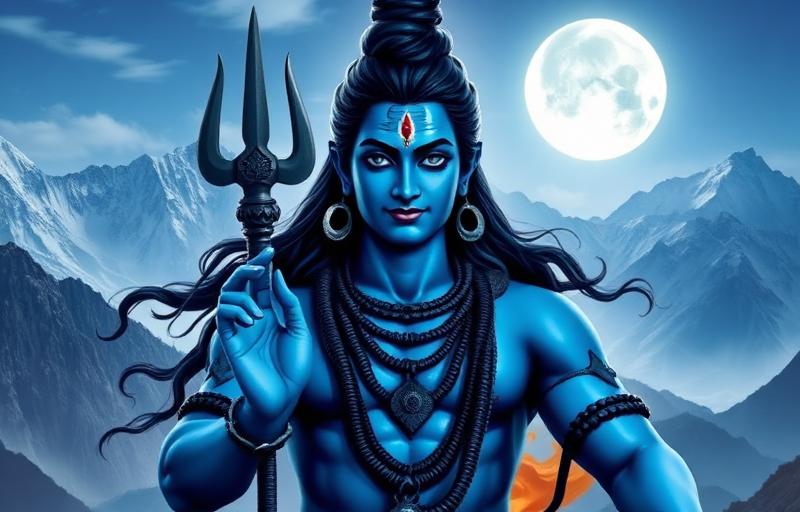
Bhasmasur performed severe tapas and pleased Shiva, who granted him a boon. The asura asked for a power that would let him reduce to ash anyone on whose head he placed his hand. Shiva granted it, as he grants what is asked.
Bhasmasur then decided to test the boon on Shiva himself.
Shiva fled, and the katha says he created or entered this cave to escape. This is why local tradition describes the cave as a passage made in that moment rather than a natural formation, and why devotees are told the cave leads much further than the section open to them.
The episode ends with Vishnu, who appeared as Mohini. Bhasmasur, taken with her, agreed to imitate her movements in a dance, and at one point she placed her hand on her own head. He did the same, and the boon consumed him.
What the katha establishes:
- Shiva grants what is asked without weighing the consequence, which is a recurring pattern in Shaiva narrative
- A boon obtained by tapas is not automatically deserved, and the katha does not pretend otherwise
- The resolution comes through intelligence rather than force, which is Vishnu's characteristic role in such episodes
For devotees at Shiv Khori, the practical result is a cave that is understood as Shiva's own refuge, which gives darshan there a different quality from darshan at a built temple.
The Walk From Ransoo
Shiv Khori is reached by a walk that most reasonably fit visitors can manage.
- The base camp is at Ransoo, which is reachable by road from Katra, Udhampur and Jammu
- From Ransoo the walk to the cave is roughly three kilometres, on a made path
- The route climbs and descends through hill country, with shops, water points and rest stops along the way
- Ponies and palanquins are available for those who need them, as at other shrines in this region
- At the cave, devotees queue and enter in a managed flow, since the passage is narrow
Inside the cave:
- Sections require stooping and moving in single file
- The rock is wet in places, and the floor can be slippery
- The air is close, and the passage can feel confined for those who are uncomfortable in enclosed spaces
- Time inside is limited during busy periods to keep the queue moving
Devotees who are claustrophobic should think about this honestly before entering, since turning back inside a narrow passage with people behind you is difficult. Temple staff manage the flow and will advise.
Best time is October to March for weather. Mahashivratri is the largest gathering. Sawan Mondays draw substantial crowds. Summer is hot in the approach, and the monsoon makes the path slippery.
The Mahashivratri Mela
The Shiv Khori mela at Mahashivratri is the shrine's biggest event, running over several days.
- Devotees arrive from across Jammu, Punjab, Himachal and Delhi
- A chhari yatra, the ceremonial mace procession, is associated with the mela, following the pattern common to shrines in this region
- The route from Ransoo fills through the day and night
- Langars are run by devotee organisations along the path
- Administration arrangements handle crowd flow, medical posts and transport
Offered at the shrine are the standard Shaiva items, carried in by hand:
- Water and milk for abhishek, though the natural drip on the linga is itself considered the continuous abhishek
- Bel patra, dhatura, flowers and dhoop
- A lamp lit outside the cave, since open flames inside a narrow passage are restricted
For most pilgrims, Shiv Khori is combined with Vaishno Devi, since Katra is close and the two shrines are in the same district. The customary order among devotees from the region is Vaishno Devi first and Shiv Khori after, or the reverse depending on travel, and many families do both in a single trip of three or four days along with the Jammu city temples.
Cave Shrines and Why They Are Different
Shiv Khori belongs to a category of Hindu shrine that behaves differently from a built temple, and the difference is worth naming.
Other examples across India:
- Amarnath in Kashmir, where the ice linga forms naturally each year
- Vaishno Devi at Katra, where the Devi is worshipped as three pindis inside a cave
- Patal Bhuvaneshwar in Uttarakhand, a deep limestone cave with formations identified with numerous deities
- Elephanta and Ellora, where caves were carved rather than found, a different case
- Kamakhya and Ugratara in Assam, where the deity is a natural feature rather than an image
What these have in common:
- The deity was found, not installed, which places them in the swayambhu category
- The structure cannot be modified to accommodate devotees, so queues, timings and access are dictated by the rock
- The experience is physical. You go in, the space narrows, the light changes and the temperature drops, and that transition is part of the darshan.
- Nothing can be added. There is no scope for expansion, ornamentation or new construction at the point of worship itself.
That last point is why devotees describe cave shrines as feeling older than other temples, whatever their actual history. A built temple carries the marks of every generation that patronised it. A cave carries none.
Planning the Visit
Shiv Khori fits easily into a Jammu region itinerary.
- Location - Reasi district, Jammu, with the base at Ransoo
- Distance - roughly two to three hours by road from Jammu, and about an hour and a half from Katra depending on the route
- Walk - about three kilometres each way from Ransoo, with ponies and palanquins available
- Time needed - half a day from Katra, a full day from Jammu
- Facilities - accommodation at Ransoo and along the route, with far more available at Katra
- Best time - October to March, with Mahashivratri for the mela and Sawan Mondays for Shaiva devotion
What to carry: water, bel patra and offerings bought at the base, comfortable footwear for a stone path, and warm clothing in winter. Leave large bags at the base, since the cave passage is narrow.
Suggested circuit for the region:
- Vaishno Devi at Katra, the yatra most families in the region complete first
- Shiv Khori at Ransoo, the Shaiva counterpart
- Bawe Wali Mata at Bahu Fort and the Raghunath and Ranbireshwar temples in Jammu city
- Machail Mata in Kishtwar, for those with the time and the fitness for a much harder journey
Done in that order over four days, it covers the Devi, the Shiva cave and the city shrines, which is how families from Jammu themselves usually structure a pilgrimage for visiting relatives.
What People Ask Most
What is Shiv Khori?+
Shiv Khori is a natural cave shrine in Reasi district of Jammu, running roughly two hundred metres into the hillside, with a swayambhu Shivling at the far end and rock formations devotees identify as Parvati, Ganesha and Nandi around it.
What is the katha behind Shiv Khori?+
Bhasmasur received a boon from Shiva that anyone whose head he touched would turn to ash, then tried it on Shiva himself. Shiva fled, and tradition says he created or entered this cave to escape. Vishnu appeared as Mohini and led the asura to place his own hand on his head.
How long is the trek to Shiv Khori?+
About three kilometres each way from the base camp at Ransoo, on a made path with shops, water points and rest stops. Ponies and palanquins are available for those who need them.
Is the cave difficult to enter?+
The passage narrows considerably in places, requiring stooping and single file movement, the rock is wet and the air is close. Devotees who are uncomfortable in enclosed spaces should consider this before entering, since turning back inside is difficult.
When is the Shiv Khori mela?+
At Mahashivratri, running over several days, with a chhari yatra associated with it and devotees arriving from Jammu, Punjab, Himachal and Delhi. Sawan Mondays also draw substantial crowds.
Can Shiv Khori be combined with Vaishno Devi?+
Yes, and most pilgrims do. Both are in Reasi district, with Ransoo about an hour and a half from Katra. Families typically cover Vaishno Devi, Shiv Khori and the Jammu city temples in a trip of three or four days.
About the author
Pandit Ravindra Sharma · Vedic Rituals & Bhakti, 22+ years
Pandit Ravindra is the Vandnaa editorial team's resident specialist on aarti, chalisa, and daily devotion. He has performed home and temple pujas across Varanasi and Delhi for over two decades and contributes the bhakti-focused articles on this site.
Meet the Vandnaa editorial team →