The Katha, Simply Told
Markandeya was born to a childless couple, the sage Mrikandu and his wife, after years of devoted prayer to Shiva. When the boon of a son was granted, Shiva gave the parents a choice: a foolish but long-lived son, or a wise and virtuous son destined to live only sixteen years. The parents chose virtue over length of years, and Markandeya was born.
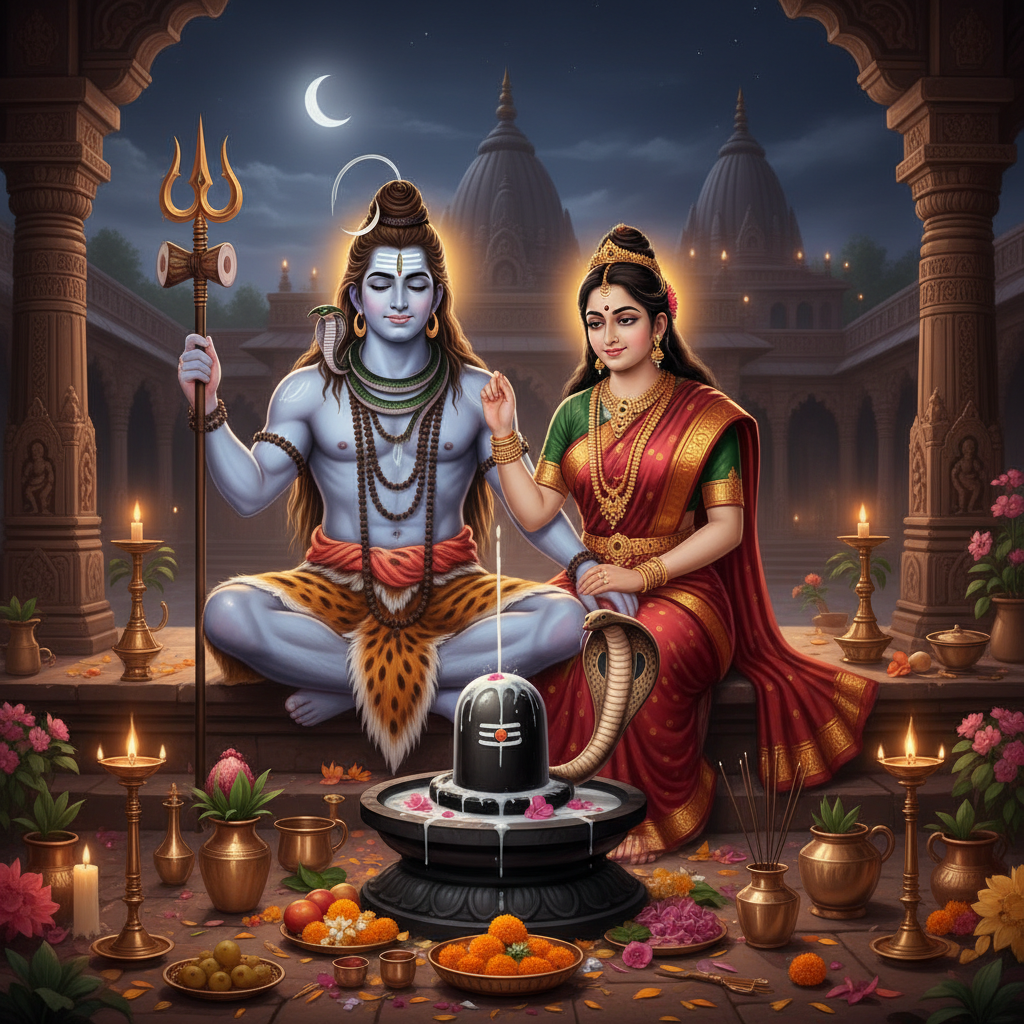
As he grew, Markandeya became an extraordinary devotee of Shiva, spending his days in worship and prayer. As his sixteenth year approached, his parents grew fearful, but Markandeya himself remained calm, deepening his devotion rather than his dread. On the very day his life was destined to end, Markandeya was worshipping a Shiva lingam when Yama, the god of death, arrived to claim his soul.
In utter devotion, the boy clung to the lingam, refusing to let go even as Yama cast his noose. Moved by the depth of this faith, and to protect his devotee, Shiva himself emerged from the very lingam Markandeya embraced. Confronting Yama directly, Shiva intervened and granted Markandeya not just his life but eternal youth, making him one of the immortals of tradition, chiranjivi, forever remembered as a boy of unwavering devotion.
Scriptural Context
The Markandeya katha appears in the Shiva Purana and is also connected to the Markandeya Purana, one of the eighteen Maha Puranas, which is traditionally associated with the sage. The story is closely linked to the origin of the Mahamrityunjaya Mantra, the great death-conquering mantra dedicated to Shiva, which tradition holds was chanted by Markandeya or taught to him in connection with this very episode.
Different regional tellings vary slightly in details, such as the exact circumstances of Yama's arrival, but the central elements, the boon of a short virtuous life, unwavering devotion at the lingam, and Shiva's direct intervention against death itself, remain consistent across the tradition.
Symbolic Meaning
The Markandeya katha is one of the most powerful symbols in Hindu tradition of how sincere devotion can transcend even the fixed boundaries of fate. Markandeya's parents' choice, virtue over longevity, establishes early that a meaningful life, however short, is valued above mere length of years.
Markandeya clinging to the lingam even as death approached represents complete surrender, the idea that unwavering faith does not waver even in the face of the ultimate certainty, mortality itself. Shiva's emergence from the lingam to confront Yama shows that the divine is never truly separate from the object of worship; devotion offered with complete sincerity can call forth the presence of God directly. The story affirms that grace, when devotion is total, is not bound even by cosmic law.
What It Teaches Devotees

- Quality of life matters more than its length: Markandeya's parents chose virtue over years, a value tradition holds in high regard.
- Devotion should remain steady in difficulty, not only in comfort: Markandeya did not let the fear of an approaching end diminish his worship.
- Complete surrender invites divine grace: his refusal to release the lingam, even facing death, reflects total trust rather than mere ritual habit.
- Faith can meet even life's greatest fear: the story offers comfort that sincere devotion to Shiva can bring courage and peace in the face of mortality itself.
How It Is Remembered Today
The Markandeya katha remains closely tied to the chanting of the Mahamrityunjaya Mantra, which many devotees recite for health, protection, and peace of mind, especially during illness or times of fear. Shiva in this protective role is sometimes referred to as Kalantaka or Mrityunjaya, the conqueror of death, and several Shiva temples across India commemorate this story in their iconography.
The katha is also often told to children and young devotees as an inspiring example of steady faith, reminding them that devotion is not only for moments of ease but especially valuable in moments of fear and uncertainty.
Takeaway
The Markandeya katha endures because it speaks to a fear every devotee eventually faces, the certainty of mortality, and offers the comforting assurance that unwavering faith is never in vain. It teaches that devotion, when whole and sincere, can meet even the greatest of fears with calm courage. Worship connected to this story, through the Mahamrityunjaya Mantra and Shiva's protective grace, is an act of faith and love, not a transaction.
Common Questions From Devotees
What is the Markandeya katha about?+
It tells of a young devotee destined to live only sixteen years, whose unwavering devotion to Shiva while embracing a lingam led Shiva to intervene against Yama and grant him eternal youth.
How is the Mahamrityunjaya Mantra connected to Markandeya?+
Tradition closely associates the Mahamrityunjaya Mantra, chanted for health and protection, with the events of the Markandeya katha and Shiva's victory over death.
What does the Markandeya katha teach devotees?+
It teaches that sincere, unwavering devotion can bring courage and grace even in the face of life's greatest certainty, and that a meaningful life matters more than merely a long one.
About the author
Anjali Mehta · Editor, M.A. Religious Studies
Anjali is the managing editor for Vandnaa and oversees the festival and vrat coverage. She holds an M.A. in Religious Studies and reviews every published article for accuracy, accessibility, and tradition-fidelity.
Meet the Vandnaa editorial team →