The Katha, Simply Told
During the great churning of the cosmic ocean, Samudra Manthan, gods and demons worked together, using the serpent Vasuki as a rope and Mount Mandara as the churning rod, hoping to obtain the nectar of immortality. But before any treasure emerged, the ocean released something no one had expected, a deadly poison called Halahala, so potent that its fumes alone threatened to destroy all three worlds.
Panic spread among both gods and demons. No one, not even the powerful devas, could withstand the poison's force, and creation itself stood on the edge of destruction. In desperation, the gods rushed to Mount Kailash and appealed to Shiva, the only one they believed capable of absorbing such a terrible force.
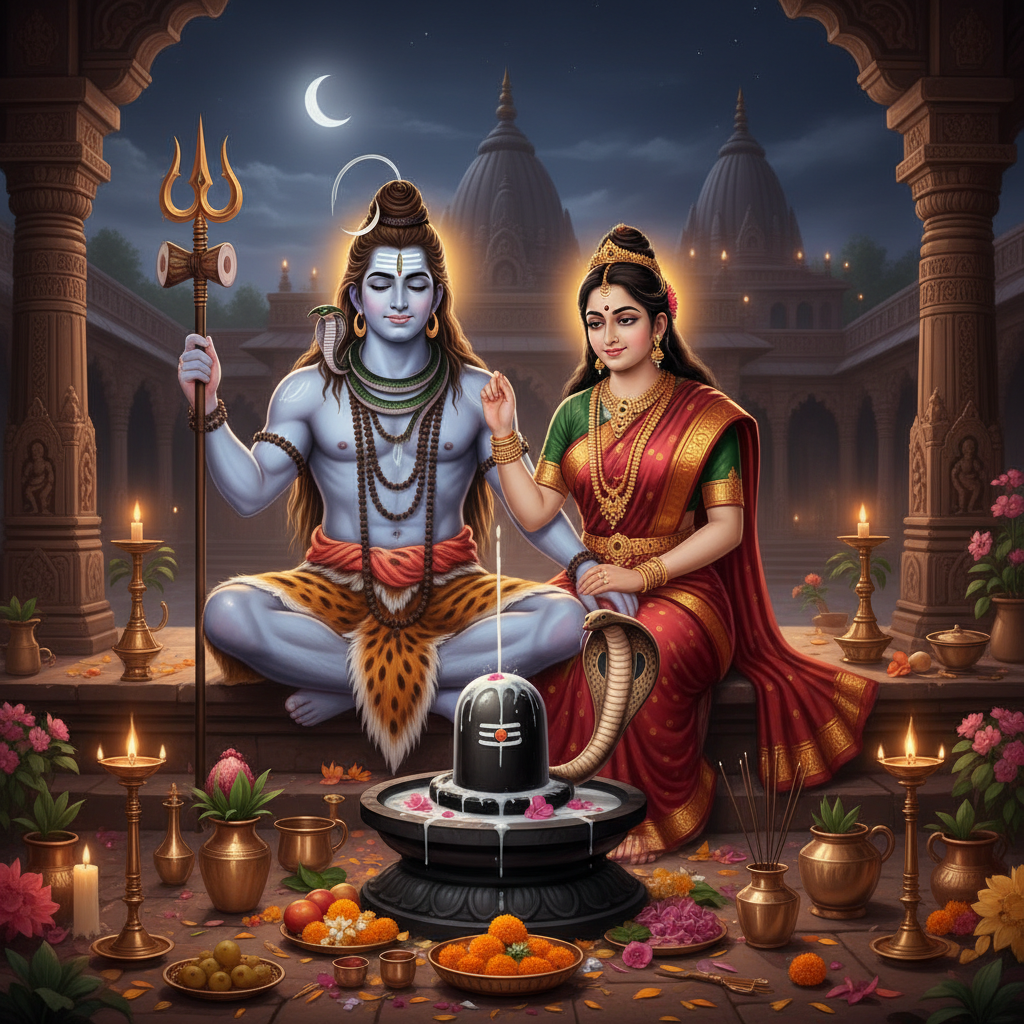
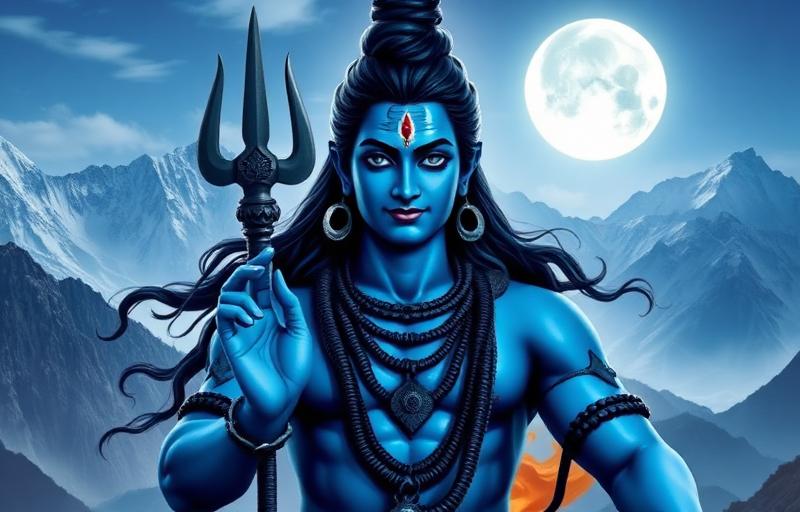
Moved by compassion for all beings, Shiva gathered the poison in his palms and drank it. Before it could pass down his throat and harm his body, Parvati, some tellings say, held his throat firmly to stop it from spreading further, so the poison remained lodged there, turning his throat a deep blue. From that day, Shiva came to be known as Neelkanth, the blue-throated one.
Scriptural Context
The Samudra Manthan episode and Shiva drinking the poison are described in several Puranas, including the Vishnu Purana and the Bhagavata Purana, as well as in the Mahabharata. While the surrounding details, such as who else was present, vary between texts, the core event of Shiva consuming the Halahala to save creation is remembered consistently across tradition.
This episode is often placed at the very start of the churning, before the fourteen treasures, including the nectar itself, emerged from the ocean, underscoring that even the pursuit of something as precious as immortality first required an act of supreme sacrifice.
Symbolic Meaning
Shiva drinking the poison but not letting it destroy him represents a profound spiritual idea, that true strength lies not in avoiding negativity but in the capacity to absorb it without being consumed by it. He holds the poison in his throat, neither swallowing it to let it harm his being nor spitting it out to let it harm the world.
This balance is why Neelkanth is seen as a symbol of self-mastery and protective compassion, taking on the world's suffering without letting it corrupt the self. The blue throat itself becomes a mark of honour rather than a wound, a visible reminder of sacrifice made willingly for the good of all.
What It Teaches Devotees

- True leadership means absorbing hardship for others: Shiva's act shows that protecting those we care for sometimes means bearing burdens no one else can.
- Restraint is strength: holding the poison in his throat, neither swallowing nor releasing it, reflects the value of controlled, wise response over reaction.
- Sacrifice for the collective good is honoured, not diminishing: Shiva's willingness to suffer for the world elevated his status rather than weakening it.
- Compassion extends even to those who did not ask: Shiva acted before anyone specifically petitioned him with the full picture, moved simply by the scale of the crisis.
How It Is Remembered Today
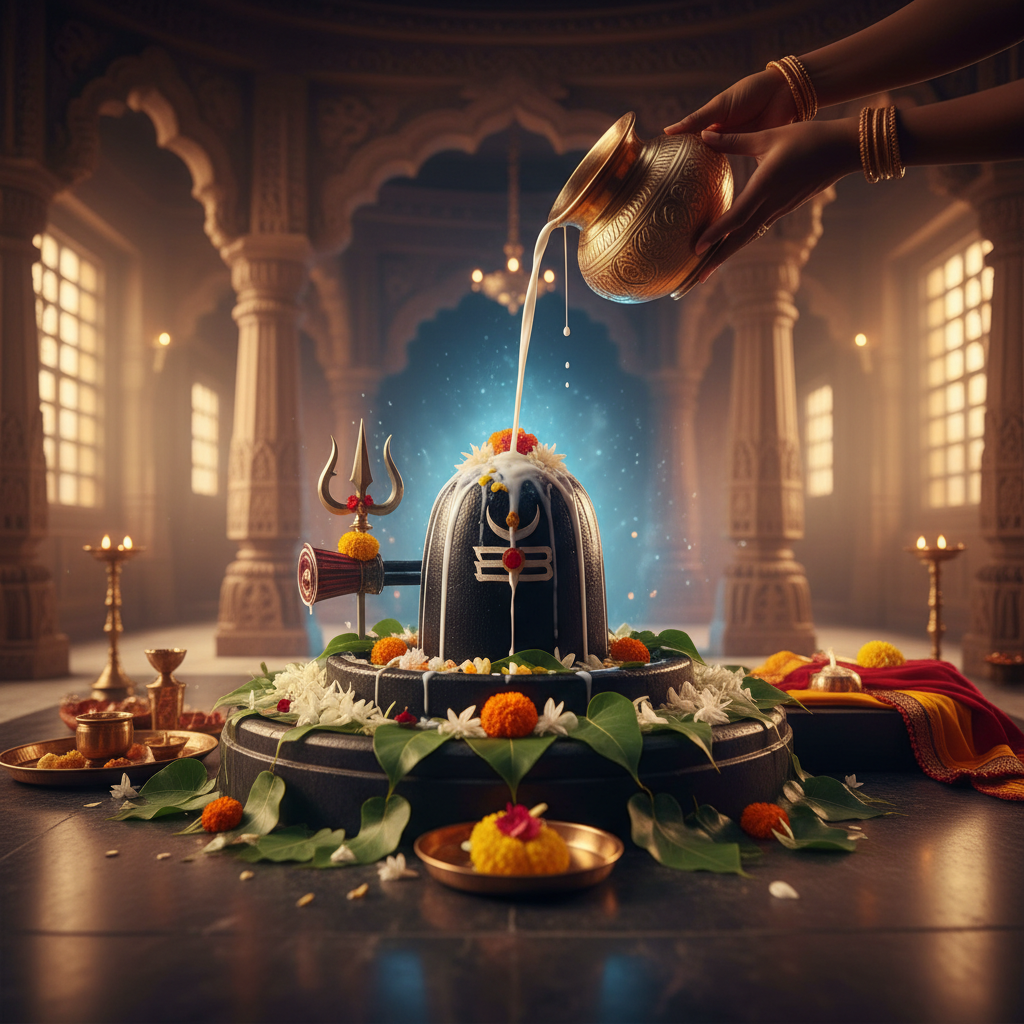
The Neelkanth form of Shiva is worshipped widely, and several temples across India, including ones in the Himalayan region, are dedicated specifically to this aspect of the deity. During Mahashivratri and the month of Shravan, devotees often recall this katha as part of the reasons Shiva is offered milk and water, symbolically helping to cool the effect of the poison he once bore for creation.
The image of Shiva with a blue throat is one of the most recognisable in Hindu iconography, and the story is commonly told to children as an early lesson in selflessness, making it one of the more widely known Shiva stories across generations.
Takeaway
The Neelkanth katha remains one of the most beloved Shiva stories because it captures, in a single image, the essence of protective love, taking on the world's poison so others need not suffer it. Devotees remember this not as a tale of pain but of quiet, immense strength. Worship offered to Neelkanth is an act of faith and gratitude, not a transaction.
What People Ask Most
Why is Shiva called Neelkanth?+
Shiva is called Neelkanth, meaning blue-throated, because his throat turned blue after he drank the deadly Halahala poison that emerged during Samudra Manthan to save creation.
Did the poison harm Shiva permanently?+
According to tradition, the poison remained held in Shiva's throat and did not spread further, leaving only the blue mark as a lasting sign rather than causing him lasting harm.
What does the Neelkanth story symbolize?+
It symbolizes self-mastery and protective compassion, the idea that great strength lies in absorbing hardship for the good of others without being overcome by it.
About the author
Anjali Mehta · Editor, M.A. Religious Studies
Anjali is the managing editor for Vandnaa and oversees the festival and vrat coverage. She holds an M.A. in Religious Studies and reviews every published article for accuracy, accessibility, and tradition-fidelity.
Meet the Vandnaa editorial team →