
What is Shree Suktam - The Vedic Lakshmi Hymn
Shree Suktam (also spelled Shri Suktam) is found in the Rigveda Khilani (appendix) - making it one of the most ancient hymns to Mahalakshmi. While Kanakadhara was composed by Adi Shankaracharya 1300 years ago, Shree Suktam is at least 3500-4000 years old.
The core difference from Kanakadhara:
- Kanakadhara: focused on attracting wealth, lyrical, beauty-focused
- Shree Suktam: foundational Vedic invocation, encompasses ALL aspects of Lakshmi (wealth, beauty, fame, bliss, knowledge, righteousness, fertility), used in major Vedic yajnas
The 16 verses (Sukta means 'well-said'): Each verse is a separate mantra. They invoke Lakshmi as:
- Hiranyavarna (golden-hued)
- Chandragabha (moon-like)
- Surya-sannibha (sun-radiant)
- The provider of cattle, gold, horses, sons, food
- The destroyer of poverty, hunger, fear
- The granter of fame, prosperity, longevity, dharmic family
Why Shree Suktam matters:
- Vedic authority - directly from the Rigveda
- Universal applicability - covers wealth + family + dharma + spiritual progress
- Used in Lakshmi homam (fire ritual) - the most powerful form of Lakshmi worship
- Recited at all major auspicious occasions - house warming, wedding, business opening
- Multi-faceted blessings - not just money, but full prosperity in all areas
The most famous verse - Verse 1: 'Hiranyavarnaam harinim suvarna-rajat-srajaam, Chandraam hiranmayim Lakshmiim jaatavedo ma aavaha.'
'O Agni (sacred fire), bring to me Mahalakshmi - the golden-hued one, the green/lush one, adorned with gold and silver, lustrous like the moon, golden in form.'
📜 The Vandnaa App's Stotras module has Shree Suktam in 3 styles - slow Vedic chanting (with svara/intonation), classical recitation, and Friday Lakshmi pace.
16 Verses - Key Themes & Meanings
Verse 1 (Invocation): Bring me Lakshmi - golden-hued, moon-like, lustrous.
Verse 2 (Establishment): Bring me that Lakshmi who never deserts - by whose grace I obtain gold, cattle, horses, men/family.
Verse 3 (Continuous Presence): May Lakshmi precede me, follow me, dwell on all sides - golden, smiling, surrounded by elephants of gold.
Verse 4 (Removal of Disease): May the goddess remove from me hunger, thirst, illness, downfall, dishonor.
Verse 5 (The Smiling One): O Lakshmi, smiling, fragrant, ornamented with the sun's lustre - be present.
Verse 6 (Dharma): Through dharma, may I obtain wealth, fame, sons, livestock - all auspicious things.
Verse 7 (Rejection of Inauspicious): Drive away the elder sister Alakshmi (poverty, misfortune) far from this place.
Verse 8 (Vishnu's Wife): O lotus-eyed one, daughter of the ocean, wife of Vishnu - be gracious.
Verse 9 (The Sustainer): May the milk-producing, herb-growing, water-flowing Lakshmi remain.
Verse 10 (Cosmic Mother): Mother of cosmic abundance, granter of all-around prosperity - be present.
Verse 11 (Family Welfare): Bring family welfare - sons, daughters, servants, livestock.
Verse 12 (Long Life): Grant long life, perfect health, full senses, joyful old age.
Verse 13 (Wealth Variants): All forms of wealth - gold, gems, cattle, food, fame - come to my home.
Verse 14 (Removal of Loss): Even if I lose what I have, may Lakshmi return it manifold.
Verse 15 (Liberation): Beyond all material - may Lakshmi grant liberation (moksha) at the end.
Verse 16 (Closing): O fire (Agni), having pleased Lakshmi, may she grant me all that is asked.
The completeness: Notice how Shree Suktam covers EVERY aspect of human prosperity: wealth, family, health, longevity, dharma, fame, removal of negativity, AND ultimately moksha. This is why it is the most comprehensive Lakshmi stotra in tradition.
Benefits of Shree Suktam
Comprehensive prosperity (not just money): Unlike Kanakadhara which focuses on wealth, Shree Suktam covers wealth + family + health + dharma. Devotees who recite both report wealth-only results from Kanakadhara but well-rounded prosperity from Shree Suktam.
Specific benefits:
1. Wealth in all forms - money, property, gold, jewelry, livestock (modern equivalent: vehicles, real estate, financial assets)
2. Family welfare - children's education, marriage, health; harmonious relationships; protection of family members
3. Health & longevity - Verse 12 specifically asks for long life with full faculties
4. Removal of poverty & misfortune - Verse 7's rejection of Alakshmi (Lakshmi's sister, who represents misfortune)
5. Recovery of lost wealth - Verse 14's promise that even lost wealth returns multiplied
6. Vedic-level cosmic protection - being a Rigvedic hymn, it carries the highest authority
7. Used in Lakshmi Homam - the fire-ritual offering each verse with ghee, ideal for major life events (housewarming, wedding, business opening)
8. Final moksha - Verse 15's promise of liberation, the ultimate spiritual fruit
The 16-verse principle: Tradition says reciting all 16 verses 16 times in a single sitting (256 mantras total) on Diwali or Lakshmi Panchami gives extraordinary blessings. Takes about 90 minutes.
Daily practice: Even single recitation daily at sunrise creates a Vedic protective field around home.
Why Shree Suktam is irreplaceable: It IS the original Lakshmi text. Every later stotra (including Kanakadhara) builds on its foundation. Reciting Shree Suktam connects you to 4000 years of unbroken Lakshmi devotion in Hindu lineage.
Shree Suktam Vidhi at Home
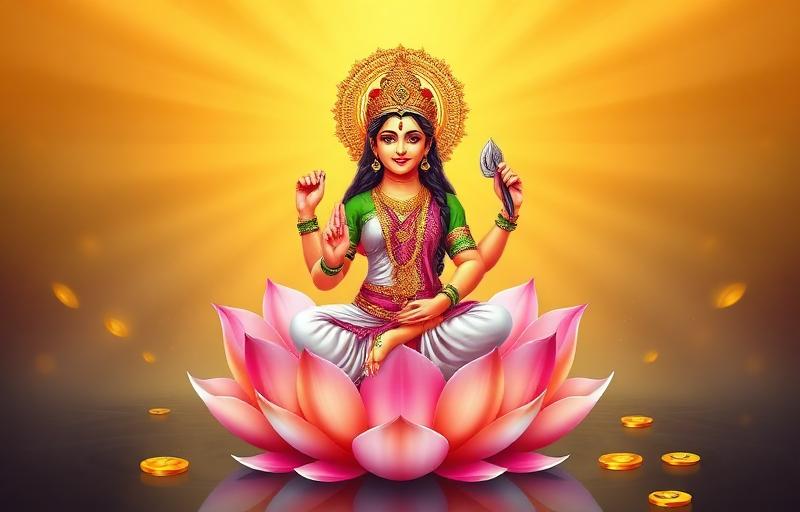
Best time: Early morning (sunrise to 9 AM) is best. Friday and Diwali especially powerful.
Items needed (more elaborate than Kanakadhara):
- Lakshmi photo/murti
- Yellow cloth on chowki
- Gold or silver coin (for Lakshmi visualization)
- Yellow flowers - marigold, lotus essential
- Ghee diya
- Camphor
- Bhog: kheer + sweet items
- Akshat (rice + haldi)
- Turmeric (haldi) - for Lakshmi's color
- Sandalwood paste
- Pure water in copper kalash
- Rudraksha mala (for jap)
Step-by-step:
1. Pre-prep: Bath at sunrise. Wear yellow/red. Clean puja area thoroughly.
2. Setup: Yellow cloth on chowki. Lakshmi photo center. Kalash to right. Coins/ornaments arranged before Lakshmi.
3. Sankalpa: Take water in palm. State: 'I, [name], on this [day], recite Shree Suktam from the Rigveda for [intention]. By the grace of Mahalakshmi, may my purpose be fulfilled.' Pour at base.
4. Light ghee diya + camphor + agarbatti.
5. Apply tilak - sandalwood + haldi mix on Lakshmi and yourself.
6. Achaman (3 small water sips).
7. Initial mantras - chant 11 times each:
- 'Om Shri Mahalakshmiyei Namah'
- 'Om Hreem Shri Mahalakshmiyei Namah'
8. Recite Shree Suktam - full 16 verses aloud, slowly. Each verse is a complete mantra; pause briefly between verses. Total 12-15 minutes.
9. Closing mantra - chant 108 times 'Om Shri Mahalakshmiyei Namah' on rudraksha mala (this takes ~15 min). Optional but powerful.
10. Bhog offering - kheer/sweets on banana leaf or clean plate.
11. Aarti - sing Om Jai Lakshmi Mata.
12. Camphor aarti - at the end, light camphor and circle.
13. Distribute prasad - to family.
14. Take charanamrit (water from kalash).
Total time: 35-50 minutes (with mala jap), 25-30 minutes without.
For Lakshmi Homam (advanced): If doing fire-ritual version, each verse offering of ghee into havan kund. Requires priest typically. Done on Diwali, Akshay Tritiya, Lakshmi Panchami.
Shree Suktam vs Kanakadhara - Which to Choose
Both are powerful Lakshmi stotras but serve different purposes:
Choose Shree Suktam if:
- You want comprehensive prosperity (wealth + family + health)
- You're observing Lakshmi Panchami, Diwali, or major life events
- You want Vedic-authority recitation
- You're doing Lakshmi homam (fire ritual)
- You're a serious sadhaka willing to commit to longer practice
- You want family-related prosperity (children, marriage, harmony)
Choose Kanakadhara if:
- You're focused specifically on financial prosperity
- You're new to Sanskrit (Kanakadhara is more lyrical, easier rhythm)
- You want quicker practice (Kanakadhara is shorter)
- You're following Adi Shankaracharya tradition
- You want explicitly 'wealth-attraction' stotra
- You have a specific business/job intention
Both together (recommended for Friday + Diwali): Diwali night: Recite Shree Suktam 16 times + Kanakadhara 11 times. This combined practice is the gold-standard Diwali Lakshmi worship.
The depth comparison:
| Aspect | Shree Suktam | Kanakadhara | |---|---|---| | Era | 4000+ years (Rigveda) | 1300 years (Shankaracharya) | | Verses | 16 | 21 | | Duration | 12-15 min | 8-10 min | | Difficulty | Sanskrit Vedic (harder) | Sanskrit Sloka (easier) | | Scope | Comprehensive prosperity | Wealth focus | | Authority | Veda (highest) | Adi Shankara (very high) | | Best occasion | Diwali, Lakshmi homam | Friday, daily | | Difficulty level | Intermediate to advanced | Beginner to intermediate |
Practical recommendation:
- Beginners: Start with Kanakadhara (easier)
- 6 months later: Add Shree Suktam (Friday + Diwali)
- Long-term: Both daily for full Lakshmi grace
Multiplicative effect: When recited together (in same sitting), the merit is not 2x but said to be 11x - they amplify each other.
Common Mistakes
1. Mispronouncing Sanskrit svara (intonation). Vedic mantras have specific tonal patterns (svara). Without proper svara, the mantra doesn't fully activate. Use traditional audio recordings to learn correct intonation.
2. Reciting too fast. Vedic mantras require slow, deliberate pace. Each syllable should be clear. 12-15 minutes for 16 verses is the proper duration.
3. Skipping the kalash (water vessel). The kalash filled with copper-water is a traditional Lakshmi-receptacle. Without it, recitation is incomplete.
4. No yellow flowers. Yellow is Lakshmi's color. Marigold or yellow lotus essential. Roses or red flowers are NOT for Shree Suktam.
5. Eating non-veg the night before. Vedic mantras need sattvic vessel.
6. Reciting on wrong tithi. Avoid Ashtami, Amavasya. Friday and Purnima are best.
7. Reciting without sankalpa. State your intention clearly before starting.
8. Skipping the 108-time mala jap after. This 'seals' the Shree Suktam recitation. Many people skip it; merit is reduced.
9. Doing it in a hurry between meetings. Vedic mantras need calm mind. Schedule properly.
10. Treating Shree Suktam as same as Kanakadhara. They're complementary, not interchangeable. Each has its method.
11. Wearing dark colors. Yellow, red, orange, white. Black/dark blue blocks Lakshmi energy.
12. Skipping Friday recitation. Shree Suktam on Friday is non-negotiable for serious devotees.
Make Shree Suktam Your Vedic Anchor

Of all Lakshmi practices, Shree Suktam is the most ancient, most authoritative, most comprehensive. While Kanakadhara is sweet and accessible, Shree Suktam is majestic and complete.
Three commitment levels:
Level 1 - Friday only:
- Once a week morning
- 30-minute practice
- Over months, builds Vedic-level Lakshmi grace
Level 2 - Three days a week:
- Tuesday, Friday, Sunday
- 30 minutes each
- Strong devotional rhythm
Level 3 - Daily morning:
- Daily sunrise practice
- 30 minutes
- For serious sadhaks
- Combines beautifully with Aditya Hridayam (sun) and Kanakadhara (wealth) for full morning sadhana
A final reflection:
When you recite Shree Suktam, you are not just praying - you are joining a vibrational chain that includes Vedic rishis, ancient kings, generations of householders, your own grandparents, and millions of unknown devotees who recited the same syllables across 4000 years.
Shree Suktam is older than most living religions. It predates Christianity by 1000+ years, predates Buddhism, predates Islam. It survived because it works.
Lakshmi rewards Vedic devotion with grace beyond what newer practices can deliver. Not because she is biased - but because Vedic mantras carry concentrated cosmic energy that millennia of devotees have already activated.
Begin this Friday morning. Sit before Lakshmi. Light a ghee diya. Recite the 16 verses slowly. Tell her: 'I have come to the source.'
She will respond.
Om Shri Mahalakshmiyei Namah. Om Hreem Shreem Mahalakshmiyei Namah.
📜 The Vandnaa App's Shree Suktam module: Vedic svara audio (3 styles), 16-verse synchronized text, Friday reminder, Lakshmi Panchami calendar, 108-mala counter for closing jap.
Common Questions From Devotees
Is Shree Suktam from the Vedas?+
Yes - Shree Suktam is found in the Khilani (appendix) of the Rigveda, making it among the most ancient sacred texts on Lakshmi. It is Vedic-authority, dating back 4000+ years.
Can I recite without knowing Sanskrit svara (intonation)?+
Yes, basic recitation without svara still carries merit (about 60-70% of full effect). Listen to traditional audio recordings to gradually pick up intonation. Beginning without perfect svara is far better than not starting.
How often should I recite Shree Suktam?+
Beginners: Friday weekly. Intermediate: 3 times a week. Advanced: daily. For specific intentions, 16 times in a single Friday morning. For Diwali night, 16 times is the gold-standard practice.
Should I do Shree Suktam or Lakshmi Sahasranama?+
Shree Suktam (16 verses, ~12 min) is for daily/weekly practice. Lakshmi Sahasranama (1000 names, ~45 min) is for special occasions. Both serve different purposes. Many devotees do Shree Suktam daily and Lakshmi Sahasranama on Diwali, Akshaya Tritiya, Lakshmi Panchami.
Can I do Shree Suktam in the evening instead of morning?+
Morning is preferred for Lakshmi (sunrise to 10 AM). Evening recitation is acceptable for those who can't do morning, especially before Lakshmi puja time (sandhya, sunset). Avoid late night recitation.
Is Shree Suktam suitable for beginners?+
Mid-level rather than beginner. Vedic Sanskrit is harder than later stotras. Start with Lakshmi mantras (Om Shri Mahalakshmiyei Namah) and Kanakadhara first. After 6 months of those, move to Shree Suktam. Don't skip the build-up.
About the author
Acharya Vinaya Kapoor · M.A. Sanskrit, Mantra & Stotra Studies
Acharya Vinaya holds an M.A. in Sanskrit from Banaras Hindu University and writes the mantra and stotra commentary on Vandnaa. Her focus is on accurate pronunciation, traditional context, and helping modern readers connect with classical texts.
Meet the Vandnaa editorial team →Explore on Vandnaa
Related Articles
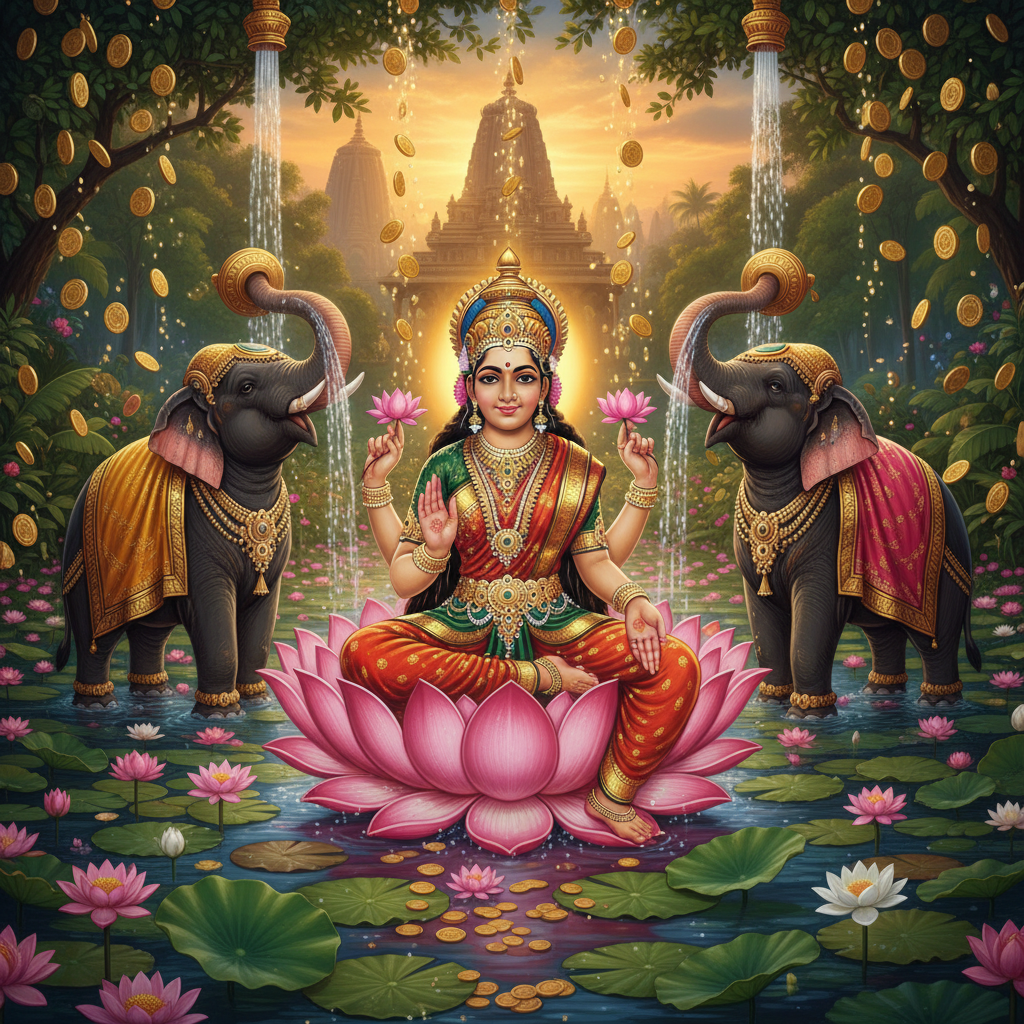
Kanakadhara Stotra: Meaning, Benefits & Vidhi for Wealth
9 min read
Lakshmi Aarti Lyrics – Om Jai Lakshmi Mata (लक्ष्मी आरती)
8 min read
Lakshmi Mantra for Wealth and Prosperity (धन प्राप्ति के लिए लक्ष्मी मंत्र)
12 min read
Lakshmi Puja at Home Step by Step (घर पर लक्ष्मी पूजा कैसे करें)
9 min read
Best Day to Worship Goddess Lakshmi – Friday, Special Occasions & Daily Puja Guide
12 min read
Diwali 2026: Lakshmi Puja Vidhi, Exact Muhurat, Mantras & 11 Things Every Home Must Do
11 min read