What Is the Crescent Moon on Shiva
Lord Shiva wears a slender crescent moon (chandra) on his matted locks, near his forehead, which earns him the name Chandrashekhar - 'the one who bears the moon as a crown'. The moon shown is always the waxing crescent of the second day, a sliver of cool, gentle light. Resting beside the fierce energy of the third eye and the wild Ganga, the calm moon shows the perfect balance Shiva holds between heat and coolness, power and serenity, fierceness and grace.
The Story of the Moon's Refuge
Chandra (the moon god) had married the twenty-seven daughters of Daksha but favoured only Rohini. Angered, Daksha cursed Chandra to wane and lose his light day by day until he would fade away completely. Desperate, Chandra sought refuge with Lord Shiva, who placed him upon his head and protected him. Shiva softened the curse so that the moon would wax and wane in cycles rather than vanish forever. In gratitude, the crescent stayed on Shiva's head, and this is why the moon grows and shrinks each month.
Control Over the Mind and Time
In Hindu thought, the moon governs the mind (manas), which is restless and ever-changing like the tides. By wearing the moon calmly on his head, Shiva shows his complete mastery over the mind and its endless fluctuations. The crescent also marks time, for the lunar phases measure the months and the sacred calendar. As lord of the moon, Shiva is master of time and the mind alike, teaching that a steady mind is the foundation of all spiritual progress.
Soma and the Cooling of the Poison
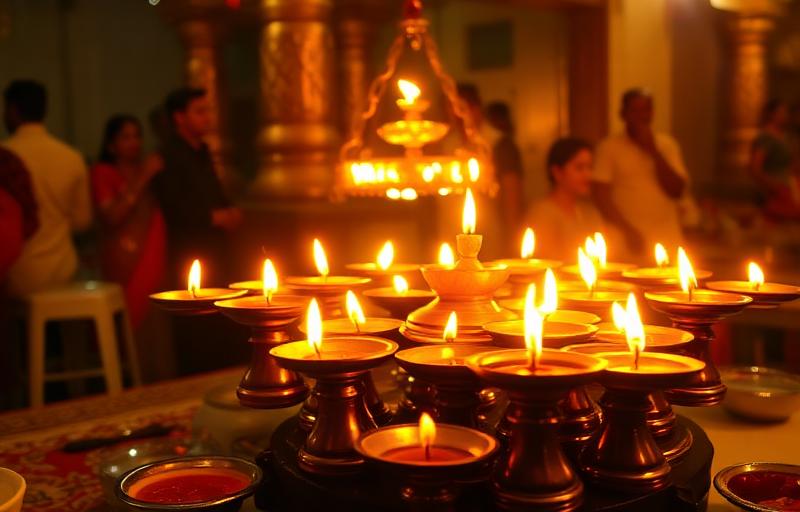
The moon is the source of soma, the cool nectar of immortality and the gentle, life-giving energy. When Shiva drank the Halahala poison during the churning of the ocean, his throat burned with its terrible heat. The crescent moon on his head poured down its cooling rays to soothe the fire of the poison and ease his suffering. The moon therefore stands for the healing coolness that balances intense tapas, reminding devotees that grace and compassion temper even the fiercest power.
How Devotees Relate to the Crescent Moon
Devotees draw inspiration from the crescent moon to keep a calm, balanced mind amid the rising and falling tides of life. Mondays (Somvar, the moon's day) are dedicated to Shiva, when devotees fast and worship to steady the mind and gain his grace. Looking at the moon and remembering Chandrashekhar, devotees pray to accept the cycles of gain and loss with equanimity, trusting that, like the waning moon, every difficult phase will pass and grow bright again.
Shiva Mantra for a Calm Mind
To honour Chandrashekhar and steady the mind, devotees chant:
Om Namah Shivaya
Many also recite the Chandrashekhar Ashtakam and offer prayers on Mondays for mental peace. Chanting Om Namah Shivaya slowly, while picturing the cool crescent moon on Shiva's head, is believed to calm restless thoughts, cool anger and bring the mind to a gentle, balanced stillness, just as the moon soothed the heat of the poison.
Reader Questions Answered
Why does Shiva wear a crescent moon?+
Shiva wears the crescent moon as a sign of his mastery over the mind and time, and to honour Chandra, who took refuge with him after Daksha's curse. It earns him the name Chandrashekhar.
What does the crescent moon on Shiva symbolise?+
It symbolises Shiva's control over the restless mind and over time, and his mastery of the cycles of waxing and waning. It also represents cooling soma that balances intense energy.
How did the moon end up on Shiva's head?+
Daksha cursed Chandra to fade away. Chandra took refuge with Shiva, who placed him on his head and softened the curse so the moon would wax and wane in cycles instead of vanishing.
How did the moon help when Shiva drank poison?+
When Shiva drank the Halahala poison, his throat burned. The crescent moon on his head poured down cooling rays to soothe the fire of the poison and ease his suffering.
Why is Monday dedicated to Shiva?+
Monday is Somvar, the moon's day. Since Shiva bears the moon and governs the mind, devotees fast and worship on Mondays to steady the mind and gain his grace.
Which mantra helps calm the mind?+
Chanting 'Om Namah Shivaya' slowly while picturing the cool crescent moon on Shiva's head is believed to calm restless thoughts. Many also recite the Chandrashekhar Ashtakam.
About the author
Pandit Ravindra Sharma · Vedic Rituals & Bhakti, 22+ years
Pandit Ravindra is the Vandnaa editorial team's resident specialist on aarti, chalisa, and daily devotion. He has performed home and temple pujas across Varanasi and Delhi for over two decades and contributes the bhakti-focused articles on this site.
Meet the Vandnaa editorial team →Explore on Vandnaa
Related Articles
Significance of Shiva's Trishul (Trident) - Meaning & Symbolism
9 min read
Significance of Shiva's Damru (Drum) - Meaning & Symbolism
8 min read
Significance of Shiva's Third Eye - Meaning & Symbolism
9 min read
Significance of the Snake Around Shiva's Neck - Meaning
9 min read
Om Namah Shivaya Mantra Benefits & Meaning (ॐ नमः शिवाय)
9 min read
Shiv Chalisa Lyrics & Meaning in Hindi (शिव चालीसा)
13 min read