What Is the Damru
The Damru is a small two-headed hand-drum, narrow at the centre and wide at both ends, that Lord Shiva holds in one of his hands, especially in his form as Nataraja, the cosmic dancer. It is shaped like two triangles meeting at a point, and is played by twisting the wrist so that the knotted cords strike the drum heads. Though tiny, its sound is said to be the first vibration of the universe, the seed of all sound and form.
The Story of the Maheshwara Sutras
A beloved tradition says that when Shiva danced his Tandava at the end of an age, he sounded the Damru fourteen times. From these fourteen beats emerged the Maheshwara Sutras, the fundamental sounds from which the entire structure of the Sanskrit language and its grammar arose. The great grammarian Panini is said to have received these sounds as the foundation of his work. In this way the Damru is honoured as the very source of language, knowledge and the spoken word.
Nada Brahma - Sound as the Supreme
The deepest meaning of the Damru is Nada Brahma - the truth that the universe arose from sound and that sound itself is divine. The primordial vibration Om is said to ring out from the Damru, and from this single sound all creation unfolds. The drum teaches that beneath every name and form there is a subtle, continuous vibration. To listen inwardly to this anahata (unstruck) sound is, in yoga, a doorway to the experience of the absolute.
The Rhythm of Creation and Dissolution
The Damru's shape, two triangles meeting at a single point, holds a profound symbol. One triangle represents creation and the other dissolution; where they meet is the still point from which all rhythm flows. As Shiva dances and beats the Damru, the universe is created, and as the sound fades, it dissolves back into silence. The drum thus marks the eternal cycle of birth and death, reminding us that activity and stillness are two faces of the same reality.
How Devotees Relate to the Damru
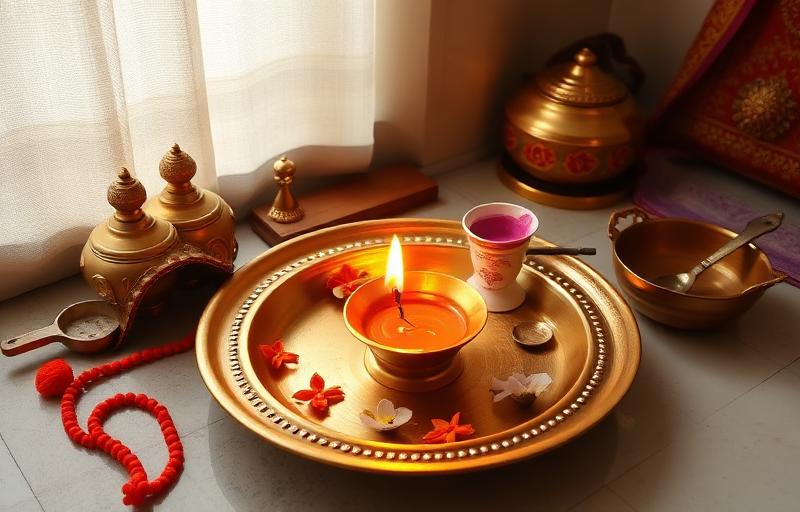
Devotees sound the Damru during Shiva aarti and worship, especially on Mahashivratri and Mondays, believing its vibration purifies the space and awakens devotion. The sharp, rhythmic beat is used to focus a wandering mind and to mark the rising energy of prayer. Many keep a small Damru on the home altar as a reminder that life moves in rhythms of action and rest, and that even silence carries the divine sound within it.
Shiva Mantra for the Damru
The sacred sound that resonates with the Damru is the pranava:
Om
From this seed unfolds the great mantra Om Namah Shivaya, which devotees chant in rhythm with the drum. Repeating the mantra while feeling the steady beat of the Damru is said to align the mind with the cosmic vibration. Chanting slowly and listening to the silence between sounds helps the seeker touch the Nada Brahma that the Damru represents.
Frequently Asked Questions
What does Shiva's Damru symbolise?+
The Damru symbolises Nada Brahma, the cosmic sound from which the universe arose. Its two triangles meeting at a point represent the rhythm of creation and dissolution.
What are the Maheshwara Sutras?+
The Maheshwara Sutras are fourteen fundamental sounds said to have emerged from Shiva's Damru during his Tandava. From them arose the structure of Sanskrit grammar, used by the sage Panini.
What is Nada Brahma?+
Nada Brahma is the principle that the supreme reality is sound, and that the universe arose from the primordial vibration Om. The Damru represents this divine cosmic sound.
Why is the Damru shaped like two triangles?+
The two triangles meeting at a single point represent creation and dissolution. The meeting point is the still source from which all rhythm and the cycle of birth and death flow.
When do devotees sound the Damru?+
Devotees sound the Damru during Shiva aarti and worship, especially on Mahashivratri and Mondays. Its vibration is believed to purify the space and awaken devotion.
Which mantra is linked to the Damru?+
The sound Om resonates with the Damru, and from it unfolds 'Om Namah Shivaya'. Chanting in rhythm with the drum is said to align the mind with the cosmic vibration.
About the author
Anjali Mehta · Editor, M.A. Religious Studies
Anjali is the managing editor for Vandnaa and oversees the festival and vrat coverage. She holds an M.A. in Religious Studies and reviews every published article for accuracy, accessibility, and tradition-fidelity.
Meet the Vandnaa editorial team →Explore on Vandnaa
Related Articles
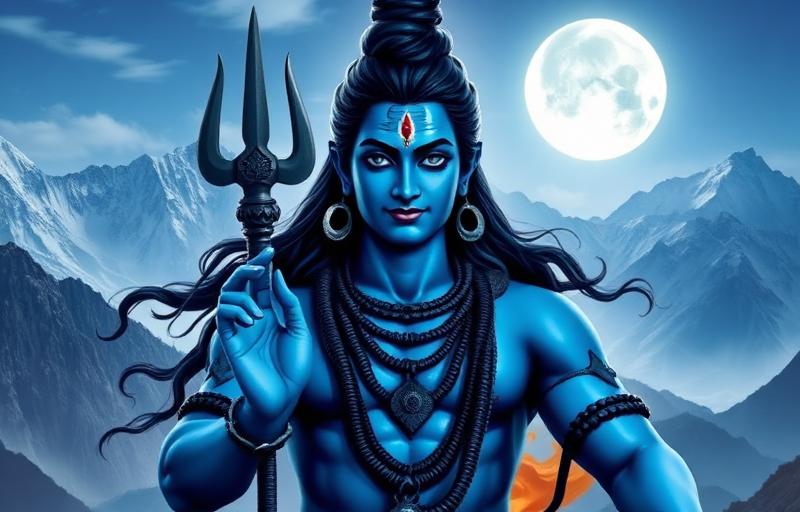
Significance of Shiva's Trishul (Trident) - Meaning & Symbolism
9 min read
Significance of Shiva's Third Eye - Meaning & Symbolism
9 min read
Significance of the Snake Around Shiva's Neck - Meaning
9 min read
Significance of the Crescent Moon on Shiva - Meaning
8 min read
Om Namah Shivaya Mantra Benefits & Meaning (ॐ नमः शिवाय)
9 min read
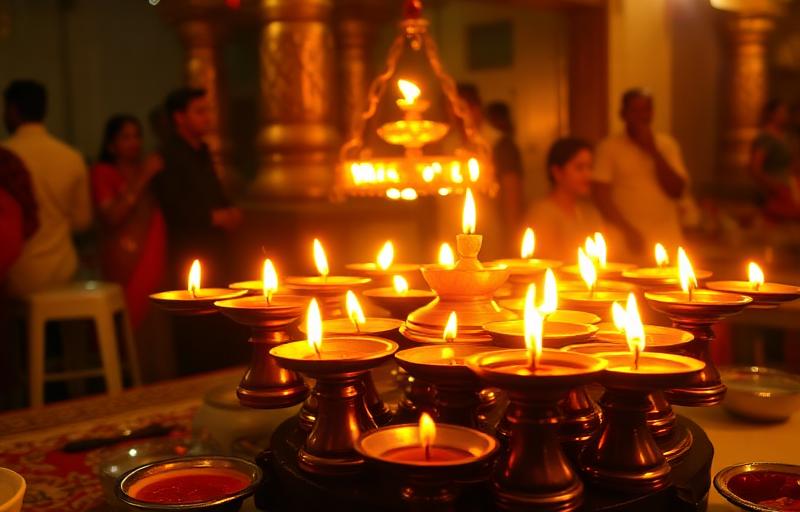
Shiv Aarti Lyrics – Om Jai Shiv Omkara (शिव आरती)
13 min read