What Is Shiva's Third Eye
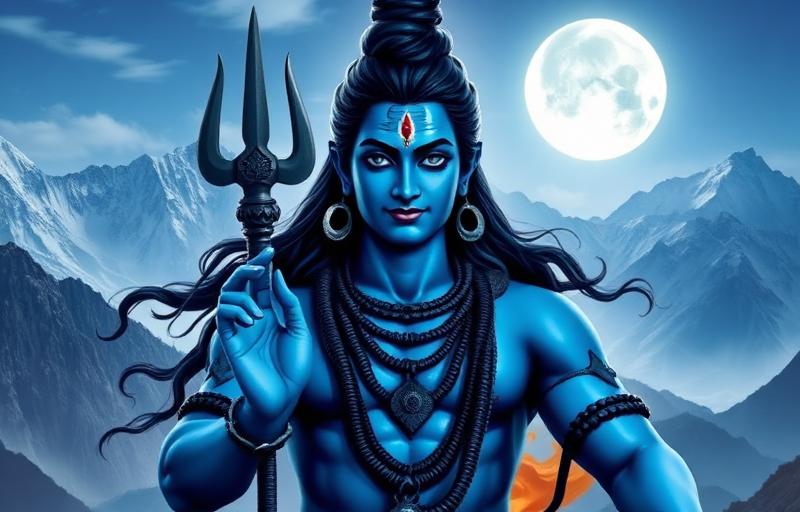
Lord Shiva is depicted with a third eye set vertically in the centre of his forehead, between the eyebrows. While his two ordinary eyes see the outer world of forms, the third eye is the eye of wisdom and inner perception that sees the truth behind all appearances. It usually remains closed, for when it opens it releases a fire powerful enough to reduce illusion and even the cosmos to ashes. The third eye is therefore both a source of supreme knowledge and of the power that destroys ignorance.
The Story of Burning Kamadeva
The most famous story of the third eye tells how Kamadeva, the god of desire, was sent to disturb Shiva's deep meditation so that he would unite with Parvati and father a son to defeat a demon. As Kamadeva shot his flower arrow of love, Shiva's meditation broke. In a flash he opened his third eye, and a fire blazed out that burned Kamadeva to ashes. The lesson is profound: the eye of wisdom destroys uncontrolled desire and attachment, the very forces that bind the soul.
The Third Eye and the Ajna Chakra
In yoga, the third eye corresponds to the ajna chakra, the energy centre located between the eyebrows. It is the seat of intuition, insight and the command of the higher self over the lower mind. When this chakra awakens, the seeker gains clarity, discernment and the ability to perceive truth directly rather than through the limited senses. Shiva's third eye is the perfected ajna - the fully awakened inner vision that the yogi aspires to realise through meditation.
Vision Beyond Duality

The two ordinary eyes see in pairs of opposites - light and dark, good and bad, self and other. The third eye sees beyond this duality to the one reality in which all opposites are reconciled. It does not perceive through division but through wholeness, recognising the divine in everything. This is why the third eye is the fire that burns illusion: it dissolves the false separation between the seeker and the supreme, revealing that the seer and the seen are not two.
How Devotees Relate to the Third Eye
Devotees apply tripundra (three horizontal lines of sacred ash) and a tilak on the forehead, honouring the place of the third eye and inviting inner awareness. In meditation, many gently focus attention between the eyebrows to awaken intuition and steady the mind. Praying before Shiva, a devotee asks not for the destructive fire but for the wisdom to see clearly, to recognise truth from illusion and to master desire rather than be ruled by it.
Shiva Mantra for the Third Eye
For awakening inner vision and protection, devotees chant the Maha Mrityunjaya mantra:
Om Tryambakam Yajamahe, Sugandhim Pushtivardhanam. Urvarukamiva Bandhanan, Mrityor Mukshiya Maamritat.
The word Tryambakam means 'the three-eyed one', addressing Shiva directly by his third eye. Chanting this mantra while focusing gently between the eyebrows is believed to nourish wisdom, dissolve fear and gradually open the inner sight that perceives beyond duality.
Reader Questions Answered
What does Shiva's third eye symbolise?+
The third eye symbolises wisdom and inner perception that sees the truth beyond all appearances. It corresponds to the ajna chakra and the vision that goes beyond duality.
Why did Shiva burn Kamadeva with his third eye?+
Kamadeva disturbed Shiva's deep meditation with the arrow of desire. Shiva opened his third eye and burned him to ashes, showing that wisdom destroys uncontrolled desire and attachment.
How is the third eye related to the ajna chakra?+
The third eye corresponds to the ajna chakra between the eyebrows, the seat of intuition and insight. Shiva's third eye is the fully awakened ajna that yogis aspire to realise.
What does 'vision beyond duality' mean?+
The two eyes see opposites like good and bad, self and other. The third eye sees the one reality in which all opposites are reconciled, dissolving the false separation between seeker and the supreme.
Why do devotees apply tilak on the forehead?+
Devotees apply tripundra ash and a tilak to honour the place of the third eye and invite inner awareness, marking the centre of intuition and the higher self.
Which mantra awakens the third eye?+
The Maha Mrityunjaya mantra, which addresses Shiva as Tryambakam (the three-eyed one), is chanted while focusing between the eyebrows to nourish wisdom and open inner sight.
About the author
Anjali Mehta · Editor, M.A. Religious Studies
Anjali is the managing editor for Vandnaa and oversees the festival and vrat coverage. She holds an M.A. in Religious Studies and reviews every published article for accuracy, accessibility, and tradition-fidelity.
Meet the Vandnaa editorial team →Explore on Vandnaa
Related Articles
Significance of Shiva's Trishul (Trident) - Meaning & Symbolism
9 min read
Significance of Shiva's Damru (Drum) - Meaning & Symbolism
8 min read
Significance of the Snake Around Shiva's Neck - Meaning
9 min read
Significance of the Crescent Moon on Shiva - Meaning
8 min read
Maha Mrityunjaya Mantra: Meaning & Benefits (महा मृत्युंजय मंत्र)
9 min read
Seven Chakras - Meaning, Balance & Awakening Guide
10 min read