What the Swastika Means
The word swastika comes from the Sanskrit su-asti - 'su' meaning good and 'asti' meaning to be, together meaning 'let there be well-being'. It is one of the oldest and most auspicious symbols in Hindu tradition, drawn to invite good fortune, prosperity and the blessings of the divine. Far older than any modern misuse, the Hindu swastika is a pure and sacred sign of mangalkari (auspicious) energy.
The Four Arms and Their Symbolism
The swastika's four arms, bent clockwise, carry layers of meaning. They represent the four Vedas (Rig, Yajur, Sama, Atharva), the four directions and the four goals of life - dharma, artha, kama and moksha. The central point is the still centre, often linked to Lord Vishnu or the navel of creation, while the turning arms show the sun's motion and the cycle of life. The four dots added in each quadrant are seen as the divine watching over all directions.
Significance in Hindu Worship
The swastika is considered the symbol of Lord Ganesha, the remover of obstacles, and is drawn before any auspicious beginning so that work proceeds without hindrance. It is marked at the threshold during Diwali, weddings, griha pravesh and pujas, on account books on Lakshmi Puja, and on new vehicles and homes. Its presence is believed to ward off negative energy and invite the goddess Lakshmi and lasting prosperity.
Clockwise vs Anticlockwise
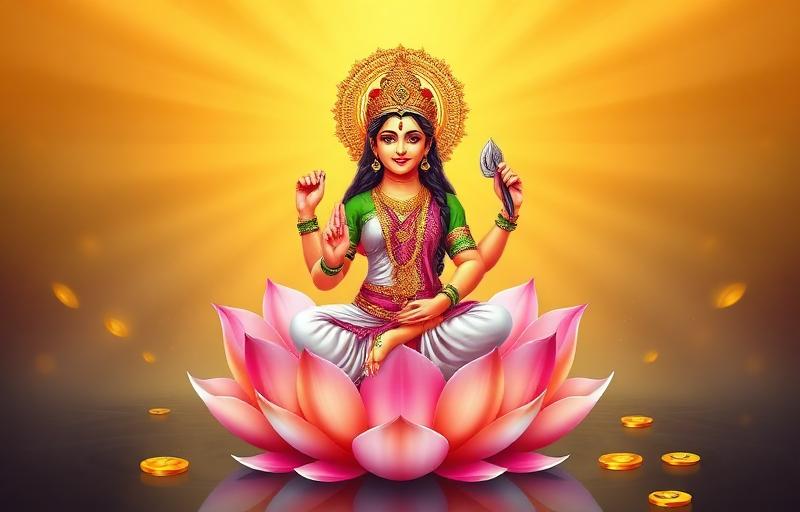
The clockwise (right-facing) swastika is the auspicious form, representing the forward motion of the sun, prosperity, growth and positive energy. The anticlockwise (left-facing) form, sometimes called sauvastika, is associated with the night, with the goddess Kali and with the dissolution side of creation, and is generally not drawn for everyday auspicious purposes. For home worship and festivals, always draw the clockwise swastika.
How to Draw the Swastika Correctly
1. Use kumkum (red), roli or haldi mixed with a little water; red is the most auspicious. 2. Begin by drawing a vertical line and a horizontal line crossing at the centre to form a plus sign. 3. From the end of each arm, draw a short line bent to the right (clockwise), all turning in the same direction. 4. Place a dot in each of the four quadrants formed between the arms. 5. Keep the lines even and the figure upright, with arms of equal length. Draw it with a clean hand and a calm, devotional mind, ideally with the ring finger.
Do's and Don'ts
Do: draw the clockwise swastika with kumkum or haldi at the threshold, mandir, account books and before auspicious work, keeping the lines neat and upright. Don't: draw it on the floor where it will be stepped on, on footwear or unclean surfaces, or in the anticlockwise form for everyday worship. Treat the symbol with respect, as it represents Ganesha and the wish for universal well-being.
Common Questions From Devotees
What does the swastika symbolise in Hinduism?+
The swastika symbolises well-being, prosperity and auspiciousness. Its name comes from 'su-asti', meaning 'let there be good'. It is linked to Lord Ganesha and the sun's life-giving motion.
What do the four arms of the swastika mean?+
The four arms represent the four Vedas, the four directions and the four goals of life - dharma, artha, kama and moksha. The four dots stand for the divine watching over all directions.
How do you draw the swastika correctly?+
Draw a plus sign with kumkum or haldi, then bend each arm to the right in a clockwise direction, all turning the same way, and place a dot in each of the four quadrants.
Which colour is used to draw the swastika?+
Red kumkum or roli is the most auspicious, and haldi (turmeric) is also used. Red represents energy, prosperity and the goddess Lakshmi, making it ideal for auspicious occasions.
What is the difference between clockwise and anticlockwise swastika?+
The clockwise swastika is the auspicious form for worship and festivals, representing prosperity and positive energy. The anticlockwise form is linked to the night and is not used for everyday auspicious purposes.
Where is the swastika drawn during festivals?+
It is drawn at the threshold, on the home mandir, on account books during Lakshmi Puja, and on new homes and vehicles. It marks auspicious beginnings and invites prosperity and protection.
About the author
Anjali Mehta · Editor, M.A. Religious Studies
Anjali is the managing editor for Vandnaa and oversees the festival and vrat coverage. She holds an M.A. in Religious Studies and reviews every published article for accuracy, accessibility, and tradition-fidelity.
Meet the Vandnaa editorial team →Explore on Vandnaa
Related Articles

Om (Aum) Symbol - Meaning, Significance & Chanting Benefits
9 min read
Home Mandir Setup - Direction, Vastu Rules, Dos and Don'ts
9 min read
Complete Puja Samagri List - Items and Their Significance
9 min read
Lotus Flower - Significance in Hinduism & Which Deity
8 min read
Ganesh Aarti Lyrics – Jai Ganesh Deva (गणेश आरती)
8 min read
Lakshmi Aarti Lyrics – Om Jai Lakshmi Mata (लक्ष्मी आरती)
8 min read