The Lotus as a Sacred Symbol
The lotus, called padma or kamal in Sanskrit, is the most sacred flower in Hinduism. It grows in muddy water yet rises above it to bloom spotless and beautiful, its petals shedding every drop of dirt. This is why it stands for purity rising from impurity - the soul living in the world yet remaining untouched by it. The lotus is the supreme symbol of spiritual awakening, detachment and divine beauty.
Layers of Symbolism
The lotus carries many meanings in Hindu thought. Its unfolding petals represent the expansion of the soul and the blossoming of consciousness. Because it remains dry and clean even in water, it teaches the ideal of detachment - living in the world without being stained by it, as the Bhagavad Gita praises one who acts 'like a lotus leaf untouched by water'. The lotus is also linked to the heart, where the divine is said to dwell as a blooming inner flower.
Which Deities Are Linked to the Lotus
The lotus is the seat and symbol of several great deities:
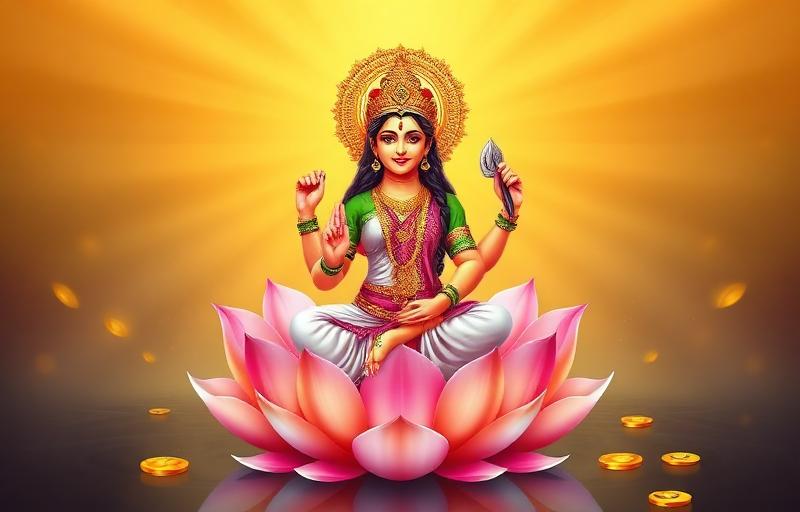
Goddess Lakshmi - she sits and stands upon a lotus and holds lotuses, symbolising pure, untainted prosperity; she is Padmavati and Kamala. Goddess Saraswati - seated on a white lotus, representing pure knowledge. Lord Brahma - born from a lotus that rises from Vishnu's navel at creation. Lord Vishnu - called Padmanabha, the lotus-naveled one, and holds a lotus.
Many deities are described with lotus-like eyes, hands and feet, a mark of supreme beauty and grace.
The Lotus in Yoga and Meditation

The lotus also shapes the language of yoga and meditation. The classic meditation seat is the padmasana (lotus pose), recalling the flower's stillness and balance. The chakras along the spine are visualised as lotuses with differing numbers of petals, and the sahasrara, the crown chakra, is the thousand-petalled lotus where the soul meets the divine. To meditate is, in a sense, to let the inner lotus of awareness slowly unfold.
The Lotus in Worship
Offering a lotus is considered one of the most auspicious acts in puja, especially to Lakshmi and Vishnu. During Diwali and Lakshmi Puja, lotus flowers and kamalgatta (lotus seeds) are offered to invite wealth and abundance. The lotus is offered fresh and whole, placed gently at the deity's feet with devotion. Even when a real lotus is unavailable, its image and meaning are invoked, for the flower's symbolism is as powerful as its presence.
Do's and Don'ts
Do: offer fresh, fully bloomed or budding lotus flowers, handle them gently, and place them at the deity's feet with devotion, especially during Lakshmi worship. Don't: offer wilted, broken or insect-eaten lotuses, pick them carelessly, or let them touch unclean surfaces before offering. As with all flowers, offer the lotus with a pure heart, remembering the lesson it teaches - to stay unstained while living in the world.
Common Questions From Devotees
Why is the lotus considered sacred in Hinduism?+
The lotus grows in mud yet blooms pure and untouched above the water. It symbolises purity rising from impurity, spiritual awakening and detachment - living in the world without being stained by it.
Which deities are associated with the lotus?+
Lakshmi sits upon and holds lotuses, Saraswati is seated on a white lotus, Brahma is born from the lotus rising from Vishnu's navel, and Vishnu is called Padmanabha, the lotus-naveled one.
What does the lotus teach about detachment?+
The lotus stays dry and clean even in water. The Bhagavad Gita praises one who acts 'like a lotus leaf untouched by water' - living and working in the world while remaining inwardly unattached and pure.
Which deity should the lotus be offered to?+
The lotus is especially offered to Goddess Lakshmi and Lord Vishnu, particularly during Diwali and Lakshmi Puja, to invite wealth and abundance. It is auspicious for Saraswati worship too.
What is the connection between the lotus and the chakras?+
The chakras along the spine are visualised as lotuses with differing numbers of petals. The crown chakra, sahasrara, is the thousand-petalled lotus where the soul is said to meet the divine.
Can a lotus be offered if a real one is unavailable?+
Yes. When a real lotus is unavailable, its image and meaning are invoked in worship. The flower's symbolism of purity and detachment is as powerful as its physical presence.
About the author
Anjali Mehta · Editor, M.A. Religious Studies
Anjali is the managing editor for Vandnaa and oversees the festival and vrat coverage. She holds an M.A. in Religious Studies and reviews every published article for accuracy, accessibility, and tradition-fidelity.
Meet the Vandnaa editorial team →Explore on Vandnaa
Related Articles
Lakshmi Aarti Lyrics – Om Jai Lakshmi Mata (लक्ष्मी आरती)
8 min read

Seven Chakras - Meaning, Balance & Awakening Guide
10 min read
Om (Aum) Symbol - Meaning, Significance & Chanting Benefits
9 min read

Swastika - Significance, Meaning & How to Draw It Right
8 min read
Complete Puja Samagri List - Items and Their Significance
9 min read
Moksha & the 4 Purusharthas - Dharma, Artha, Kama, Moksha
9 min read