What Is the Trimurti
The Trimurti is the sacred trinity of Hinduism, in which the one Supreme Reality (Brahman) expresses itself through three great forms and functions. Brahma is the creator, Vishnu the preserver and Mahesh (Shiva) the destroyer and transformer. Together they represent the unending cycle of creation, sustenance and dissolution that runs through the whole universe and every life within it.
Brahma - The Creator
Brahma is the creator who brings the universe into being. He is shown with four faces looking in all directions and four arms holding the Vedas, a kamandalu (water pot), a japa mala and a lotus. His consort is Saraswati, goddess of knowledge, and his vehicle is the swan. Though essential, Brahma has few temples, a reminder that creation is honoured not by worship of the maker alone but by living wisely within creation.
Vishnu - The Preserver
Vishnu is the preserver who sustains the universe and upholds dharma. He reclines on the serpent Shesha upon the cosmic ocean and holds the shankha (conch), chakra (discus), gada (mace) and padma (lotus). His consort is Lakshmi, goddess of wealth, and his vehicle is Garuda. Whenever evil rises and dharma weakens, Vishnu descends as an avatar such as Rama or Krishna, as promised in the Bhagavad Gita (4.7-4.8).
Mahesh - The Destroyer and Transformer
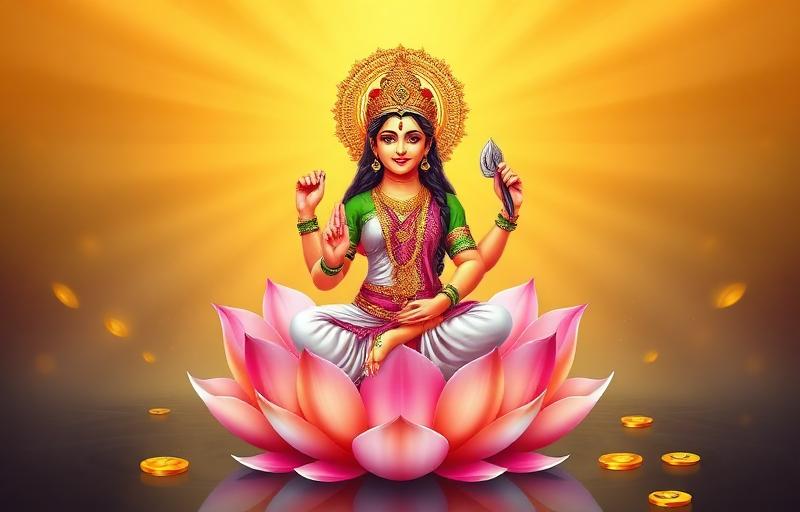
Mahesh, or Shiva, is the destroyer who dissolves the universe so that creation can begin anew. His destruction is not cruelty but transformation - the clearing away of the old to make room for the new. He is shown with the trishul (trident), the crescent moon, the Ganga in his hair and a serpent around his neck. His consort is Parvati, and his cosmic dance, the Tandava, expresses the rhythm of dissolution and renewal.
Scriptural Basis and Oneness
The Trimurti concept is developed in the Puranas, while its roots lie in the Vedas and Upanishads, where the one Brahman manifests in many forms. Importantly, the three are not rival gods but three aspects of one divine reality. The Maitri and other Upanishadic teachings affirm that creation, preservation and dissolution are functions of a single supreme power, seen from three angles.
The Deeper Spiritual Meaning
The Trimurti is a map of life itself. Everything that begins (Brahma), endures for a time (Vishnu) and finally passes away (Mahesh) follows this rhythm - a breath, a relationship, a season, a life. Seeing this cycle clearly frees us from clinging, because we learn that endings are also beginnings. The trinity teaches acceptance of change as the very nature of existence.
Why the Trimurti Matters Today

In a world that fears loss and worships only growth, the Trimurti offers balance. It reminds us that creating, sustaining and letting go are all sacred and all necessary. Honouring all three forms - in worship and in attitude - helps us welcome new beginnings, care for what we have, and release what must end with grace rather than grief.
Frequently Asked Questions
What is the Trimurti in Hinduism?+
The Trimurti is the trinity of Brahma the creator, Vishnu the preserver and Mahesh (Shiva) the destroyer. They are three aspects of one Supreme Reality governing creation, sustenance and dissolution.
What are the roles of Brahma, Vishnu and Mahesh?+
Brahma creates the universe, Vishnu preserves it and upholds dharma, and Mahesh (Shiva) destroys and transforms it so creation can begin anew. Together they form one continuous cosmic cycle.
Are Brahma, Vishnu and Mahesh separate gods?+
They are not rival gods but three aspects of one divine reality, Brahman. The Vedas and Upanishads teach that a single supreme power performs creation, preservation and dissolution.
Why is Shiva called the destroyer if destruction is bad?+
Shiva's destruction is transformation, not cruelty. By dissolving the old, he makes room for new creation. Destruction in this sense is necessary renewal, like clearing a field so fresh growth can begin.
Who are the consorts of the Trimurti?+
Brahma's consort is Saraswati (knowledge), Vishnu's is Lakshmi (wealth) and Mahesh's is Parvati (power). Together these three goddesses form the Tridevi, the feminine counterpart of the Trimurti.
Why does Brahma have so few temples?+
Tradition holds that Brahma's role as creator is complete once creation exists, so worship focuses on preservation and transformation. The famous Brahma temple at Pushkar is among the very few dedicated to him.
About the author
Anjali Mehta · Editor, M.A. Religious Studies
Anjali is the managing editor for Vandnaa and oversees the festival and vrat coverage. She holds an M.A. in Religious Studies and reviews every published article for accuracy, accessibility, and tradition-fidelity.
Meet the Vandnaa editorial team →Explore on Vandnaa
Related Articles

Tridevi - Saraswati, Lakshmi & Parvati Explained
9 min read
The Four Yugas - Satya, Treta, Dwapar & Kali Yuga Explained
10 min read
Dashavatar - 10 Avatars of Lord Vishnu: Names, Order, Meaning, Significance
11 min read
What is Atma & Paramatma (Soul & Supreme Soul)
10 min read
Vishnu Aarti Lyrics - Om Jai Jagdish Hare in Hindi & English
8 min read
Shiv Aarti Lyrics – Om Jai Shiv Omkara (शिव आरती)
13 min read