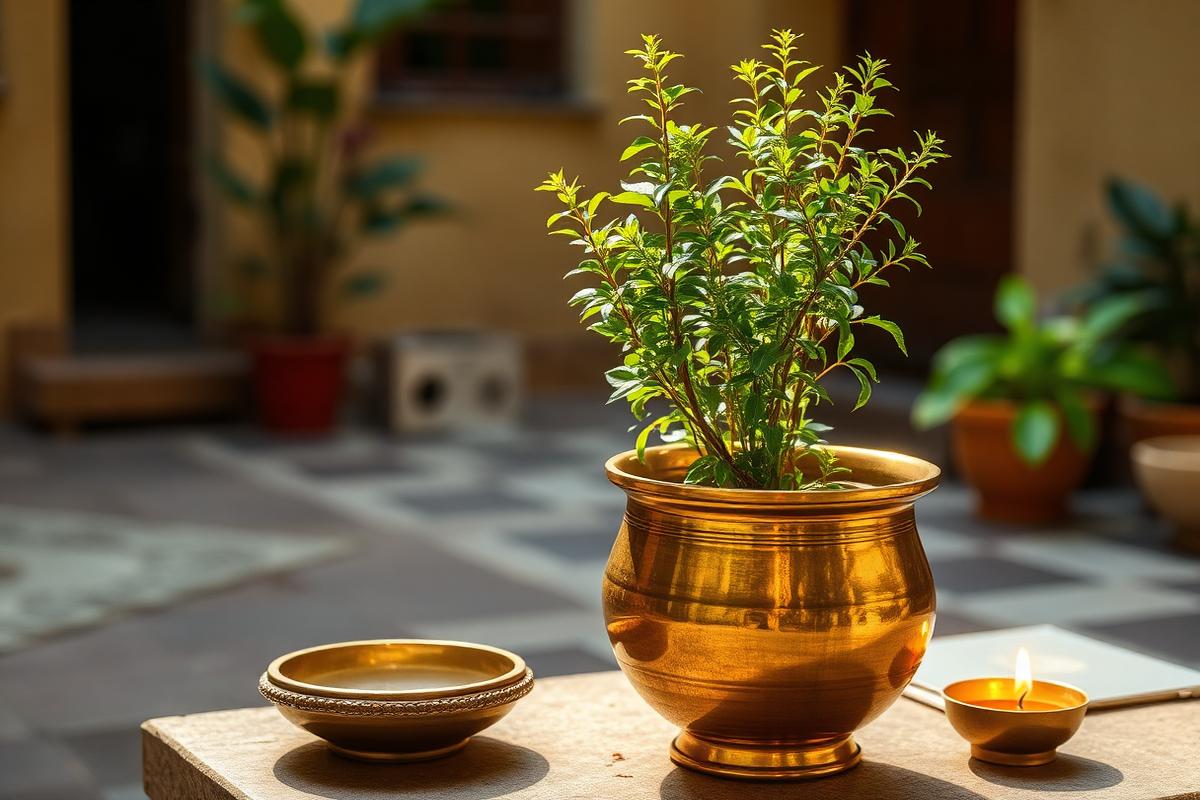
Tulsi Mata - The Goddess in Every Courtyard
Tulsi is the only deity in the Hindu tradition who lives as a plant in the family courtyard. She is revered as Vishnupriya - the beloved of Lord Vishnu - and as Vrinda Devi, whose devotion was so pure that the Lord promised no worship of His would be complete without a tulsi leaf. The Padma Purana says that wherever tulsi grows, that home becomes a tirtha, and negativity cannot stay.
For generations, the tulsi chaura (the raised platform where the plant grows) has been the heart of the Hindu home. The day begins by offering her water and ends by lighting a diya at her feet and singing "Jai Jai Tulsi Mata." This aarti is short, tender, and motherly - it addresses Tulsi not as a distant goddess but as Maiya, the mother who protects the household, removes illness, and carries her children across the ocean of worldly troubles.
Complete Tulsi Aarti Lyrics - Jai Jai Tulsi Mata
जय जय तुलसी माता, मैया जय तुलसी माता। सब जग की सुख दाता, सबकी वरदाता॥ मैया जय तुलसी माता...
सब योगों से ऊपर, सब रोगों से ऊपर। रज से रक्षा करके, सबकी भव त्राता॥ मैया जय तुलसी माता...
बटु पुत्री हे श्यामा, सूर बल्ली हे ग्राम्या। विष्णुप्रिये जो तुमको सेवे, सो नर तर जाता॥ मैया जय तुलसी माता...
हरि के शीश विराजत, त्रिभुवन से हो वंदित। पतित जनों की तारिणी, तुम हो विख्याता॥ मैया जय तुलसी माता...
लेकर जन्म विजन में, आई दिव्य भवन में। मानव लोक तुम्हीं से, सुख-संपति पाता॥ मैया जय तुलसी माता...
हरि को तुम अति प्यारी, श्याम वर्ण सुकुमारी। प्रेम अजब है उनका, तुमसे कैसा नाता॥ मैया जय तुलसी माता...
हमारी विपद हरो तुम, कृपा करो माता। जय जय तुलसी माता, मैया जय तुलसी माता॥
Roman Transliteration: Jai Jai Tulsi Mata, Maiya Jai Tulsi Mata | Sab Jag Ki Sukh Data, Sabki Var Data || Sab Yogon Se Upar, Sab Rogon Se Upar | Raj Se Raksha Karke, Sabki Bhav Trata || Batu Putri He Shyama, Sur Balli He Gramya | Vishnupriye Jo Tumko Seve, So Nar Tar Jata || Hari Ke Sheesh Virajat, Tribhuvan Se Ho Vandit | Patit Janon Ki Tarini, Tum Ho Vikhyata || Lekar Janm Vijan Mein, Aayi Divya Bhavan Mein | Manav Lok Tumhi Se, Sukh-Sampati Pata || Hari Ko Tum Ati Pyari, Shyam Varn Sukumari | Prem Ajab Hai Unka, Tumse Kaisa Nata || Hamari Vipad Haro Tum, Kripa Karo Mata | Jai Jai Tulsi Mata, Maiya Jai Tulsi Mata ||
Tulsi Aarti Meaning - Verse by Verse
Verse 1 (Sab jag ki sukh data): Victory to Tulsi Mata, the mother who gives happiness to the whole world and grants boons to all who come to her.
Verse 2 (Sab rogon se upar): She stands above all yogas and all diseases - tulsi is medicine for the body and the spirit alike - protecting her devotees and carrying them across bhava, the ocean of worldly existence.
Verse 3 (Vishnupriye jo tumko seve): She is Shyama, the dark-leaved one, beloved of Vishnu. Whoever serves her with devotion crosses over and is liberated.
Verse 4 (Hari ke sheesh virajat): She is so dear to the Lord that she adorns His very head; all three worlds bow to her, and she is famed as the saviour of the fallen.
Verses 5-6 (Lekar janm vijan mein): Born in the forest, she came to grace divine and human homes - through her, the human world receives happiness and prosperity. Her bond with Hari is a love beyond explanation.
Final verse: The devotee's simple plea - remove our troubles, Mother, and shower your grace.
The Evening Tulsi Diya - A Living Tradition
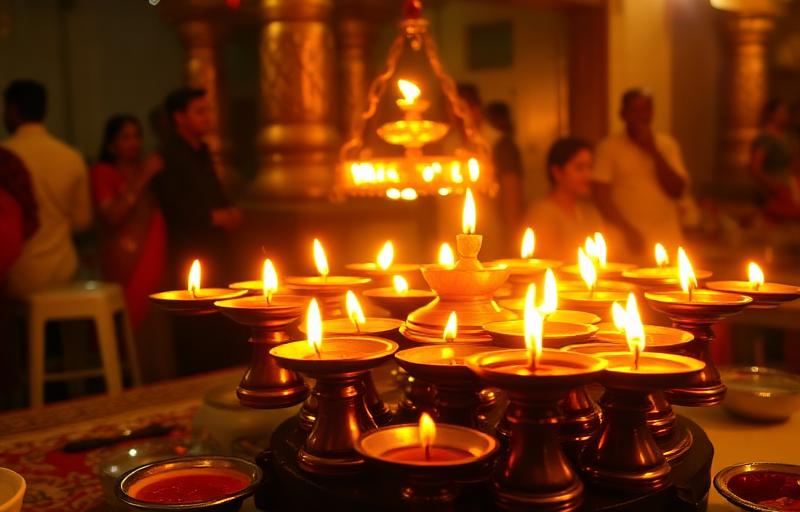
In countless Indian homes, the day closes with one small ritual: as dusk falls, the lady or any member of the house lights a ghee or mustard-oil diya at the tulsi chaura, folds her hands, and sings the aarti. This sandhya diya is considered deeply auspicious - tradition says Goddess Lakshmi herself visits the home where a lamp burns beside Tulsi at twilight.
The timing matters. The diya is lit during godhuli bela, the gentle hour around sunset, before full darkness sets in. Some families also do a simple parikrama - walking around the plant clockwise one, three, or seven times - while chanting "Tulsi Maharani Namo Namah" or simply "Radhe Radhe."
One traditional caution: tulsi leaves are never plucked after sunset, and the plant is not touched unnecessarily at night. The evening belongs to her rest; the devotee only lights the lamp, sings, and bows.
Kartik Month and Tulsi Vivah - Her Greatest Season
The month of Kartik (October-November) is Tulsi Mata's own season. Through this sacred month, devotees light a diya at the tulsi chaura every evening, and the merit of Kartik snan and deep daan is said to multiply when offered in her presence. Singing the Tulsi aarti daily through Kartik is one of the simplest and most cherished vrats in the tradition.
The month culminates in Tulsi Vivah, the ceremonial wedding of Tulsi with Lord Vishnu in His Shaligram form, celebrated on Dev Uthani Ekadashi or the following Dwadashi. The chaura is decorated like a bride's mandap, sugarcane forms the canopy, and the aarti is sung as the climax of the ceremony. You can read our full guides on Tulsi Vivah and Tulsi Pujan Diwas for the complete katha and puja vidhi - this aarti is the devotional thread running through both.
Tulsi Aarti Vidhi - How to Perform It
1. In the morning, offer water to Tulsi Mata from a copper or brass lota, ideally after your bath. Apply a little roli or chandan to the chaura and offer a flower if available.
2. For the evening aarti, light a ghee diya (or mustard-oil diya) on a small thali. Place it facing the plant; the devotee usually faces east or north while standing before the chaura.
3. Move the thali in slow clockwise circles before Tulsi Mata - traditionally seven full circles - while singing "Jai Jai Tulsi Mata." Keep the pace unhurried; the aarti takes barely three minutes.
4. After the aarti, do a clockwise parikrama of the plant one, three, or seven times, then offer pranam with folded hands.
5. Remember the traditional rules: do not pluck leaves after sunset, avoid plucking on Ekadashi, Sundays, and during eclipses, and never let the chaura stay unclean. Watering and aarti continue daily; plucking pauses on these days.
Benefits of Daily Tulsi Aarti

Tradition promises rich blessings to the home where Tulsi is honoured daily: peace in the family, the presence of Lakshmi, protection from negativity, and the special grace of Lord Vishnu, who accepts no offering without her leaf. The aarti's own verses promise that whoever serves her crosses the ocean of worldly troubles.
The lived benefits are gentle and real. Tulsi is a healing herb revered in Ayurveda, and tending her daily keeps a living, green, fragrant presence at the centre of the home. The two-minute evening ritual - lamp, song, parikrama - creates a daily moment when the whole family pauses together, screens are set aside, and the day ends in gratitude.
For many devotees, the Tulsi aarti is also their first aarti - learned in childhood at a grandmother's side. Singing it keeps that thread of devotion unbroken across generations, which may be its sweetest benefit of all.
Common Questions From Devotees
When should the Tulsi aarti be sung - morning or evening?+
Both are traditional. Water is offered in the morning, often with a short aarti or mantra, while the main aarti with the diya is sung at dusk, during godhuli bela. If you can do only one, the evening diya and aarti is the most cherished form of daily Tulsi seva.
Why is a diya lit near Tulsi every evening?+
The evening diya honours Tulsi as Vishnupriya and is believed to invite Goddess Lakshmi into the home. Tradition holds that a lamp beside Tulsi at twilight removes negativity and brings peace and prosperity. It also marks a gentle daily close to the household's day.
On which days should tulsi leaves not be plucked?+
Tradition advises not plucking tulsi leaves on Ekadashi, Sundays, and during eclipses, and never after sunset on any day. Watering, diya, and aarti continue every day without restriction - only the plucking of leaves pauses.
What is the connection between Tulsi aarti and Tulsi Vivah?+
Tulsi Vivah, on Dev Uthani Ekadashi or Dwadashi in Kartik, is the ceremonial wedding of Tulsi with Lord Vishnu's Shaligram form. The Jai Jai Tulsi Mata aarti is sung as the climax of that ceremony, and through the whole Kartik month devotees sing it nightly at the decorated tulsi chaura.
Can Tulsi aarti be done in an apartment without a courtyard?+
Absolutely. A tulsi plant in a pot on a balcony, window sill, or near the home mandir serves fully. Keep her where she gets sunlight, offer water in the morning, and light the evening diya safely beside the pot. Bhava matters far more than the size of the chaura.
What are the benefits of singing Tulsi aarti daily?+
Tradition associates daily Tulsi seva with family peace, Lakshmi's presence, protection from negativity, and Vishnu's grace. Practically, it gives the home a living green presence, a daily moment of family togetherness at dusk, and an unbroken thread of devotion passed across generations.
About the author
Acharya Vinaya Kapoor · M.A. Sanskrit, Mantra & Stotra Studies
Acharya Vinaya holds an M.A. in Sanskrit from Banaras Hindu University and writes the mantra and stotra commentary on Vandnaa. Her focus is on accurate pronunciation, traditional context, and helping modern readers connect with classical texts.
Meet the Vandnaa editorial team →