Origin in the Devi Mahatmya
The Devi Mahatmya describes how, in the battle against the demon Raktabija, the shakti of Vishnu emerged as Vaishnavi to stand beside the goddess Chandika, carrying the very weapons Vishnu himself wields to protect dharma.
Her presence in that battle reflects a recurring theme in Devi worship, that preservation and protection, just like creation, ultimately depend on the shakti of the divine mother.
Meaning and Iconography
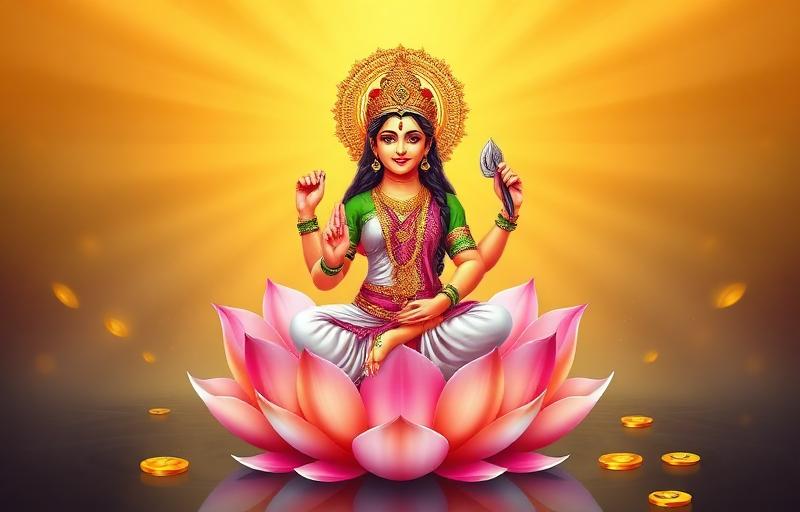
Vaishnavi is usually shown with a dark or bluish complexion, echoing Vishnu's own colour, and seated upon or beside Garuda. Her four weapons carry the same meanings devotees associate with Vishnu, the conch as the sound of creation, the discus as the wheel of time and justice, the mace as strength, and the lotus as purity.
Her calm yet powerful expression is said to reflect Vishnu's role as the preserver who steps in only when balance must be restored.
How Devotees Worship Vaishnavi
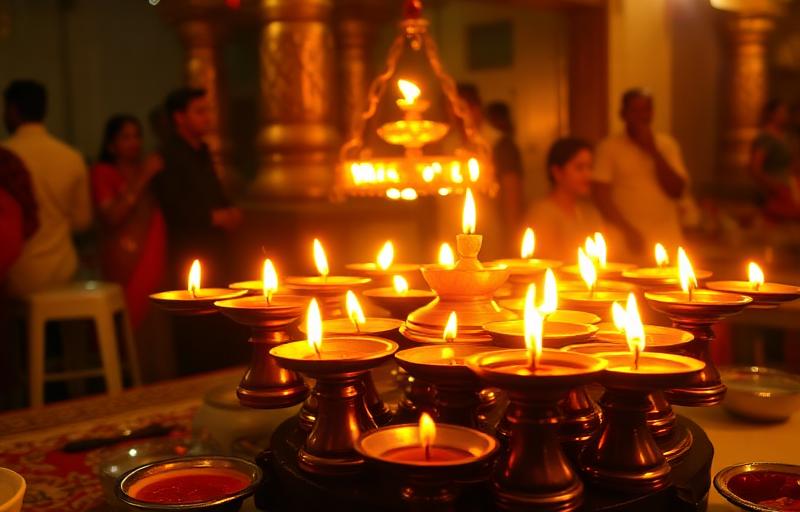
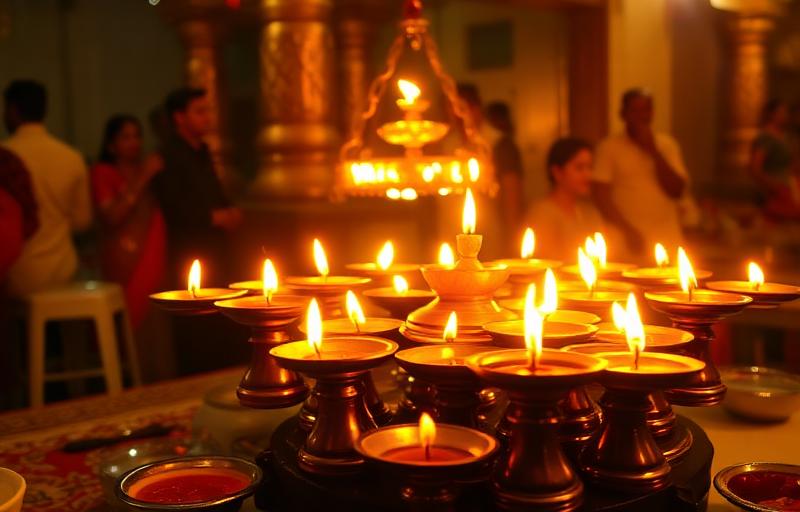
As with the other Saptamatrikas, Vaishnavi is mostly worshipped as part of the matrika panel found in shakti temples, and invoked collectively during Navratri when devotees recite the Devi Mahatmya. A simple invocation, Om Vaishnavyai Namah, is chanted while offering flowers, especially tulsi where available, in her honour.
Devotees seeking stability, protection for family, or the safe continuation of an ongoing endeavour are said to remember Vaishnavi alongside their prayers to Vishnu.
Benefits as per Tradition
As per tradition, Vaishnavi is believed to grant protection, patience and the strength to sustain what one has already built, whether that is a family, a livelihood or a long-term goal. She is seen as a gentle but firm guardian against forces that threaten to disturb hard-won stability.
Her worship alongside the other Saptamatrikas during Navratri is considered especially auspicious for seeking her protective grace.
The Devotional Takeaway
Vaishnavi's place among the seven mothers is a reminder that preservation is as much an act of shakti as creation and destruction. Devotees who invoke her, as per tradition, do so seeking not miracles but steady, sustaining strength for what truly matters in their lives.
Worship of Vaishnavi, like all devotion to the Saptamatrikas, is an act of faith and love, not a transaction.
What People Ask Most
What does Vaishnavi, the Saptamatrika, embody?+
Vaishnavi embodies the shakti of Vishnu the preserver, carrying his conch, discus, mace and lotus while riding Garuda, and represents protective, sustaining energy.
How is Vaishnavi worshipped?+
Vaishnavi is worshipped as part of the Saptamatrika panel in shakti temples and invoked during Navratri alongside the other six mothers, often with the chant Om Vaishnavyai Namah.
What does Vaishnavi's iconography symbolise?+
Her conch, discus, mace and lotus mirror Vishnu's own symbols, representing creation's sound, time and justice, strength, and purity respectively.
About the author
Anjali Mehta · Editor, M.A. Religious Studies
Anjali is the managing editor for Vandnaa and oversees the festival and vrat coverage. She holds an M.A. in Religious Studies and reviews every published article for accuracy, accessibility, and tradition-fidelity.
Meet the Vandnaa editorial team →