What Are the Lokas
In Hindu cosmology, the universe is described as fourteen lokas or worlds, arranged as seven upper realms and seven lower realms. The word loka means a plane of existence or world of experience. These are not only physical places but also states of consciousness, reflecting the level of spiritual evolution of the beings who dwell there. Together they map the vast structure of creation within Brahmanda, the cosmic egg.
The Seven Upper Lokas
The seven upper worlds, rising from earth toward the highest truth, are: Bhu Loka (the earth we live on), Bhuvar Loka (the space between earth and sun), Svar Loka (the heaven of Indra and the devas), Mahar Loka (the realm of great sages), Jana Loka (the abode of evolved beings and Brahma's sons), Tapa Loka (the world of intense austerity) and Satya Loka (Brahma Loka, the highest realm of truth). Each higher loka has subtler matter and greater spiritual purity.
The Seven Lower Lokas
Below the earth lie seven patalas or nether worlds: Atala, Vitala, Sutala, Talatala, Mahatala, Rasatala and Patala (the lowest). These are not simply realms of punishment - many are described as beautiful, jewelled worlds inhabited by nagas, asuras and other powerful beings. They represent realms dominated more by material power, desire and ego than by spiritual aspiration, where consciousness is turned outward rather than upward.
Scriptural Basis of the Lokas
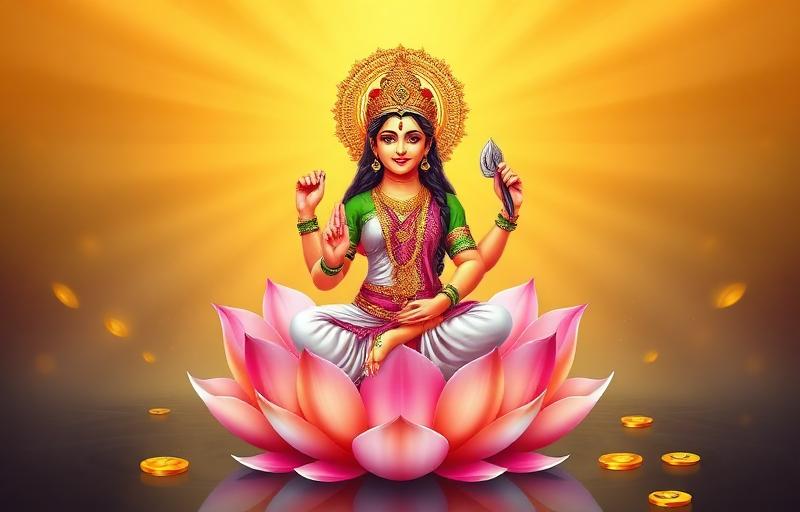
The fourteen lokas are described in the Puranas, especially the Bhagavata Purana and Vishnu Purana, and echoed in the Vedas and Upanishads. The daily Gayatri invocation chants Om Bhur Bhuvah Svah, naming the first three lokas. This shows that the loka structure is not abstract theory but woven into everyday worship, reminding the devotee of the vastness of creation in a single breath.
The Spiritual Meaning of the Lokas
Beyond cosmology, the lokas symbolise inner states of consciousness. The lower worlds represent a mind ruled by base desires and ego, while the upper worlds represent rising awareness, wisdom and nearness to the divine. Through karma, the soul moves among these realms across lifetimes. The teaching is clear - where our consciousness dwells determines the loka we experience, here and hereafter.
What Lies Beyond the Lokas
Even Satya Loka, the highest world, is part of creation and is eventually dissolved at the end of a cosmic cycle. The true goal of spiritual life is moksha - liberation that takes the soul beyond all fourteen lokas to union with the eternal Brahman. The Bhagavad Gita teaches that those who reach the supreme abode are never reborn, transcending the wheel of worlds entirely.
Why This Matters Today
The fourteen lokas remind us that we are part of a vast, ordered universe, and that our choices shape where our consciousness rises or falls. Instead of taking the worlds literally as a map of space, we can use them as a mirror for our inner life. Living with truth, devotion and good karma is how we lift our awareness toward the higher lokas while still on earth.
Reader Questions Answered
What are the 14 lokas in Hinduism?+
The 14 lokas are seven upper worlds (Bhu, Bhuvar, Svar, Mahar, Jana, Tapa and Satya) and seven lower worlds (Atala, Vitala, Sutala, Talatala, Mahatala, Rasatala and Patala). They map the structure of creation.
Which is the highest loka?+
Satya Loka, also called Brahma Loka, is the highest of the seven upper worlds. It is the realm of truth and the abode of Lord Brahma, with the subtlest matter and greatest spiritual purity.
Are the lower lokas places of punishment?+
Not simply. Many lower lokas are described as beautiful jewelled worlds inhabited by nagas and asuras. They represent realms dominated by material power, desire and ego rather than spiritual aspiration.
Where are the lokas described in scripture?+
The lokas are described in the Puranas, especially the Bhagavata and Vishnu Puranas, and echoed in the Vedas. The Gayatri invocation 'Om Bhur Bhuvah Svah' names the first three lokas.
Do the lokas have a spiritual meaning?+
Yes. The lokas symbolise inner states of consciousness. Lower worlds reflect a mind ruled by ego and desire, while upper worlds reflect rising wisdom and nearness to the divine, shaped by our karma.
What lies beyond all the lokas?+
Beyond all fourteen lokas is moksha, liberation that unites the soul with the eternal Brahman. Even Satya Loka is part of creation and dissolves at the end of a cosmic cycle, but the liberated soul transcends all worlds.
About the author
Anjali Mehta · Editor, M.A. Religious Studies
Anjali is the managing editor for Vandnaa and oversees the festival and vrat coverage. She holds an M.A. in Religious Studies and reviews every published article for accuracy, accessibility, and tradition-fidelity.
Meet the Vandnaa editorial team →Explore on Vandnaa
Related Articles

Moksha & the 4 Purusharthas - Dharma, Artha, Kama, Moksha
9 min read

The Four Vedas - Rig, Yajur, Sama, Atharva Explained
10 min read
The Four Ashramas of Life in Hinduism Explained
10 min read
What is Tirtha - Pilgrimage Significance in Hinduism
10 min read
Gayatri Mantra Meaning, Benefits & How to Chant (गायत्री मंत्र)
12 min read
Bhagavad Gita - All 18 Chapters Summary & Key Teachings
10 min read