What Is Maya
Maya is one of the deepest ideas in Hindu philosophy - the cosmic illusion that veils the one true Reality, Brahman, and makes the ever-changing world appear to be the whole and final truth. Maya does not mean the world is fake; it means we mistake the temporary for the eternal and the appearance for the essence. Like a rope mistaken for a snake in dim light, the world is real as experience but misread in its true nature.
Maya in the Scriptures
In the Bhagavad Gita (7.14), Krishna says, 'This divine Maya of mine, made of the three gunas, is hard to overcome; but those who surrender to me cross beyond it.' The Upanishads speak of the world appearing through nama-rupa (name and form) over the changeless Brahman. The sage Adi Shankaracharya developed this into Advaita Vedanta, teaching that only Brahman is ultimately real, and Maya is the power by which the One appears as the many.
The Two Powers of Maya
Vedanta describes Maya as having two functions. The first is avarana (veiling), which hides our true nature as the eternal self. The second is vikshepa (projection), which throws up the appearance of a separate, changing world of names and forms. Together these make us forget who we are and identify instead with body, mind and possessions, leading to attachment and suffering.
The Deeper Spiritual Meaning
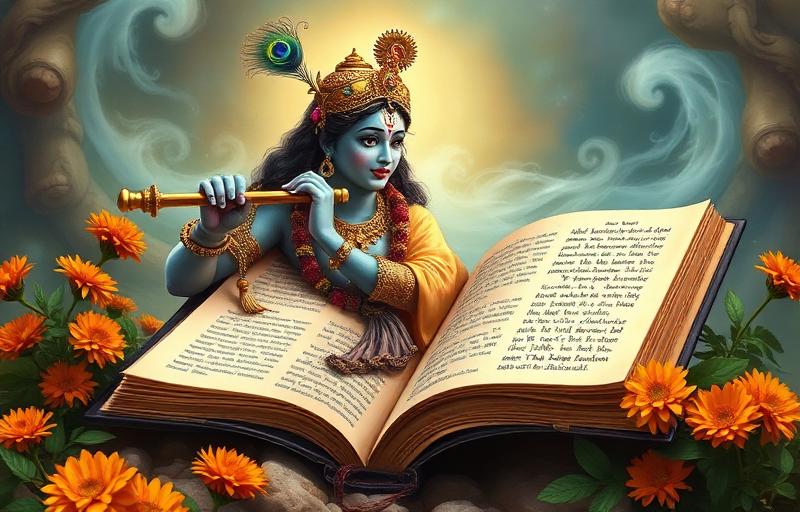
Maya is not a curse but a teacher. It is the very screen on which the play of life unfolds, allowing the One to experience itself as many. Suffering begins only when we take the play for the player, the wave for the ocean. To 'see through Maya' is not to reject the world but to enjoy it lightly, knowing that behind every passing form shines the changeless Brahman, our own true Self.
How to See Beyond Maya
Scriptures offer time-tested paths to pierce Maya. Jnana (self-inquiry) asks 'who am I?' until the eternal self is recognised. Bhakti (devotion) and surrender, as Krishna promises in the Gita, let grace lift the veil. Karma yoga, acting without selfish attachment, loosens Maya's grip. Steady meditation and the company of the wise (satsang) gradually still the mind so the ever-present Reality can shine through.
Everyday Examples of Maya
Maya is seen in simple experiences. A dream feels completely real until we wake; a mirage of water shimmers on a hot road; a movie moves us to tears though it is only light on a screen. In each case the experience is vivid yet not the final truth. Our waking life, the sages say, is similar - utterly real to us, yet a passing appearance over the one unchanging Reality.
Why Understanding Maya Matters Today
In an age of constant noise and craving, the teaching of Maya brings calm. It helps us hold success and loss lightly, knowing that all forms change while our deeper Self does not. This does not make us passive; it frees us to act with love and courage without being crushed by results. Seeing through Maya is the root of lasting peace and the doorway to moksha.
Frequently Asked Questions
What is Maya in Hinduism?+
Maya is the cosmic illusion that veils the one Reality, Brahman, making the changing world appear to be the whole truth. It is the power by which the One appears as the many forms we experience.
Does Maya mean the world is unreal?+
Not exactly. Maya means we mistake the temporary for the eternal. The world is real as experience but not the final truth, like a rope mistaken for a snake in dim light.
Where is Maya mentioned in scripture?+
The Bhagavad Gita (7.14) describes Maya made of the three gunas as hard to cross except by surrender. The Upanishads and Adi Shankaracharya's Advaita Vedanta develop it further.
What are the two powers of Maya?+
Maya has avarana, the power of veiling that hides our true self, and vikshepa, the power of projection that throws up the appearance of a separate, changing world of names and forms.
How can one overcome Maya?+
Through self-inquiry (jnana), devotion and surrender (bhakti), selfless action (karma yoga), steady meditation and the company of the wise. The Gita assures that surrender to God lets grace lift the veil.
How does understanding Maya help in daily life?+
It helps us hold success and loss lightly, knowing forms change while the deeper Self does not. This brings calm and frees us to act with love and courage without being crushed by results.
About the author
Anjali Mehta · Editor, M.A. Religious Studies
Anjali is the managing editor for Vandnaa and oversees the festival and vrat coverage. She holds an M.A. in Religious Studies and reviews every published article for accuracy, accessibility, and tradition-fidelity.
Meet the Vandnaa editorial team →Explore on Vandnaa
Related Articles

What is Atma & Paramatma (Soul & Supreme Soul)
10 min read
The Four Yugas - Satya, Treta, Dwapar & Kali Yuga Explained
10 min read
Trimurti - Roles of Brahma, Vishnu & Mahesh
9 min read
Bhagavad Gita - All 18 Chapters Summary & Key Teachings
10 min read
Moksha & the 4 Purusharthas - Dharma, Artha, Kama, Moksha
9 min read
Reincarnation (Punarjanam) - Soul, Karma & Rebirth
9 min read