The Practice: A Vrat for Each Day of the Week
Many Hindu devotees observe a weekly vrat, or fast, dedicated to a particular deity on a specific day, eating only simple satvik food, or sometimes fasting until evening. Monday is widely observed for Lord Shiva, Tuesday for Hanuman, and Friday often for the Goddess, among other such associations through the week.
Rather than fasting on every single day, most devotees choose one day that holds personal or family significance, and observe it consistently over months or years as a form of steady devotion.
Where This Weekly Pattern Comes From
This tradition comes from the panchang, the Hindu calendar system, where each day of the week, or vaar, is traditionally associated with a particular graha and, through it, with a devotional form connected to that day. This is purely a matter of devotional calendar and worship custom, not a system of predictions, it simply tells devotees which deity's remembrance is traditionally connected to which day.
Over centuries, this gave every day of the week its own devotional character: Monday for Shiva, Tuesday and Saturday for Hanuman, Wednesday often for Ganesha, Thursday for Vishnu or one's guru, Friday for the Goddess or Lakshmi, and Sunday for Surya, the sun.
The Meaning Behind Dedicating a Day
Setting aside one day each week for a chosen deity brings a rhythm of discipline and remembrance into a devotee's life. Rather than devotion being an occasional act reserved for festivals, the weekly vrat weaves it into the ordinary flow of time, giving the mind a regular pause for reflection and gratitude.
Fasting itself is understood in tradition as a way to bring focus and simplicity, easing the body so the mind can turn more fully toward prayer. In this sense, each weekly vrat becomes a small, recurring pilgrimage of the mind, undertaken without needing to travel anywhere.
How These Weekly Vrats Are Observed Today

Each weekly vrat carries its own small customs, shaped by tradition over generations:
- Monday (Shiva): jalabhishek on a Shivling, eating fruits or a single simple meal
- Tuesday and Saturday (Hanuman): reciting the Hanuman Chalisa, visiting a Hanuman temple, avoiding certain foods
- Wednesday (Ganesha): prayers before starting new tasks, seeking blessings for obstacles to be removed
- Thursday (Vishnu or Guru): wearing yellow, offering yellow flowers or sweets, respect shown to teachers
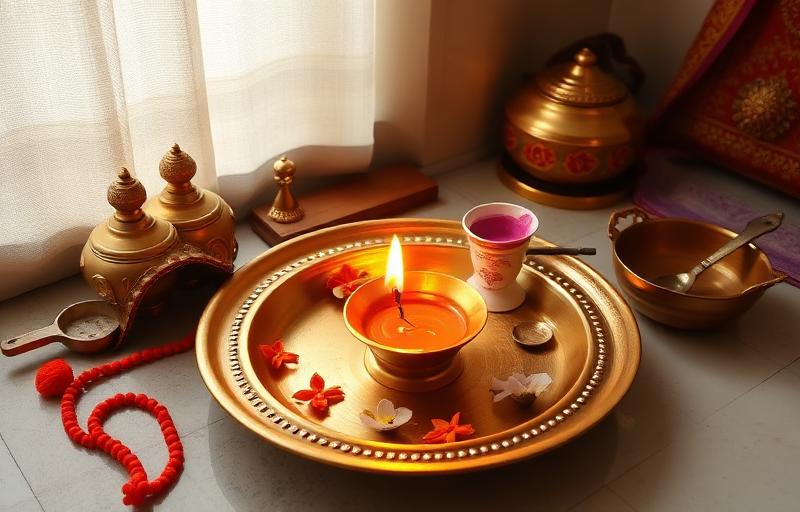
- Friday (Devi or Lakshmi): home puja, lighting a lamp for the Goddess, keeping the home especially clean
- Sunday (Surya): offering water (arghya) to the rising sun
Many devotees pick just one of these to follow consistently, often based on a family tradition passed down through generations.
A Week Shaped Around Devotion
The custom of linking each weekday to a deity turns the ordinary passage of time into an ongoing devotional rhythm. It is a gentle structure, not a strict obligation, one that helps devotees return again and again to gratitude and remembrance amid the busyness of daily life.
As with all vrats, this practice is an act of faith and love, not a transaction. Whichever day a devotee chooses, what matters most in tradition is the sincerity carried into that day's quiet discipline.
What People Ask Most
Why is Monday associated with fasting for Lord Shiva?+
Within the traditional weekly calendar, Monday is devotionally linked to Lord Shiva, making it a day many devotees set aside for jalabhishek and simple fasting as an expression of focused worship.
Is choosing a weekly vrat day based on astrology?+
No, this tradition is about devotional worship and remembrance, not predictions or remedies. It simply reflects which deity's worship is traditionally connected to which day of the week within the panchang.
Do devotees have to fast on all seven days?+
No, most devotees choose just one day of the week that holds personal or family meaning and observe it consistently. Fasting every day is not expected or required by tradition.
About the author
Anjali Mehta · Editor, M.A. Religious Studies
Anjali is the managing editor for Vandnaa and oversees the festival and vrat coverage. She holds an M.A. in Religious Studies and reviews every published article for accuracy, accessibility, and tradition-fidelity.
Meet the Vandnaa editorial team →