What Is Dashashwamedh Ghat
Of the many ghats that line the Ganga in Varanasi, Dashashwamedh Ghat is the most famous and the most alive, a place where ritual, commerce, prayer and daily life all meet on the same stone steps. Located a short walk from Kashi Vishwanath Temple, it serves as the city's most accessible and most visited riverfront.
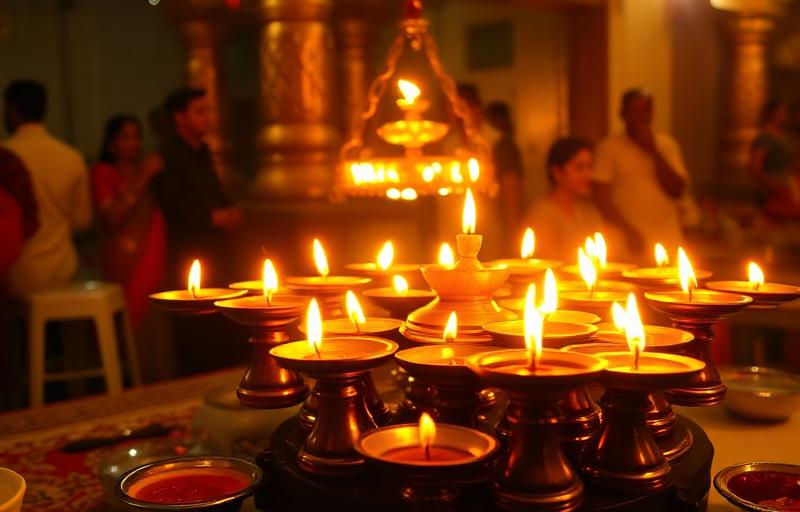
Throughout the day the ghat hums with boatmen, flower sellers, priests and bathers, but it is in the evening, when the grand Ganga Aarti begins, that Dashashwamedh reveals the devotional heart for which it is best known.
The Legend of the Ten Horse Sacrifices
The name Dashashwamedh comes from "dasha" meaning ten and "ashwamedha" referring to the horse sacrifice, one of the most significant yajnas described in ancient tradition. According to popular legend, Lord Brahma himself performed ten such ashwamedha yajnas at this very spot.
Some accounts connect this event to the welcoming of Lord Shiva to Kashi, marking the ghat as a place consecrated at the very beginning of the city's sacred history. Whatever the exact telling, the name has endured for generations, reminding every visitor that this ground was considered holy long before the first aarti lamp was ever lit here.
Why This Ghat Holds Such Significance
Dashashwamedh Ghat is considered one of the most auspicious spots along the Ganga for ritual bathing, and many pilgrims begin their Kashi darshan with a dip here before proceeding to Kashi Vishwanath Temple nearby. It is regarded as a place where ordinary river water carries the full sanctity of Mother Ganga in her most accessible form.
The ghat is also the stage for the city's most iconic devotional spectacle, an evening ritual that has become, for many visitors, their most memorable experience of Varanasi's living faith, standing as proof that ancient tradition can remain vivid and communal in the present day.
Visitor Guide: When to Arrive and What to Expect
The Ganga Aarti is performed every evening as dusk falls, with the exact start shifting gently across the year with the change of season. Arriving at least thirty to forty five minutes early is wise, since the ghat's steps fill quickly with both devotees and visitors.
Many choose to experience the aarti from a boat on the river itself, which offers a wide, unobstructed view of all the priests performing in unison. Mornings offer a different, quieter experience, with ritual bathing, boat rides and a gentler view of the ghat's daily rhythm.
How to Reach Dashashwamedh Ghat
Dashashwamedh Ghat lies at the very heart of the old city, an easy walk from Kashi Vishwanath Temple through the narrow lanes that connect the temple to the river. Vehicles cannot approach the ghat directly, so the final stretch is always covered on foot.
Varanasi Junction, Varanasi Cantt railway station and Lal Bahadur Shastri International Airport connect the city to the rest of India, and taxis or autos can drop pilgrims at the nearest accessible point before the walk down to the river.
A Closing Thought on Gratitude to the River
Watching the aarti at Dashashwamedh, many visitors quietly repeat a line devoted to the river:
Om Namah Gangayai (Salutations to Mother Ganga)
This simple offering of words joins the flames, the incense and the chanting as one more form of gratitude rising toward the river.
Dashashwamedh Ghat, in the end, is a place that reminds every visitor of an old and simple truth: that a river which sustains a city deserves to be thanked, and that gratitude expressed together, night after night, is itself a form of devotion. Worship here is an act of faith and love, not a transaction, offered freely to the water that has cared for Kashi since memory began.
Reader Questions Answered
Why is it called Dashashwamedh Ghat?+
The name comes from a tradition that Lord Brahma performed ten ashwamedha yajnas, a significant ancient sacrifice, at this very spot, making it one of the most consecrated ghats along the Ganga in Varanasi.
What time does the Ganga Aarti happen at Dashashwamedh Ghat?+
The aarti is performed every evening as dusk falls, with the exact time shifting gradually with the seasons. Arriving thirty to forty five minutes early is generally advised to find a good spot.
Is it better to watch the Ganga Aarti from the ghat steps or from a boat?+
Both offer a meaningful experience. The ghat steps place visitors close to the ritual itself, while a boat on the river offers a wide, unobstructed view of all the priests performing together.
About the author
Acharya Vinaya Kapoor · M.A. Sanskrit, Mantra & Stotra Studies
Acharya Vinaya holds an M.A. in Sanskrit from Banaras Hindu University and writes the mantra and stotra commentary on Vandnaa. Her focus is on accurate pronunciation, traditional context, and helping modern readers connect with classical texts.
Meet the Vandnaa editorial team →