A Demon Born From, or Sent Against, Shiva
Accounts of Gajasura's origin vary across texts. Some tellings, particularly in certain Puranic traditions from South India, describe him as a devotee of Shiva who performed severe tapasya and was granted the boon of enormous strength along with an elephant's form and hide of near-indestructible toughness, only to misuse that strength afterward, terrorizing sages and disrupting their rituals across the region. Other tellings connect him more directly to Andhaka's circle of demons or to a broader campaign of asuras testing Shiva's patience during a period of general disorder in the three worlds.
What the versions agree on is the shape of the conflict: Gajasura, whichever his origin, eventually attacked a group of sages performing a yajna, and the sages, unable to defend themselves, called on Shiva directly. Shiva arrived and engaged the elephant-demon in single combat.
A Dying Wish Granted
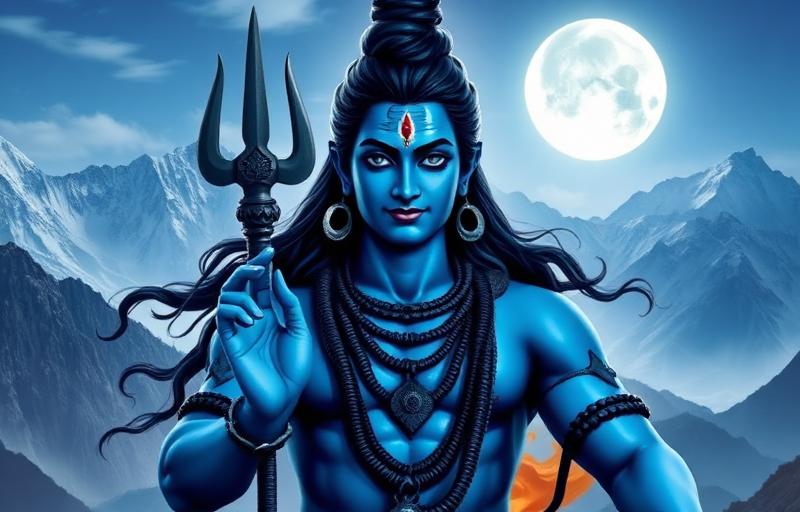
As the fight turned decisively against him, Gajasura, in most versions of the story, recognized his opponent's true nature and, rather than fighting to the last breath in denial, made a final request: that Shiva kill him and then wear his hide as a permanent garment, so that some part of him would remain in eternal contact with the deity he had, in his own way, revered even while terrorizing others. Shiva granted this last wish, killing him and draping the elephant's hide across his own shoulders as a cloak, an image that became one of Shiva's standard iconographic forms, known in temple sculpture and text as Gajasurasamharamurti, the form of Shiva as slayer of the elephant demon.
The episode is notable within Shaiva theology for the specific mercy embedded in it: rather than simple destruction, Gajasura's death is framed as a form of union with Shiva, his physical form literally becoming part of the deity's own permanent appearance rather than being erased.
An Image Carved Across South Indian Temples
The Gajasurasamharamurti form is prominently carved at major Chola and Pallava era temples across Tamil Nadu, often shown as a dancing Shiva with the elephant hide stretched dramatically behind him like a canopy, one of the more theatrically striking images in South Indian temple sculpture. It is distinct from, and should not be confused with, the story of the elephant-headed demon Gajamukhasura connected to Ganesha's origin in some Puranic traditions, a different figure with a different fate entirely.
For a worshipper encountering the image without the backstory, the elephant hide can read simply as a symbol of Shiva's power over the largest and strongest of creatures. Knowing the fuller story adds a different note: the garment is not a war trophy in the ordinary sense but something closer to a memorial, worn because a dying devotee asked to be kept close.
Reader Questions Answered
Is Gajasura the same as the demon connected to Ganesha's origin?+
No, these are separate figures. Gajasura is the elephant demon killed by Shiva whose hide becomes his garment, while Gajamukhasura appears in a different, unrelated set of Puranic stories connected to Ganesha's iconography.
Why did Gajasura ask to be worn as a garment rather than simply seek mercy?+
The tradition frames this as his final act of devotion, choosing permanent physical closeness to Shiva over an ordinary plea for his life, turning his death into a form of union rather than a defeat.
What is Gajasurasamharamurti?+
It is a specific iconographic form of Shiva, usually shown dancing with the elephant hide stretched out behind him, commemorating his victory over and mercy toward Gajasura, and it is common in Chola and Pallava era temple sculpture in Tamil Nadu.
About the author
Anjali Mehta · Editor, M.A. Religious Studies
Anjali is the managing editor for Vandnaa and oversees the festival and vrat coverage. She holds an M.A. in Religious Studies and reviews every published article for accuracy, accessibility, and tradition-fidelity.
Meet the Vandnaa editorial team →