Why Hanuman Has So Many Names
In Sanskrit tradition, a deity's names are not arbitrary labels - they are mantras of specific energies. Each name invokes a particular aspect of the deity's nature. Hanuman ji has the largest collection of names of any Hindu deity, with traditions counting anywhere from 12 to 108 to 1008 names.
The 12 most powerful names (Dwadasha Naam) are chanted together every morning by millions of devotees. The classical shloka says:
'Hanumana-anjaneya cha vayuputra cha mahabala, Rameshtah phalguna sakha pingaksha amita-vikrama, Udadhi-kramanas-chaiva sitashoka-vinashaka, Lakshmana-prana-data cha Dasagriva-darpaha. Dwadashaitani namani kapindrasya mahatmanah, Swapakale prabodhe cha yatrakale cha yah pathet - sarvapadbhyo vimuchyeta nama-rakshakaranam.'
The promise: 'Whoever recites these 12 names of the great monkey-king at sleeping time, on waking, and at the start of any journey - is freed from all dangers.'
This section walks through each of the 12 names, what each means, and the specific benefit each one carries.
📿 The Vandnaa App's Hanuman module has audio of all 12 names with synchronized chanting practice for the prescribed dawn-and-dusk recitation.
Names 1–4: Hanuman, Anjaneya, Vayuputra, Mahabala
1. हनुमान (Hanuman) - 'The One with the Disfigured Jaw'
From hanu (jaw) + mat (having). When child Hanuman tried to eat the sun thinking it was a fruit, Indra struck him with the vajra, breaking his jaw. He survived and was named Hanuman from this incident. The name represents his invincibility - even cosmic weapons cannot kill him.
Benefit of chanting: Protection from physical harm, accidents, and surgery complications.
2. अंजनेय (Anjaneya) - 'Son of Anjana'
Mother Anjana was an apsara cursed to be born as a vanara (monkey). Her devotion to Lord Shiva resulted in Hanuman's birth as Shiva's amsha (partial incarnation). The name connects Hanuman to maternal love and the bond between mother and child.
Benefit of chanting: Healing mother-child relationships, success in fertility, protection of children.
3. वायुपुत्र / पवनपुत्र (Vayuputra / Pavanputra) - 'Son of the Wind'
The wind god Vayu is Hanuman's spiritual father. This is why Hanuman can fly, traverse vast distances, and is the ruler of all prana (life-force). The name represents speed, breath, and life-energy.
Benefit of chanting: Improved breathing, recovery from respiratory illness, mental clarity, success in fast-moving situations.
4. महाबल (Mahabala) - 'The Mighty Powerful One'
Literally 'great strength'. Hanuman is the deity of bal (strength) - physical, mental, and spiritual. No deity in Hinduism rivals him in pure strength. Even Lord Krishna is said to have offered prayers to Hanuman.
Benefit of chanting: Physical strength building, success in athletics/military, courage in confrontations, victory over weakness.
Names 5–8: Rameshta, Phalguna-sakha, Pingaksha, Amitavikrama
5. रामेष्ट (Rameshta) - 'Beloved of Ram'
The most emotionally tender of all Hanuman's names. Hanuman is not just Ram's servant - he is Ram's most beloved, the one Ram values above all. This name represents the ultimate bhakti relationship in Hinduism.
Benefit of chanting: Deepens one's own devotion, attracts divine love, heals separation from loved ones.
6. फाल्गुन-सखा (Phalguna-sakha) - 'Friend of Phalguna (Arjuna)'
In the Mahabharata, Hanuman sat on top of Arjuna's chariot during the Kurukshetra war as a guardian - making him Arjuna's friend across yugas. This name represents cross-yuga friendship and protection of warriors.
Benefit of chanting: Success in battles (literal or metaphorical - court cases, business wars), friendship blessings, safe travel.
7. पिंगाक्ष (Pingaksha) - 'The Tawny-Eyed One'
Hanuman's eyes are described as pingala - the color of dawn or fire. This represents his fierce vision that can see truth across illusion. Pingaksha is the seer who cannot be deceived.
Benefit of chanting: Discernment in deception, ability to see through lies, protection from fraud, success in legal/contract matters.
8. अमित-विक्रम (Amitavikrama) - 'The Immeasurable Hero'
Amita = immeasurable; vikrama = heroism/valor. No human or cosmic measure can quantify Hanuman's heroism. This name represents the unbounded nature of divine effort.
Benefit of chanting: Breaking through perceived limits, achieving impossible-seeming goals, expanded confidence.
Names 9–12: Udadhikramana, Sitashokavinashaka, Lakshmanapranadata, Dasagrivadarpaha
9. उदधि-क्रमण (Udadhikramana) - 'The One Who Crossed the Ocean'
The ocean (udadhi) leap from India to Lanka is the longest single feat of devotion in Hindu scripture. This name immortalizes that moment - when devotion overcame physical impossibility.
Benefit of chanting: Crossing apparently impossible obstacles, success in immigration/travel, overcoming chronic blocks.
10. सीताशोक-विनाशक (Sitashokavinashaka) - 'Destroyer of Sita's Sorrow'
When Hanuman finally found Sita in Ashoka Vatika and gave her Ram's news, her months of grief dissolved instantly. This name represents Hanuman's role as the bridge between separated loved ones.
Benefit of chanting: Healing emotional grief, reuniting separated family/lovers, dissolving deep sorrow.
11. लक्ष्मण-प्राण-दाता (Lakshmanapranadata) - 'Giver of Life to Lakshman'
When Lakshman was struck unconscious in battle, only Sanjeevani herb could revive him. Hanuman flew to the Himalayas, lifted the entire Dronagiri mountain, and brought it back. This name represents life-saving intervention.
Benefit of chanting: Recovery from serious illness, surgery success, prayers for someone in critical condition.
12. दशग्रीव-दर्प-हा (Dasagrivadarpaha) - 'Crusher of the Ten-Headed One's Pride'
Dasagriva is Ravana (the ten-headed). Even before Ram defeated Ravana, Hanuman crushed Ravana's pride by burning Lanka and humiliating him in his own court. This name represents defeat of all ego, pride, and arrogance - both external (in opponents) and internal (in oneself).
Benefit of chanting: Victory over arrogant opponents, removal of one's own ego, success in encounters with bullies/aggressive people.
The complete Dwadasha Naam shloka - the daily practice:
Chant all 12 names together as one shloka, three times each: 'Hanuman, Anjaneya, Vayuputra, Mahabala, Rameshta, Phalguna-sakha, Pingaksha, Amitavikrama, Udadhi-kramana, Sitashokavinashaka, Lakshmana-prana-data, Dasagriva-darpaha.'
3 minutes daily. The classical promise: this alone is enough for full Hanuman protection.
When to Chant the 12 Names - Daily Schedule
The classical shloka itself prescribes three specific moments:
1. Swapakale (At sleeping time): Last thing before falling asleep. Lying in bed, eyes closed, chant the 12 names in sequence 3 times. This 'seals' the night under Hanuman's protection - bad dreams, sleep paralysis, and night fears are dissolved.
2. Prabodhe (At waking time): First thing after opening eyes in the morning. Before phone, before bathroom - chant the 12 names 3 times. This sets the day's energetic tone under Hanuman's grace.
3. Yatrakale (At journey-start time): Before stepping out of the house for any significant journey (long travel, important meeting, court appearance, exam, surgery). The 12 names create a mobile shield that travels with you.
Beyond these three classical times:
- Tuesday and Saturday - extra recitations recommended
- Before any major decision
- When entering a new house, vehicle, or business
- When facing immediate danger or fear
- Whenever you feel 'something is off' but can't identify it
The 21-times rule: For specific intentions, chant the full 12 names sequence 21 times in one sitting - takes about 30 minutes. Tradition says this 21-times recitation can shift any single situation.
The 108-times intensive: For crisis situations, chant the 12 names 108 times in one sitting - takes about 2 hours. This is equivalent to a full Hanuman puja in compressed form.
The integration with other practices:
- Before Hanuman Chalisa - chant the 12 names once as 'invocation'
- Before Sundarkand path - chant 3 times
- Before Bajrang Baan - chant 11 times
- At end of any Hanuman aarti - chant once for closing seal
📿 The Vandnaa App has a 12-Names timer with audio in 3 chanting speeds (slow learning, daily pace, intensive). Set automatic reminders for swapakale and prabodhe.
The Deeper Significance - Why Just 12?
Why 12 names specifically? In Hindu cosmology, 12 is a sacred number with multiple cosmic correspondences:
12 Suns (Adityas) - The 12 forms of the Sun God, one for each month. Hanuman, as a devotee of Surya (his guru) and as the wind that carries Surya's chariot, embodies all 12.
12 Months / Rashis - The zodiac. The 12 names protect across all 12 months, making Hanuman an all-year guardian.
12 Jyotirlingas - The 12 sacred Shiva shrines across India. Since Hanuman is Shiva's devotee (Rudravatara), the 12 names connect to all 12 jyotirlingas energetically.
12 Hours of Daylight - Each name corresponds to one hour of daytime, creating a complete daytime protection.
12 Hours of Night - Same for nighttime, completing 24-hour coverage.
12 Cosmic Aspects: 1. Hanuman = invincibility 2. Anjaneya = mother-bond 3. Vayuputra = breath/life-force 4. Mahabala = strength 5. Rameshta = divine love 6. Phalguna-sakha = warrior friendship 7. Pingaksha = clear sight 8. Amitavikrama = limitless effort 9. Udadhikramana = obstacle-crossing 10. Sitashokavinashaka = grief-removal 11. Lakshmanapranadata = life-saving 12. Dasagrivadarpaha = ego-defeating
Together, these 12 cover every domain of human need - physical, emotional, mental, social, spiritual.
The mystical insight: When you chant all 12 in sequence, you are not just remembering Hanuman. You are summoning his complete cosmic personality - invoking every aspect at once. This is why the 12-Names recitation, despite being only 30 seconds long, is considered as effective as a full Hanuman Chalisa for protective purposes.
The Tantric perspective: In certain Tantric texts, the 12 names correspond to 12 bija (seed) sounds when chanted with specific breath patterns. This advanced practice is taught by gurus only - but the simple recitation alone, even without bija awareness, carries immense merit.
A final reflection: Most devotees never realize that just memorizing these 12 names and chanting them 3 times daily is a complete spiritual practice. No mala needed. No special time required. No vidhi to follow. Just 12 names, 3 minutes a day. The accumulated merit over a lifetime is incalculable.
Make the 12 Names Your Daily Anchor
Of all the Hanuman practices - Chalisa, Sundarkand, Bajrang Baan, aarti - the 12 Names are the most universally accessible. They require:
- 3 minutes a day
- No items, no diya, no preparation
- No language barrier (works even if you don't know Hindi/Sanskrit deeply)
- No skill level required
- Total privacy possible (can be silent in your mind)
The 21-day starter program:
- Day 1–7: Memorize the 12 names. Practice chanting them out loud while looking at the list.
- Day 8–14: Chant 3 times each at waking and sleeping. Notice the shift in dream quality and morning mood.
- Day 15–21: Add the 'before journey' practice. Chant 3 times before leaving home. Notice fewer obstacles in the day.
- Day 22+: This becomes a lifelong micro-practice woven into daily life.
For families with children: Teach children the 12 names from age 5–6. This is the simplest spiritual gift you can give a child - a protective shield they carry their entire life. Many great Indian leaders attribute their inner strength to this early childhood imprinting.
A final secret:
There are devotees who do nothing else - no Chalisa, no Sundarkand, no aarti - only the 12 Names, three times a day, every day, for decades. Their lives are quietly extraordinary. The simplicity of the practice doesn't reduce its power. In fact, the simplicity is the secret of the power.
Hanuman ji needs nothing complex. He responds to sincere remembrance. Twelve names. Three times. Every day. That's the entire secret.
Jai Hanuman.
📿 The Vandnaa App has the 12 Names with audio in 3 voices, automatic dawn/dusk reminders, and a streak tracker. Use the 'Quick 12' widget for journey-time chanting.
Frequently Asked Questions
Can I just chant 1 of the 12 names instead of all 12?+
Yes, but ideally choose ONE name based on your specific need (e.g., Pavanputra for breathing issues, Lakshmana-pranadata for someone ill). The full 12 are recommended for general daily protection. Single-name chanting is for targeted intentions.
What is the best time to chant the 12 names?+
The classical shloka prescribes three times: at sleeping (last thing at night), at waking (first thing in morning), and before any journey. Plus extra on Tuesdays and Saturdays.
Are these 12 names different from Hanuman's 108 names?+
These 12 are a subset of the larger 108 names (Ashtottara Shatanamavali). The 12 are considered the most spiritually concentrated. The 108 list expands these into more specific aspects of Hanuman's nature.
Can children chant the 12 names?+
Absolutely yes - this is one of the best practices to teach children from age 5-6 onwards. Simple, short, powerful. Many Indian families teach the 12 names as the very first 'serious' bhakti practice.
Do I need a mala (rosary) to chant the 12 names?+
No mala required for the standard 3-times daily practice. A mala is only needed if you commit to 21 or 108 sequence-recitations in a single sitting (use a rudraksha mala for these intensive sessions).
Is there a specific bija mantra or just the names?+
For ordinary householders, just chanting the 12 names is sufficient. Each name has a corresponding bija (seed sound) in advanced Tantric tradition, but this is taught only by qualified gurus to initiated students. The simple name-recitation is the universally accessible form.
About the author
Pandit Ravindra Sharma · Vedic Rituals & Bhakti, 22+ years
Pandit Ravindra is the Vandnaa editorial team's resident specialist on aarti, chalisa, and daily devotion. He has performed home and temple pujas across Varanasi and Delhi for over two decades and contributes the bhakti-focused articles on this site.
Meet the Vandnaa editorial team →Explore on Vandnaa
Related Articles
Hanuman Chalisa Lyrics in Hindi & English (हनुमान चालीसा)
12 min read
Hanuman Aarti Lyrics in Hindi & English - Aarti Kije Hanuman Lala Ki
9 min read
Hanuman Beej Mantra: Meaning, Benefits, Jap Vidhi & 9 Rules for Maximum Power
10 min read
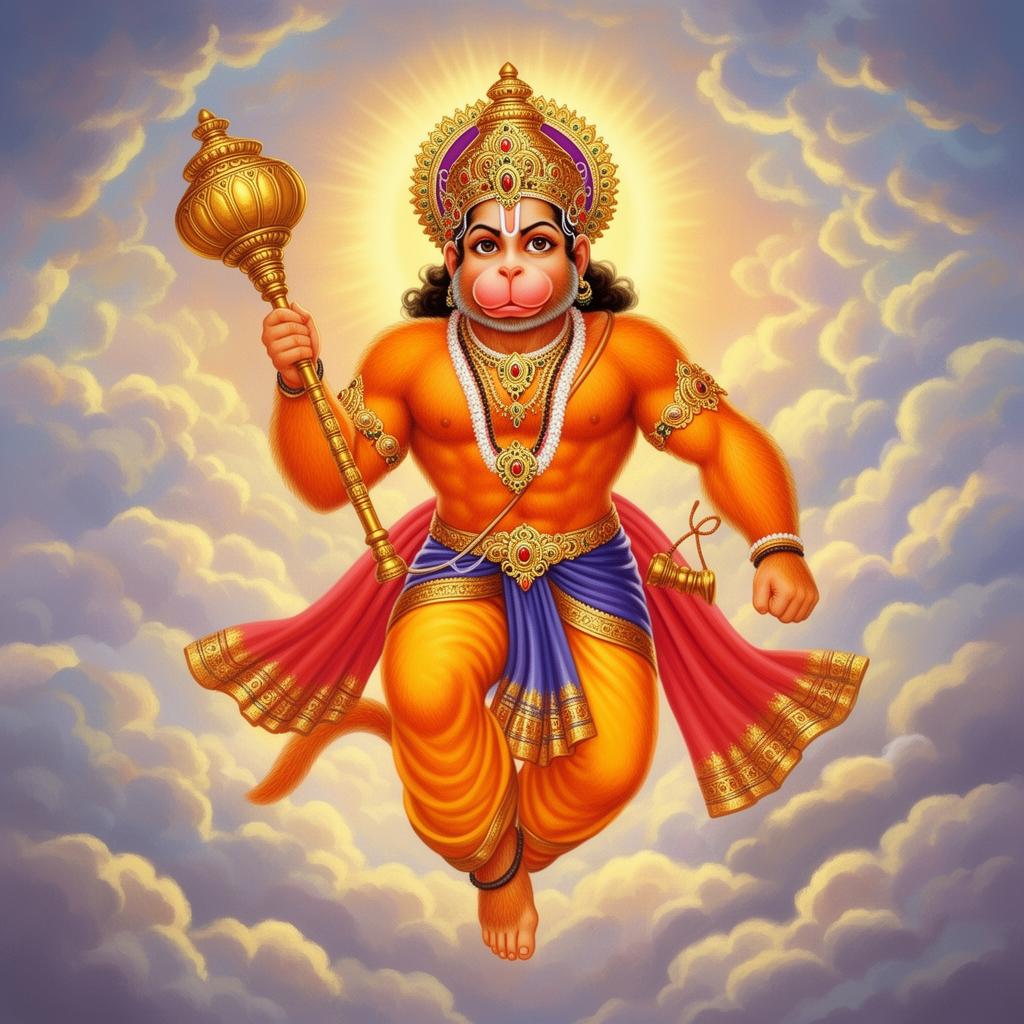
Ashta Hanuman: The 8 Forms of Lord Hanuman, Their Significance, Mantras & Which One to Worship
12 min read
108 Names of Lord Krishna: Complete List with Meaning, Benefits & How to Chant Daily
12 min read
Sundarkand Path: Benefits, Vidhi, Significance & Best Day to Read
11 min read