
What is Kanwar Yatra & Why It Matters
Kanwar Yatra is the annual pilgrimage during the Hindu month of Shravan (mid-July to mid-August) where millions of devotees called 'Kanwariyas' walk barefoot - sometimes for 100-200 kilometers - carrying decorated bamboo poles (kanwar) with two earthen pots filled with sacred Ganga water. They offer this water to Shiva temples on the way back, completing one of the most physically demanding spiritual practices in the world.
By the numbers (2024 data, 2026 expected similar or larger):
- 50+ million participants annually - making it the largest annual Hindu pilgrimage
- 3-4 million participants in a single major day on routes near Delhi
- Total distance covered collectively: billions of kilometers
- Spread across: Uttar Pradesh, Uttarakhand, Bihar, Haryana, Delhi, MP, Rajasthan
- Major routes converge on: Haridwar → Meerut → Pura Mahadev / Augharnath / Kashi
Why it matters spiritually:
- It is voluntary tapasya (austerity) - the devotee chooses physical hardship as offering
- Walking barefoot on hot tar roads in 35-40°C heat is itself the puja
- Each step is a chant - 'Bom Bhole' or 'Har Har Mahadev' in continuous rhythm
- The Ganga jal carried back symbolizes pure devotion that cannot be diluted
Why it matters socially:
- Cuts across caste, class, region, language
- Bridges urban-rural divide - billionaires walk alongside daily-wage workers
- Free food (bhandara) provided by hundreds of organizations along routes
- Temporary infrastructure (rest stops, medical camps) becomes a community effort
Why it matters culturally:
- One of the few mass cultural events that has GROWN (not shrunk) in modern India
- Each year sees more participants than the previous
- Multi-generational - grandparents, parents, children walk together
- Diaspora returns to India specifically for Kanwar yatra
🚩 The Vandnaa App's Kanwar Yatra module has 2026 dates, route maps, food camp locator, distance calculator, and a 'first-timer's checklist' for those joining for the first time.
Kanwar Yatra 2026 - Important Dates
Sawan month 2026 (per Purnimanta calendar - North Indian):
- Sawan begins: July 11, 2026 (Saturday) - Sawan Pratipada
- Sawan ends: August 9, 2026 (Sunday) - Shravan Purnima
- Sawan Mondays in 2026 (4 total):
- 1st Sawan Somvar: July 13, 2026
- 2nd Sawan Somvar: July 20, 2026
- 3rd Sawan Somvar: July 27, 2026
- 4th Sawan Somvar: August 3, 2026
Key Kanwar Yatra dates:
- Yatra begins (most participants start): July 1-5, 2026 (a few days before Sawan starts)
- Peak crowd: July 11-25, 2026 (first half of Sawan)
- Final offering days: July 27 - August 3, 2026 (3rd-4th Sawan Somvar)
- Mahashivratri of Sawan (most auspicious offering day): July 23, 2026 (Sawan Shivratri)
Specific yatra-completion days for 2026:
- Sawan Shivratri: July 23 (Wednesday) - most popular day to complete and offer
- Sawan Pradosh days: July 13, July 27, August 4 - also major offering days
- Each Sawan Monday - temple offerings peak
State-by-state route timing (approximate):
- From Haridwar to Delhi: 4-7 days walking (~250 km)
- From Haridwar to Pura Mahadev (Baghpat): 3-5 days (~150 km)
- From Haridwar to Kashi (Varanasi): 12-15 days (~1000+ km - by foot extreme; usually combined with vehicle)
- From Sultanganj (Bihar) to Deoghar (Baba Baidyanath): 4-5 days (~108 km - the famous 'Babadham yatra')
For first-timers - recommended start dates:
- If walking 5-7 days: start July 17-18
- If walking 3-5 days: start July 19-21
- If 1-2 days: start July 22 to offer on Sawan Shivratri July 23
📅 The Vandnaa App has all 2026 Sawan dates, Sawan Shivratri reminder, Pradosh times, and yatra-route timing calculator with safety alerts.
Strict Rules for Kanwariyas - What You Must Follow
Kanwar yatra is a serious spiritual commitment. The classical rules are STRICT:
Rules during the yatra (non-negotiable):
1. The kanwar (water pot) must NEVER touch the ground. Once you fill it at Ganga, until you offer at Shiva temple, the kanwar cannot be set down on earth. Use specially designed stands at every rest stop.
2. You must walk barefoot. No shoes, no slippers. Some traditions allow grass slippers in extreme heat; modern devotees may use rubber-bottom kanwar slippers (a compromise).
3. No alcohol, drugs, or non-veg. Strict sattvic diet throughout the yatra. Even tea/coffee is sometimes avoided.
4. No physical relations. The yatra is brahmacharya (celibate) - even married couples observing yatra avoid intimacy throughout.
5. No anger, arguments, or violence. A fight on the route can void the yatra's merit. Maintain peace even when crowded/jostled.
6. No sleeping on a bed. Sleep on the ground, on a mat, or at rest camps in austere conditions. Hotel rooms are not in the spirit.
7. No bathing in soap. Use only Ganga water for cleanliness. Some pilgrims accept temple water at major stops.
8. Maintain continuous chant. The classical practice is non-stop 'Bom Bhole' or 'Har Har Mahadev' - even in your sleep, the chant should continue mentally.
9. Wear saffron/orange clothes. Standard kanwar uniform - orange t-shirt or kurta, white dhoti, kanwar bandana. No red, no blue.
10. Carry no luxury items. Phone (only basic), simple food, ID card. No jewelry, no fancy gear.
Rules at the offering:
11. The temple offering must be done in your CURRENT cloth. You cannot change clothes between filling and offering. If clothes get torn/dirty, that's part of the tapasya.
12. The Ganga jal must be offered yourself. A priest cannot do it for you - the entire yatra is YOUR offering.
13. Pour the water on Shivling slowly while chanting Mahamrityunjaya - not in a hurry.
14. After offering, ALWAYS do parikrama (circumambulation) - minimum 3 times around the temple.
15. Take prasad and distribute it. Don't take prasad yourself first.
Modifications for women, elderly, children:
- Women - full participation allowed. Avoid during menstruation (can be planned around). Special women-only camps available.
- Elderly (65+) - vehicle-supported yatra is acceptable. Walk only the final 5-10 km.
- Children (10-16) - can walk shorter distances with parents. Below 10 should not do barefoot yatra.
- Pregnant women - should NOT do barefoot yatra. Light vehicle yatra acceptable up to 6th month.
Penalty for breaking rules: Tradition says: if a kanwar touches the ground accidentally, the entire water must be thrown away and refilled at Ganga. This means an extra 100 km of return trip. Most pilgrims take this seriously - better to be careful.
Kanwar Yatra History - From Ravana to Modern Times
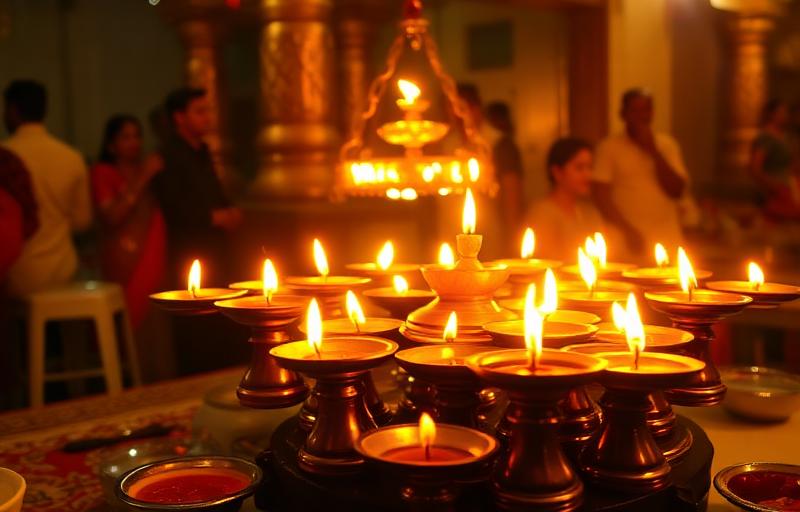
Kanwar yatra has an ancient history rooted in three major mythological stories:
Origin Story 1: Ravana's Mission The most-cited origin: Ravana, the demon king and supreme Shiva devotee, performed the first kanwar yatra. He carried Ganga water from Hardidwar (Kankhal) to Pura Mahadev temple in Baghpat to offer to Shiva. He completed this yatra annually as part of his bhakti to Shiva - long before Lanka.
Origin Story 2: Parshurama's Yatra Lord Parshurama (Vishnu's 6th avatar) performed kanwar yatra to please Shiva. He went to Pura Mahadev annually with Ganga water. Pura Mahadev temple in Baghpat is named for Parshurama's pious mother Renuka - making this the original 'Pura Mahadev kanwar yatra route' that survives to this day.
Origin Story 3: Samudra Manthan During the cosmic ocean churning (samudra manthan), the deadly halahala poison emerged. Lord Shiva drank it to save the universe, holding it in his throat (hence Neelkanth - blue-throated). To cool his burning throat, devotees brought Ganga water from heaven to earth. The kanwar yatra commemorates this - every year, devotees recreate the offering of cooling Ganga water to Shiva.
The medieval period: Kanwar yatra is mentioned in texts going back at least 1500 years. During the Mughal era, it continued despite political pressures - pilgrims would travel in groups for safety. The Marathas in the 17th-18th century revived major routes. The British era saw kanwar yatra grow as a symbol of Hindu cultural survival.
Post-independence resurgence:
- 1947-1980: Modest scale, mostly local pilgrims (~100,000 annually)
- 1980s: Began growing as religious tourism developed
- 1990s: Crossed 1 million annually
- 2000s: 5-10 million annually
- 2010s: 20-30 million annually
- 2020s: 50+ million annually
Why the modern explosion:
- Better roads make 100-200 km walking feasible
- Smartphones allow group coordination
- Food camps (bhandara) along routes - no need to carry food
- Government provides medical, security, route management
- Multi-generational tradition - grandparents bring grandchildren
- Migration: Hindus now living in cities make annual pilgrimage to maintain roots
The future: Analysts expect 75-100 million participants by 2030. Several governments are building permanent kanwar yatra infrastructure (rest pavilions, medical centers, water stations) along major routes. The yatra is becoming a permanent annual feature of North Indian life.
Types of Kanwar - Different Levels of Tapasya
Not all kanwariyas are equal. There are recognized levels based on physical tapasya:
1. Sajja Kanwar (Decorative Kanwar) - Beginner level:
- Decorated bamboo with flowers, ribbons, lights
- Walk normally with breaks
- Group travel with bhajan-singing
- Most family pilgrims do this version
- Distance: Usually 50-150 km
2. Daak Kanwar (Express Kanwar) - Intermediate:
- Continuous walking with minimal breaks
- Two pilgrims relay-running with the kanwar
- Faster pace - covers 100 km in 24-30 hours
- Time-bound to reach offering on a specific Pradosh or Sawan Shivratri
3. Standa Kanwar - Advanced:
- Pilgrim does NOT bend or sit during the entire yatra
- Eats, drinks, sleeps standing or with kanwar held high
- Extreme physical austerity
- Only experienced kanwariyas attempt
4. Dandi Kanwar - Most Difficult:
- Pilgrim falls flat (dandavat) every few feet
- Then rises and walks to where their hands reached
- Falls again, rises, walks
- Covers 1 km in roughly 1.5-2 hours
- Total yatra duration: 30-50 days for 100 km
- Reserved for the most devoted; many take month-long leave from work
5. Annya Kanwar (One-way Kanwar) - Special Vow:
- Walks only one-way (Haridwar to temple)
- Does NOT return to start point - proceeds onward to other shrines
- Often combined with year-long pilgrimage to all 12 Jyotirlingas
6. Kavar Yatra (without water) - Symbolic:
- Some pilgrims (very old, very young, or disabled) walk symbolically without water
- Carry the kanwar empty as bhakti gesture
- Priest fills water at offering and offers on their behalf
- Considered valid if main yatra is impossible due to genuine physical limitation
Choosing your level:
First-timers: Sajja Kanwar, 50-100 km, with a group. Start small.
Returning pilgrims: Daak Kanwar if physically fit. Adds time-pressure tapasya.
Long-term sadhakas: Consider Standa or Dandi for one specific year - major life sankalpa.
The cosmic gradation: Tradition says merit increases exponentially with austerity. A 1-km Dandi Kanwar is said to equal 1000 km of Sajja Kanwar. But - and this is critical - only undertake what you can complete. An incomplete Standa kanwar carries less merit than a completed Sajja kanwar.
What unites all types:
- The Ganga water from Haridwar, Sultanganj, or another holy spot
- The Shivling at the destination temple
- The continuous Bom Bhole / Har Har Mahadev chant
- The sankalpa (resolution) before starting
- The completion ceremony at the temple
First-Timer's Practical Guide
If 2026 will be your first kanwar yatra, here's what you need to know:
What to bring (minimum kit):
- 2 sets of orange/saffron clothes (one to wear, one to wash)
- 1 white dhoti
- Kanwar bandana
- Small backpack (5-10 kg max)
- Basic medicine kit (band-aids, glucose, painkillers)
- ID card (Aadhar essential)
- Some cash (₹2000-3000)
- Charged power bank
- Small water bottle (for personal drinking - separate from kanwar water)
- Pair of basic kanwar slippers (for emergency only)
What to leave home:
- Jewelry (other than rudraksha mala)
- Expensive watches
- Multiple changes of clothes
- Heavy shoes
- Excessive money
Physical preparation (start 4-6 weeks before):
- Walk 5-10 km daily barefoot at home (build foot calluses)
- Practice walking on rough surfaces
- Cardiovascular training - be able to walk 20-30 km in a single day
- Hydration habits - drink 4-5 liters water daily for weeks before
Mental preparation:
- Decide your level (Sajja, Daak, etc.) honestly
- Set sankalpa (specific intention or general devotion)
- Pre-read Mahamrityunjaya mantra and basic Shiva chants
- Tell family approximate dates and route
- Mentally accept: pain is part of the practice
Day-by-day schedule (typical 5-day Haridwar to Pura Mahadev):
Day 1 (Haridwar arrival, fill kanwar):
- Reach Haridwar by 8 AM
- Bath in Ganga at Har Ki Pauri
- Fill kanwar at the river
- Begin yatra by noon
- Walk 30-40 km, rest at organized camp
Day 2-4 (walking days):
- Wake 4 AM, walk till 11 AM (heat break)
- Rest 11 AM - 3 PM
- Walk 3 PM - 9 PM
- Sleep at next rest camp
- ~50 km/day
Day 5 (offering day):
- Reach destination temple early morning
- Long queue but priority for kanwariyas
- Offer the Ganga water on Shivling
- Mahamrityunjaya jap during offering
- Parikrama 3 times
- Take prasad and distribute
- Departure home
Safety tips:
- Walk in groups, especially women
- Stay near main roads with police presence
- Avoid drinking from random sources - use camp water only
- Don't accept food from strangers - only from established bhandaras
- Keep emergency contacts on speed dial
- Watch for foot blisters; treat early
What to do at offering temples:
- Long lines but typically kanwariya special darshan
- Don't push or argue - peaceful queue is part of the puja
- After offering, sit quietly for 5 minutes - let the merit settle
- Take charanamrit (water that touched lingam after your offering)
- Buy a small Ganga jal bottle to bring home as prasad
After the yatra:
- Rest for 2-3 days
- Treat any blisters/wounds professionally
- Reflect on the experience - many keep a journal
- Plan next year's yatra (most do it annually)
Whether You Walk or Support - Be Part of Kanwar Yatra 2026
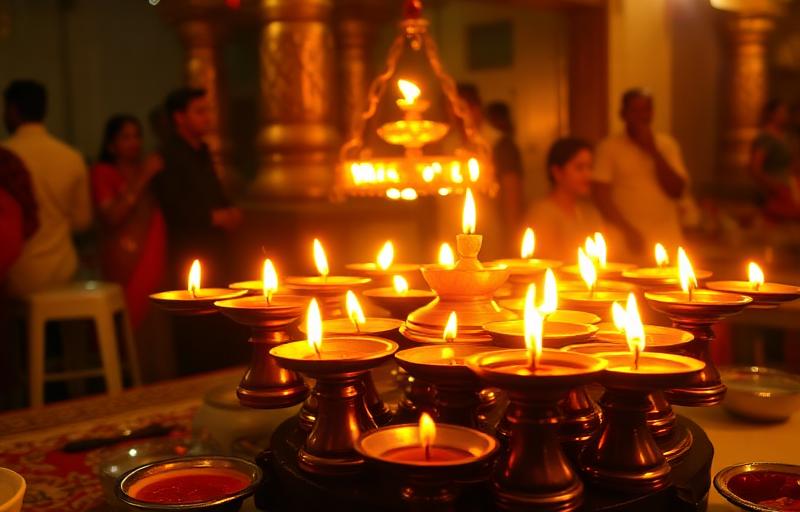
Kanwar yatra is not just for those who walk. There are 5 ways to participate:
1. Walk yourself - the highest form of participation. Even 50 km is significant.
2. Set up a bhandara - feed kanwariyas. Every meal you provide is recorded as merit. Setting up even a small water-and-fruits station is a major contribution.
3. Volunteer at medical camps - for those who can't walk, helping treat blisters, dehydration, exhaustion is direct seva.
4. Donate to organized yatra services - ISKCON, Hindu Yuva Vahini, local temple committees run major operations. Financial contribution supports food, medical, route management.
5. Pray for the kanwariyas - even from home, daily prayer for the safe completion of all kanwariyas' yatra carries merit.
For 2026, set a sankalpa now:
- Walking option: Decide which Sawan dates you can free up. Plan route. Start physical training in May.
- Bhandara option: Identify a kanwar route near you. Reach out to local Hindu organizations to coordinate. July 11 - August 9 is the active window.
- Stay-home support: Decide which charity you'll donate to. Set up a daily prayer for kanwariyas during Sawan.
A final reflection:
Kanwar yatra is one of the few mass spiritual practices that has GROWN in modern India. Every other tradition seems to be shrinking under modernity - except this one. Why?
Because kanwar yatra meets a deep human need: the need for physical, embodied, communal devotion. We have lost most of our embodied practices in modern life - kanwar yatra restores them. Walking 100 km. Sleeping on the ground. Eating simple food. Singing for hours. Joining strangers as brothers. Reaching the temple together. This is what humans evolved to do - and modernity took it from us.
Sawan 2026 is your chance - at any age, at any level - to reclaim it.
Bom Bhole. Har Har Mahadev. Kanwariyas zindabad.
🚩 The Vandnaa App's Kanwar Yatra 2026 module: route maps, real-time camp locations, weather alerts, group coordination, sankalpa tracker, and post-yatra journal.
Common Questions From Devotees
When does Kanwar Yatra 2026 start and end?+
Kanwar Yatra 2026 active window is July 11 (Sawan starts) to August 9 (Sawan ends). Most pilgrims time their yatra to offer on Sawan Shivratri (July 23, 2026) or one of the Sawan Mondays. Plan to start walking 5-7 days before your offering date.
How long does the kanwar yatra typically take?+
Depends on route and level. Haridwar-to-Delhi (~250 km) takes 4-7 days walking. Sultanganj-to-Deoghar (~108 km) takes 4-5 days. First-timers often choose 100-150 km routes (3-5 days). Dandi kanwar can take 30-50 days for 100 km.
Can women do kanwar yatra?+
Absolutely yes - women are increasingly common in kanwar yatra. There are women-only camps and groups for safety. Plan around menstruation if possible. Pregnant women should NOT do barefoot walking yatra; light vehicle yatra is acceptable up to 6 months pregnancy.
What if I can't walk the full distance?+
There are flexible options: vehicle-supported yatra (drive most, walk last 5-10 km), Annya kanwar (one-way only), or Kavar yatra (symbolic without water). Even walking just the final stretch from a temple gate to the Shivling is recognized as legitimate participation.
Do I need permission or registration for Kanwar Yatra?+
No formal registration needed. However, some states issue 'Kanwar yatri ID cards' for safety/identification. Carry Aadhar always. Major routes have police checkpoints - be polite, show ID if asked. International pilgrims need standard tourist visa.
What if my kanwar accidentally touches the ground?+
Traditional rule: the entire water must be poured out and refilled at Ganga. This means returning to the source - sometimes a 100+ km extra trip. In practice, modern devotees may continue if it was a brief unintentional touch, but offer extra mantras and prasad as 'penance'. Strict pilgrims always refill.
Can children participate in kanwar yatra?+
Children 10+ can do shorter yatra (50 km or less) with parents. Below 10 should not do barefoot walking yatra - too physically demanding. Family-friendly yatra includes vehicle support, plenty of rest, and short daily walks. Many families do annual short kanwar yatras as multi-generational tradition.
About the author
Pandit Mahesh Trivedi · Festival Traditions & Panchang
Pandit Mahesh leads the festival-date and Panchang content on Vandnaa. He cross-references multiple regional panchangs (Drik, Vaishnava, Bengali, Marathi) for every festival date published on the site.
Meet the Vandnaa editorial team →Explore on Vandnaa
Related Articles
Rudrabhishek at Home: Complete Vidhi, Items & Mantras Guide
11 min read
Bilva Patra (Bel Patra): Significance, Rules & How to Offer to Shiva
9 min read
Sawan Somwar 2026: Dates, Vrat Vidhi, Shiv Mantras & Why Mondays in Sawan Are So Powerful
10 min read
Shiv Aarti Lyrics – Om Jai Shiv Omkara (शिव आरती)
13 min read

Om Namah Shivaya Mantra Benefits & Meaning (ॐ नमः शिवाय)
9 min read
12 Jyotirlingas of Lord Shiva: Complete Guide to Locations, Stories, Mantras & Yatra Order
14 min read